How can brands stay visible in AI search with Profound?
AI assistants are becoming the new front door to every business
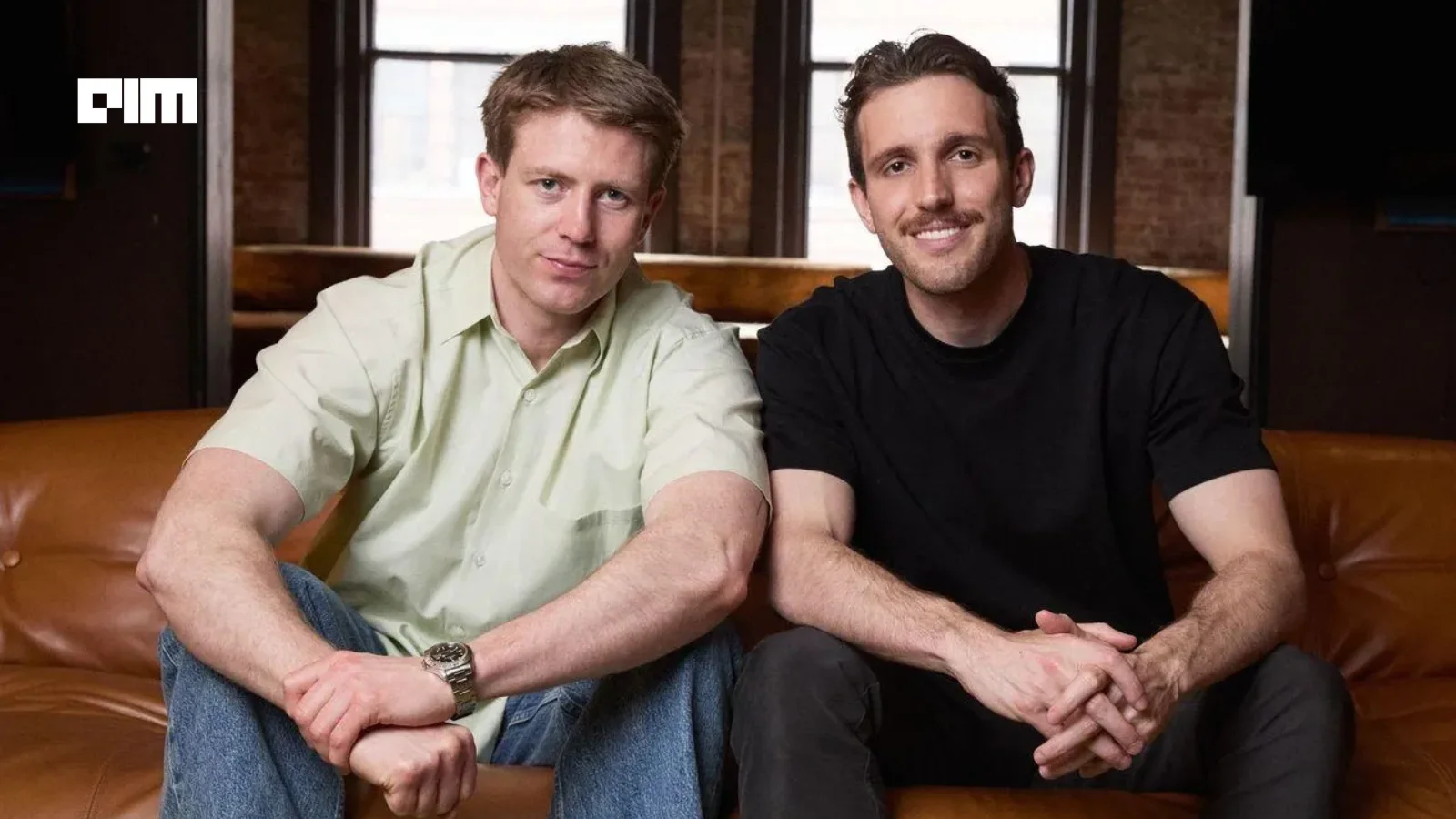
“AI assistants are becoming the new front door to every business,” said James Cadwallader, cofounder and CEO of Profound. “If you’re not showing up in those conversations, you’re invisible to billions of consumers.” Profound just announced a $35 million Series B led by Sequoia Capital, with participation from Kleiner Perkins, Khosla Ventures, Saga VC, and South Park Commons.
For brands, the rise of AI assistants like ChatGPT, Perplexity, and Google’s Gemini changes the calculus of discoverability. Traditional SEO strategies, built around keyword rankings, backlinks, and click-through rates, matter less when AI models generate direct answers rather than lists of links. This change has created a new marketing problem: ensuring that when consumers ask AI systems for product recommendations, their brand appears in the response.
Tracking and Shaping AI Visibility
Cadwallader and cofounder Dylan Babbs, a former Uber software engineer, started Profound in 2024 to address that problem. Based in New York, the company offers a platform that lets brands monitor how they appear across AI assistants, identify gaps, and produce content optimized for AI models rather than human readers.
The software tracks major AI models, including OpenAI’s GPT-5, Meta’s Llama, and Microsoft’s Copilot, to see how they describe brands and which sources influence their answers. Profound generates thousands of synthetic prompts, such as “cheap football cleats” or “best phone for a teenager,” to gauge brand visibility. It can also detect when an AI bot visits a client’s site, track how often it returns, and measure sentiment based on the language used in generated answers.
Cadwallader describes the approach as “creating what humans would probably find boring: highly structured content that’s designed for bots to consume, like a game of telephone.” The platform uses large reasoning models to recommend actions ranging from adding metadata to web pages to producing new articles, social posts, or media placements designed to influence AI-generated output.
While its focus is marketing, Profound’s founders argue that the stakes are broader. “It’s become a PR challenge, a content challenge, even a customer support challenge,” Cadwallader said. “The models have opinions, and they reflect the internet’s opinions back to users.”
Funding and Expansion
Their funding round, which comes just two months after a $20 million Series A, brings total funding to $58.5 million. Sequoia partner Anas Biad cited the team’s “remarkable” execution in both product development and customer acquisition, adding, “We only back founders who want to build generational companies.”
Profound’s client base includes Fortune 10 companies, Ramp, U.S. Bank, Indeed, MongoDB, DocuSign, Chime, Clay, and Plaid. The company says more than 2,000 marketers from over 500 organizations now use the platform daily. Customers have reported significant visibility gains; Ramp saw a sevenfold increase in AI brand mentions for its accounts payable product, while software firm Airbyte tripled its visibility in ChatGPT in a week.
Revenue has grown from six figures at the start of 2025 to eight figures in the current quarter, according to Cadwallader. The company employs 45 people and plans to nearly double headcount by the end of 2025, drawing talent from OpenAI, Google DeepMind, AMD, and Uber.
Rivals Target the Same AI Search Opportunity
Profound is one of several startups developing tools for what is becoming known as Generative Engine Optimization. Competitors like Bluefish AI and Athena are also building software to help brands track and influence their presence in AI-generated answers. The field is still emerging, with differences in approach and product scope. Profound’s investors position it as a category leader based on its customer roster, breadth of analytics, and integrated content creation tools.
The shift to AI-first search is still in its early stages, but adoption is growing. According to the Wall Street Journal, AI-powered chatbots now account for more than 5% of U.S. desktop search traffic, up from 1.3% in early 2024. OpenAI says ChatGPT has 700 million weekly users, four times more than a year ago.
For marketers, the transition is an opportunity. As Cadwallader put it, “AI assistants are becoming the new front door to every business. If you’re not showing up in those conversations, you’re invisible to billions of consumers.”
Key Takeaways
- Secure $35 million Series B funding to help brands maintain visibility in the evolving AI search landscape.
- Address the challenge of brand discoverability as AI assistants replace traditional search engines for consumers.
- Offer a platform for brands to monitor and optimize their presence across major AI models and assistants.
- Utilize synthetic prompting and sentiment analysis to track AI visibility and influence AI-generated responses.