

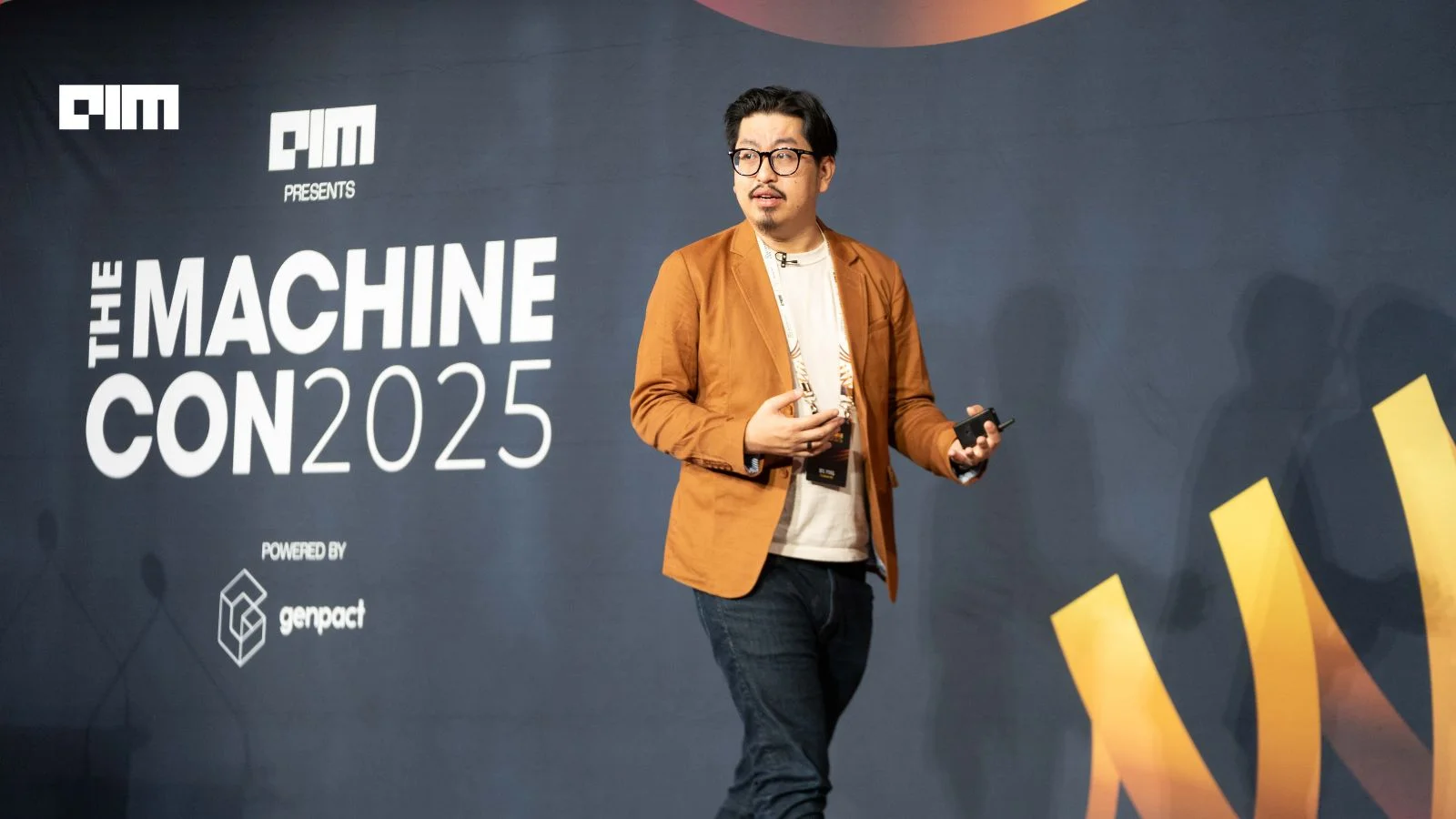
Agentic systems promise speed, adaptability, and autonomy, but they also introduce a new kind of opacity. Decisions emerge from networks of interacting agents, each reasoning, delegating, and executing in ways that even their creators cannot always anticipate. For enterprises now deploying these systems, the challenge has shifted from building them to understanding them. That tension was the focus of a session at MachineCon New York 2025 titled “Agentic Observability: The Third Eye”, presented by Wil Pong, Vice President of Product at Fiddler AI.
The New Complexity of Agentic Systems
“In the next couple of years, we have not seen this kind of transformational change since probably the cloud” said Pong as he explained that the real shift lies in how requests play out inside these systems. What seems simple on the surface can branch into a web of reasoning, delegation, and coordination. Agents pick up tasks, hand them off, and sometimes revisit them through reflection cycles. A single query can expand into multiple paths, each adding to the overall complexity. We’re starting to see different players, agent to agent interactions, multi-turn architectures, and that actually makes things exponentially more complex, he said.
Why Traditional Monitoring Falls Short
This level of interaction raises the bar for enterprises. Systems that once followed predictable workflows now behave more like evolving networks. They generate results through chains of actions that are difficult to trace end-to-end. That is why observability becomes essential. It gives teams the ability to see how agents are working together, where breakdowns occur, and how performance connects to cost and reliability.
