The coding landscape is undergoing a rapid transformation due to AI, with U.S.-based startups leading the charge. Companies like GitHub and OpenAI have introduced AI-powered tools, Copilot and Codex, respectively, which are designed to help developers write, optimize, and debug code more efficiently. These tools allow developers to focus on complex problem-solving, while AI handles repetitive tasks. Additionally, startups like Tabnine and DeepCode offer AI solutions that provide real-time code improvements and bug identification, enabling developers to create robust applications faster. As AI continues to advance, these companies are redefining software development, streamlining workflows, and making coding accessible to a wider audience.
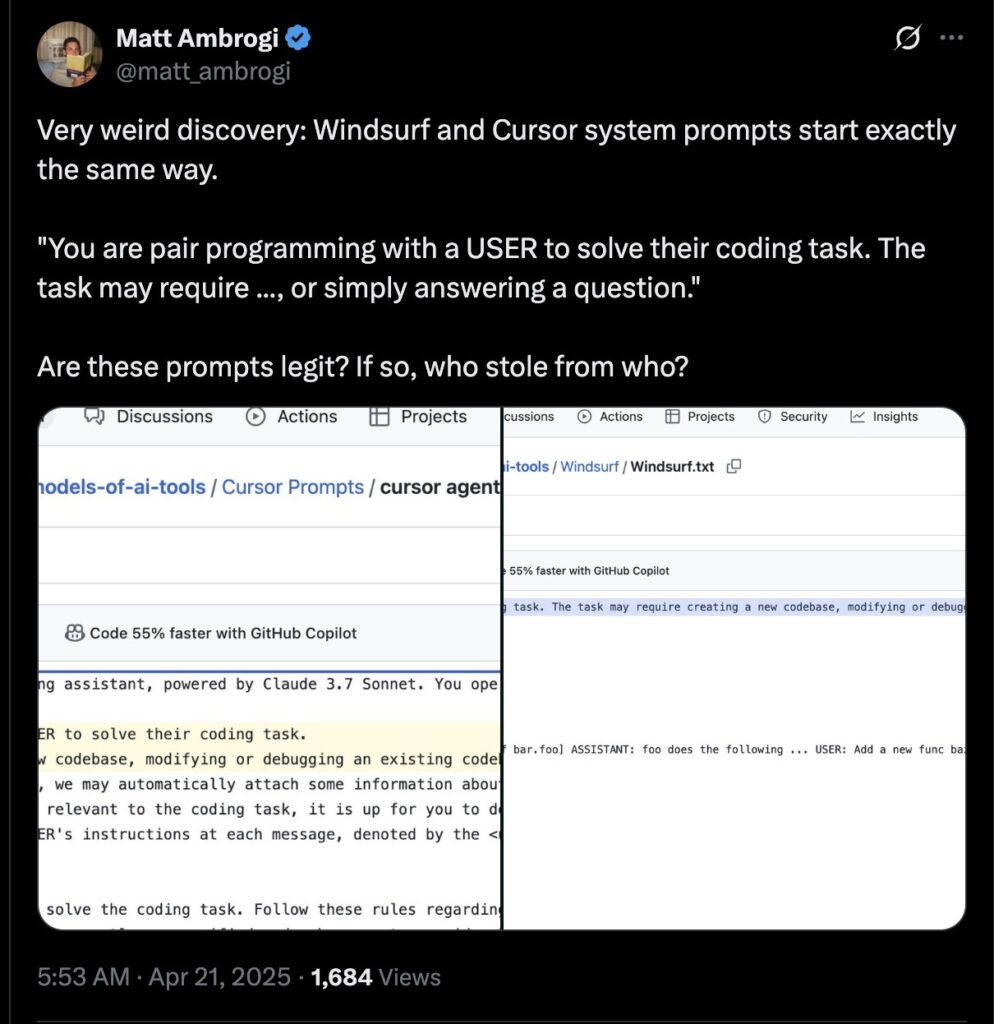
But two companies generating the most buzz in the coding ecosystem right now are Windsurf and Cursor.
The rivalry between Windsurf and Cursor is a fascinating one because it reflects a broader philosophical divide in the development of AI tools: adaptability versus autonomy. Windsurf takes the approach of adaptability; its core strength is learning from the user and tailoring suggestions to fit their unique style and needs. This makes Windsurf incredibly powerful for developers who want a tool that evolves with them over time and grows more intelligent based on their habits. On the other hand, Cursor embraces autonomy; it seeks to reduce the developer’s input as much as possible, letting the AI take control and automate as many parts of the coding process as it can. Cursor’s vision is a future where developers spend less time writing boilerplate code and more time solving complex, high-level problems. In some ways, Cursor is pushing the envelope by reducing human intervention, while Windsurf leans more toward a balance of assistance and evolution, empowering the developer without taking full control.