



As of 2024, it is clear that there are hundreds of LLMs available, with new ones being designed and issued on a consistent basis. Given the vast number of Large Language Models (LLMs) available, it might be difficult to find one that meets your unique needs. The sector is rapidly developing, with new models and improved versions appearing every week. As a result, any list of LLMs and their applications rapidly becomes obsolete. Optimizing costs while sustaining performance is crucial for the sustainable use of LLMs. As reported by AIM and other media outlets, OpenAI incurs approximately $700,000 daily to operate ChatGPT.
Choosing the best LLM is a challenging problem for businesses owing to a variety of variables. Diverse business demands imply that an LLM that works for one organisation may not work for another, and data privacy and security are critical, especially when dealing with sensitive information. Customisation requirements add another degree of complexity, since businesses frequently demand LLMs that are tailored to their unique needs, which may be resource-intensive. Cost issues are important, as the creation, deployment, and maintenance of LLMs are costly endeavours. Scalability is also important; as organisations develop, their LLM requirements change, necessitating models that scale properly. Ethical concerns and regulatory compliance are critical for maintaining confidence and avoiding legal difficulties, yet integration obstacles occur when LLMs must be effectively integrated into current systems and workflows. The quick rate of AI breakthroughs necessitates that organisations constantly adapt to new technologies, and a skills gap frequently arises, with many firms lacking the in-house competence to successfully evaluate, deploy, and manage sophisticated learning machines.
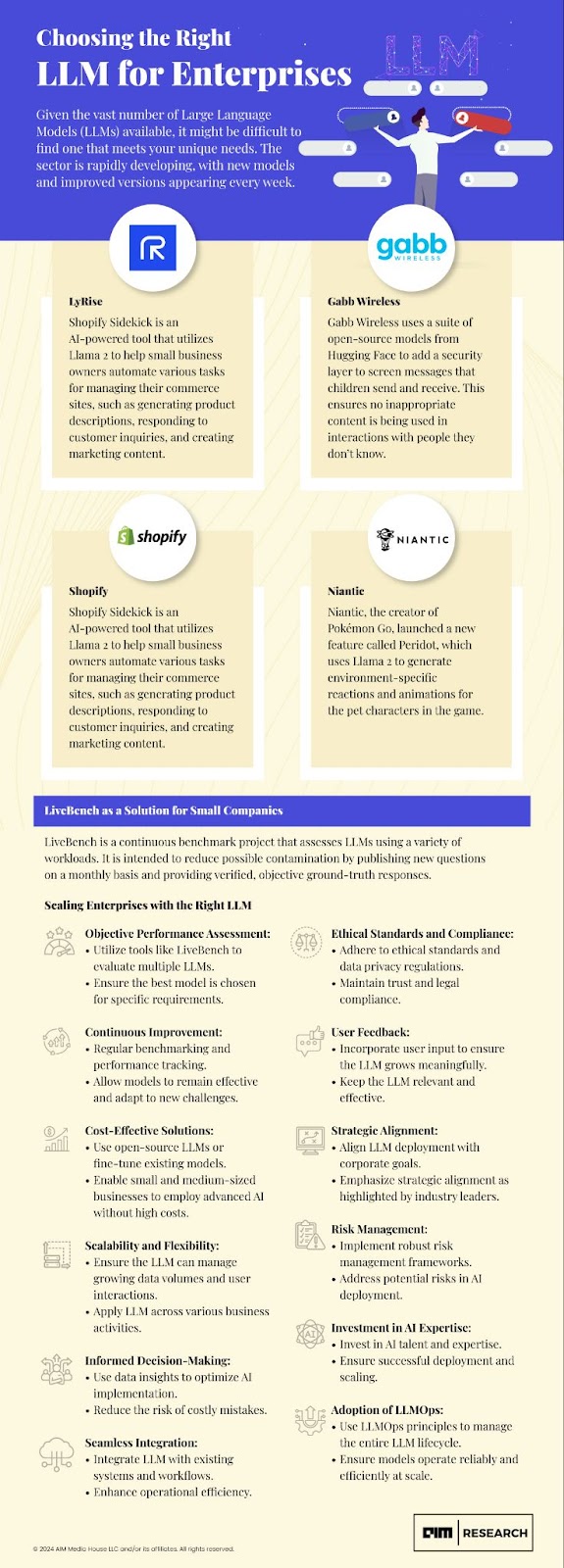
1. LyRise
Industry: Talent Matching
Deployment: LyRise, a talent-matching startup, uses a chatbot built on Llama that interacts like a human recruiter. This chatbot helps businesses find and hire top AI and data talent from a pool of high-quality profiles in Africa across various industries.
