

Differentiating between human-created and AI-generated content has grown increasingly challenging in the digital age. As AI, such as GPT-3, evolves, it can produce text, images, and videos that closely mimic human work. To discern the origin, one must consider factors like consistency, errors, style, and tone. Human-made content often exhibits subtle variations and personal nuances, whereas AI can lack these attributes. The volume and speed of content generation, along with metadata analysis, provide additional clues. Maintaining vigilance and critical thinking is crucial in navigating the blurred line between human and AI-created content in our information-driven world.
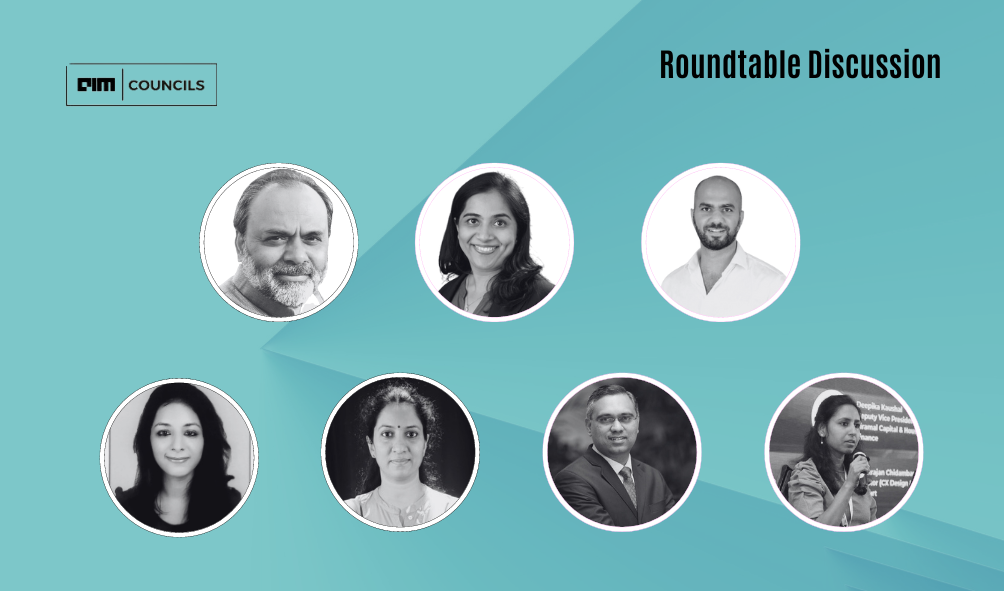
To dwell more on this we had a roundtable discussion on the agenda “How do we differentiate between human-made and AI-generated content”. The session was moderated by Sudha Bhat, Senior Director, Solution Strategy - Conversation Analytics at Uniphore with panelists Satyam Priyadarshy, First Chief Data Scientist - Oil and Gas Industry, Deepika Kaushal, Head-Everyday AI & Digital analytics at Piramal Capital & Housing Finance, Nithya Subramanian, Head of Data & Analytics - AMEA at Kellogg Company, Moutaz Gendia, Global Associate Director for Reporting and Analytics- Commercial at Novartis, Varun Saxena, Sr. Vice President & Head AI ML at ANAROCK and Vani Arora, Vice President at Macquarie Group.
Identifying AI-Generated Content
As a professor, when I read a student's article that I know, I have an idea about that person. I've been teaching for some time. So I know what they are capable of writing, and ChatGPT is very easy to figure out. It's almost like cheating, if you think of it. The second thing is that if you really want to use some technology, you can actually look at the readability index of those articles. When we write articles, if you look from statement to statement or paragraph to paragraph, our readability index will change. But when you write through a Chat GPT, it is pretty much the same readability index for the whole set. Therefore, one figuring it out, in what context we are doing; second, looking at some basics, and if you actually mix it with the behavioural analytics of the person, then it's actually very easily distinguished.
