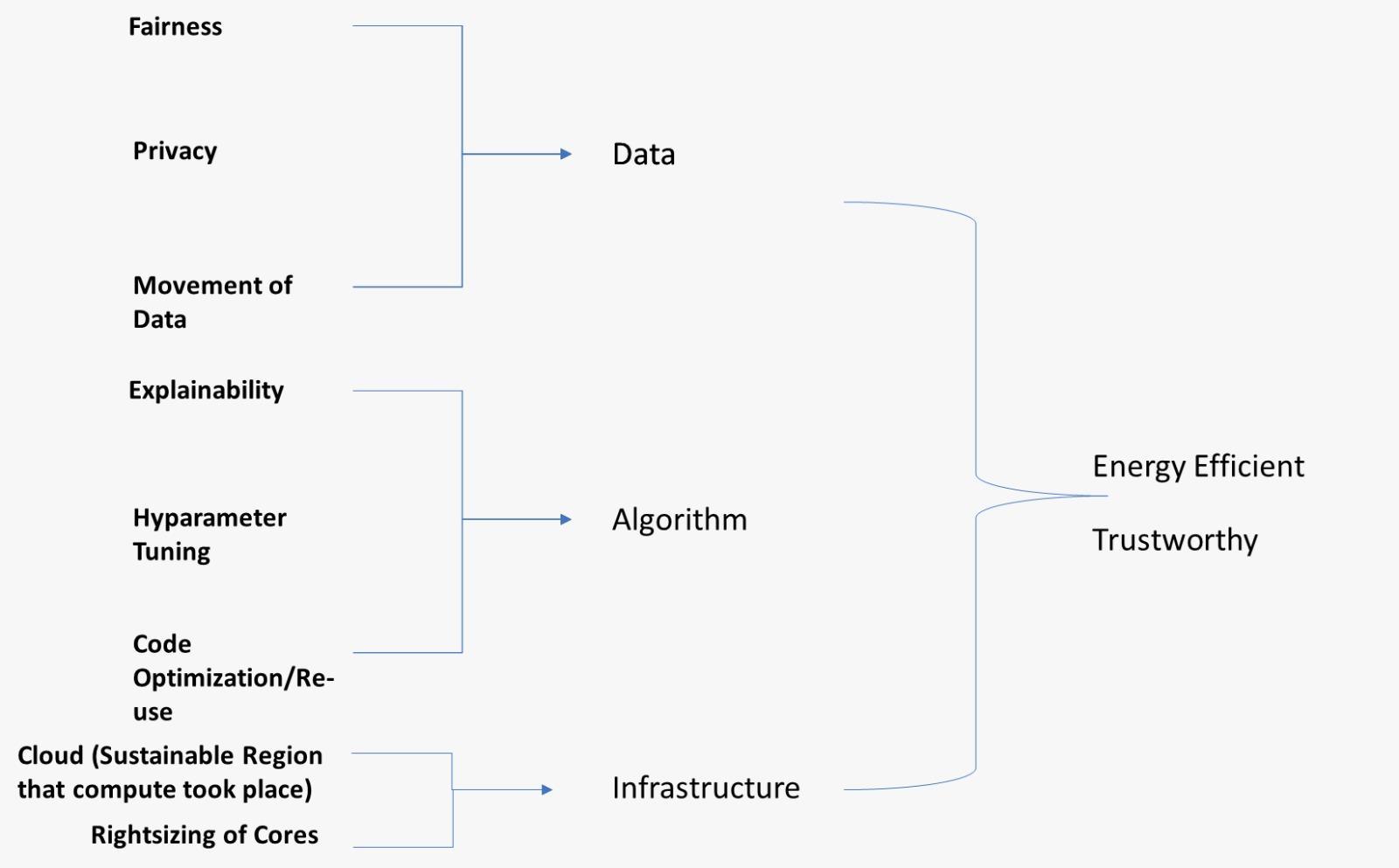
As organizations embrace autonomous systems across various sectors, the reliance on artificial intelligence models becomes paramount. These models empower autonomous systems to process data, make real-time decisions, and operate without human intervention, driving operational efficiency. However, this advancement also brings forth the critical issue of biases in decision-making.
Unaddressed biases within these intelligent systems can erode user trust and cast doubts on the model's legitimacy, potentially tarnishing its reputation. Therefore, organizations must establish policies to ensure the responsible design of AI models and algorithms, fostering reliability and accountability in autonomous systems.
Moreover, the complexity of advanced AI models contributes to a significant environmental challenge, leading to a heightened carbon footprint across the model's life cycle. From development and training to deployment and ongoing operations, the environmental impact is substantial. Hence, there is an increasing need to prioritize sustainable design principles, fostering the creation of environmentally conscious AI systems.