

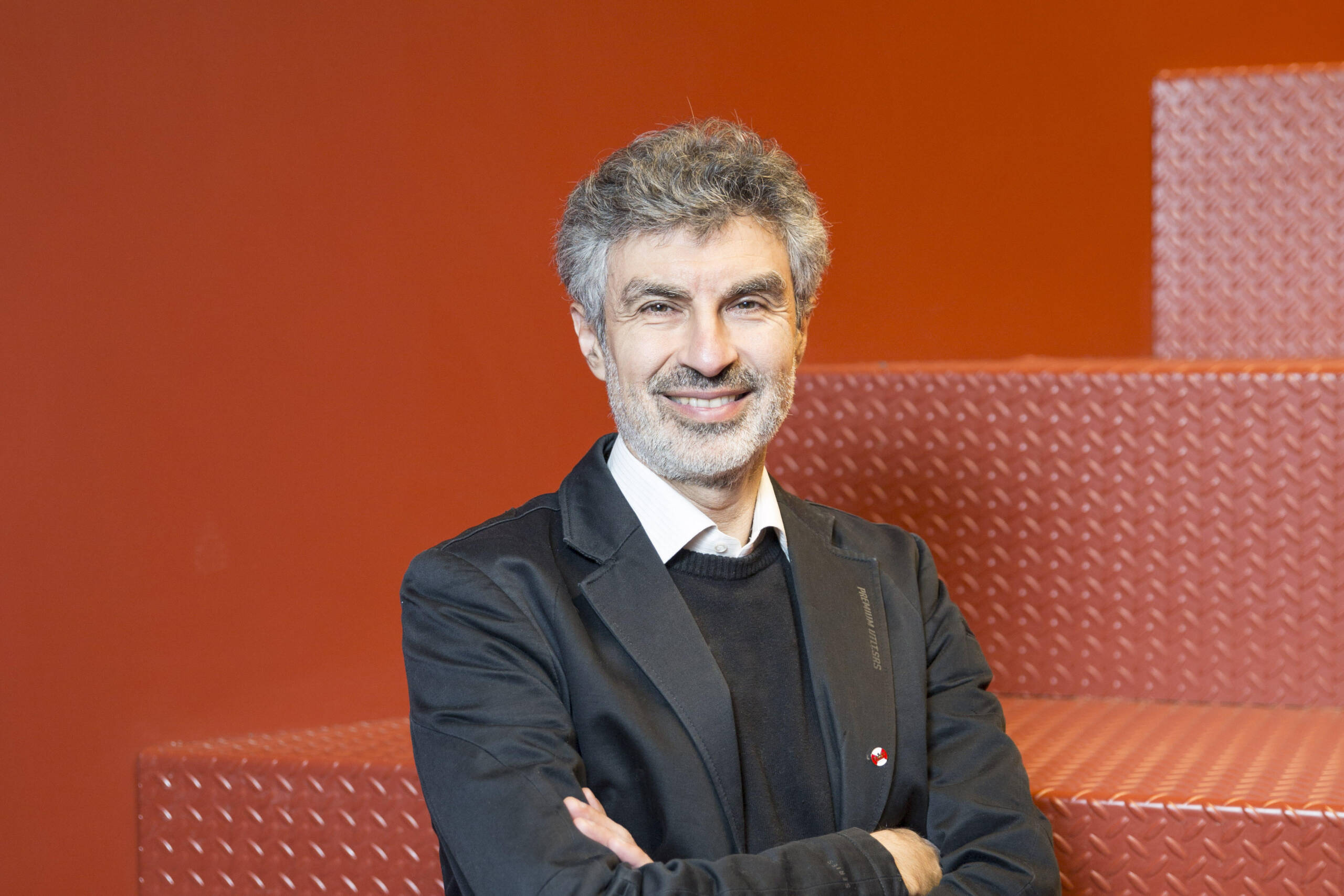
Yoshua Bengio, a pivotal figure in the deep learning revolution and winner of the prestigious Turing Award alongside Yann LeCun and Geoffrey Hinton, has long been driven by an insatiable curiosity about how things work. In a recent interview with AIM, Bengio offers an insightful glimpse into his journey and the lessons he has learned over his three-decade-long career in artificial intelligence.
As a young researcher, Bengio was drawn to connectionist models, early neural network theories rooted in cognitive science and neuroscience. He saw the potential to understand human and animal intelligence and build intelligent machines, much like the pioneering work of Geoffrey Hinton. He quickly realized that passion would play a crucial role in his research. As Bengio puts it, “If you’re doing work in an area that you don’t feel a strong, emotional appeal to, then it’s not going to be the same as if you’re passionate about it.”
Bengio also dismisses the stereotype of the lone genius scientist, emphasizing the importance of collaboration in scientific research. He explains, “Science is about building on other people’s ideas and doing it in groups.” One of Bengio's most celebrated collaborations is his work with computer scientist Ian Goodfellow on generative adversarial networks (GANs), which have since transformed fields such as machine translation, image generation, audio synthesis, and text-to-speech systems.
