

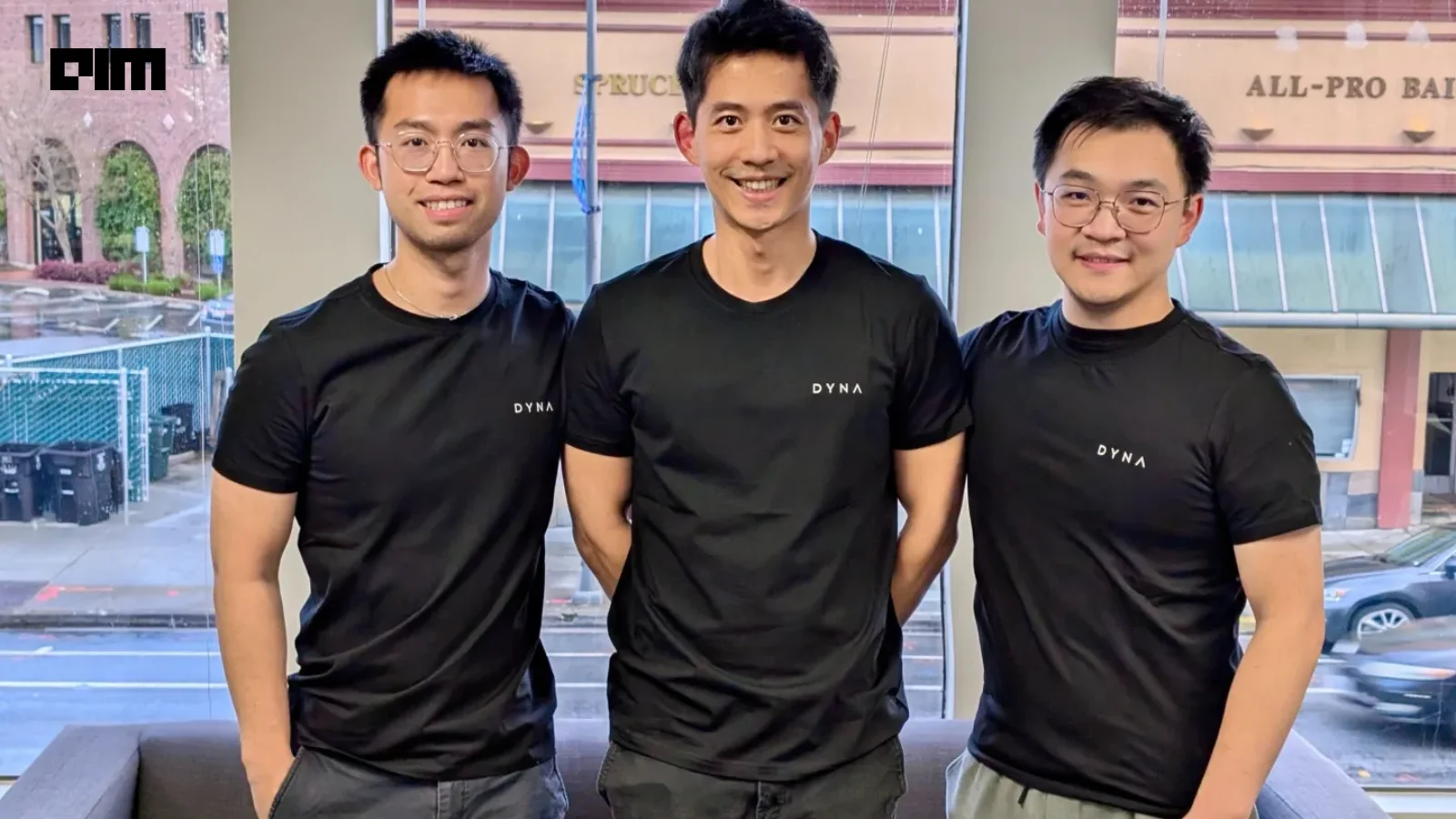
When Lindon Gao, York Yang, and Jason Ma founded Dyna Robotics in 2024, they were not entering unfamiliar territory. Gao and Yang had previously built Caper AI, a company that applied computer vision and hardware to create AI-powered shopping carts, which sold to Instacart in 2021 for $350 million. Ma, a former DeepMind research scientist, had spent his career developing foundation models for robotics. Their new venture was designed around a straightforward conviction: advances in AI would only be fully realized when machines could perform useful physical work outside the lab.
In just over a year, the Redwood City-based startup has raised more than $140 million, including a $120 million Series A announced in September. Investors range from early-stage venture firms like CRV and First Round Capital to corporate funds from Nvidia, Amazon, Salesforce, Samsung, and LG. The company is now valued above $600 million.
From Demonstration to Deployment
The company’s central product is DYNA-1, a robotics foundation model that powers stationary robotic arms. Unlike traditional robots that rely on scripted instructions, DYNA-1 is designed to generalize across environments. According to the company, the system achieved more than 99% uptime during a 24-hour continuous operation test. Within six months of launch, its robots were running up to sixteen hours a day in hotels, restaurants, laundromats, and gyms, performing tasks such as folding napkins, towels, and clothing.
