

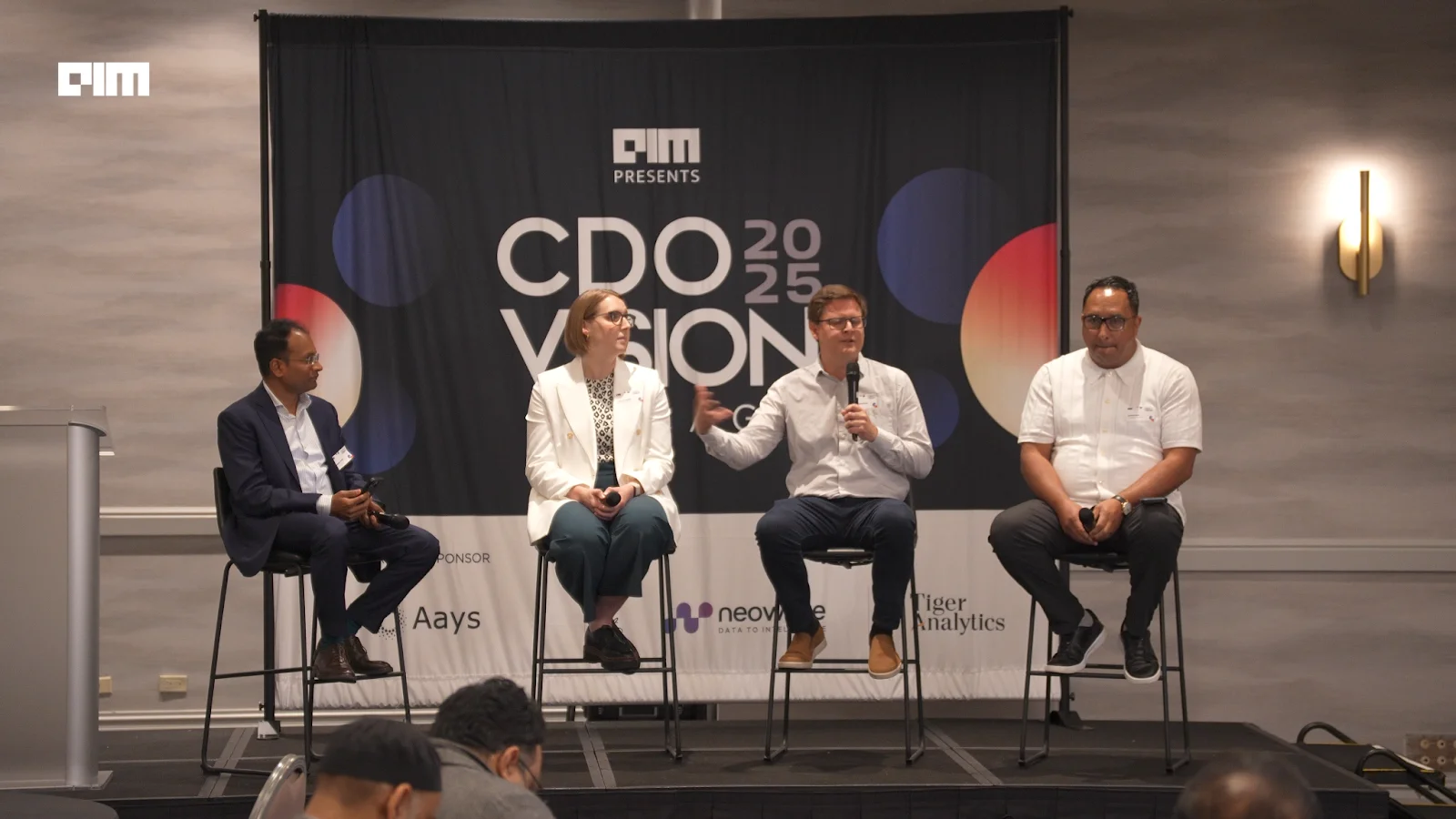
Most enterprise software currently follows a backward approach. Businesses invest heavily in rigid platforms and spend extensive time customizing workflows, only to later attempt to add AI onto systems that weren’t designed to support it. The outcome is disjointed solutions, fragmented data, and AI that feels externally integrated instead of organically part of operations. What if intelligence was the starting point, with everything else designed to support it?
At CDO Vision - Chicago, this question prompted a panel discussion among leaders from various industries. The panel brought together a uniquely diverse set of voices. Ramon Baez, VP AI Strategy & Innovation at Southern Glazer's Wine & Spirits. Katelyn Jones, Vice President, Impact Insights and Analytics at YMCA of Metropolitan Chicago. Sam Benediktson, VP of Data and Analytics at Vibes and moderated by Dwarika Patro, Founder and COO at Aays Analytics.
Understanding AI-First Architecture
AI-first software differs from traditional software in ways that surpass simple marketing terms. Traditional enterprise systems start with rigid business logic, predefined rules and workflows that attempt to capture every possible scenario. AI becomes an add-on feature, something users must consciously activate or navigate to use.
AI-first architecture inverts this model entirely. Instead of beginning with fixed workflows and retrofitting intelligence, these systems start with a foundational model that inherently understands context. The intelligence sits at the core, and workflows are built around it. Users don't click a button to "turn on AI" the intelligence is woven into every interaction, making it invisible yet omnipresent.
