


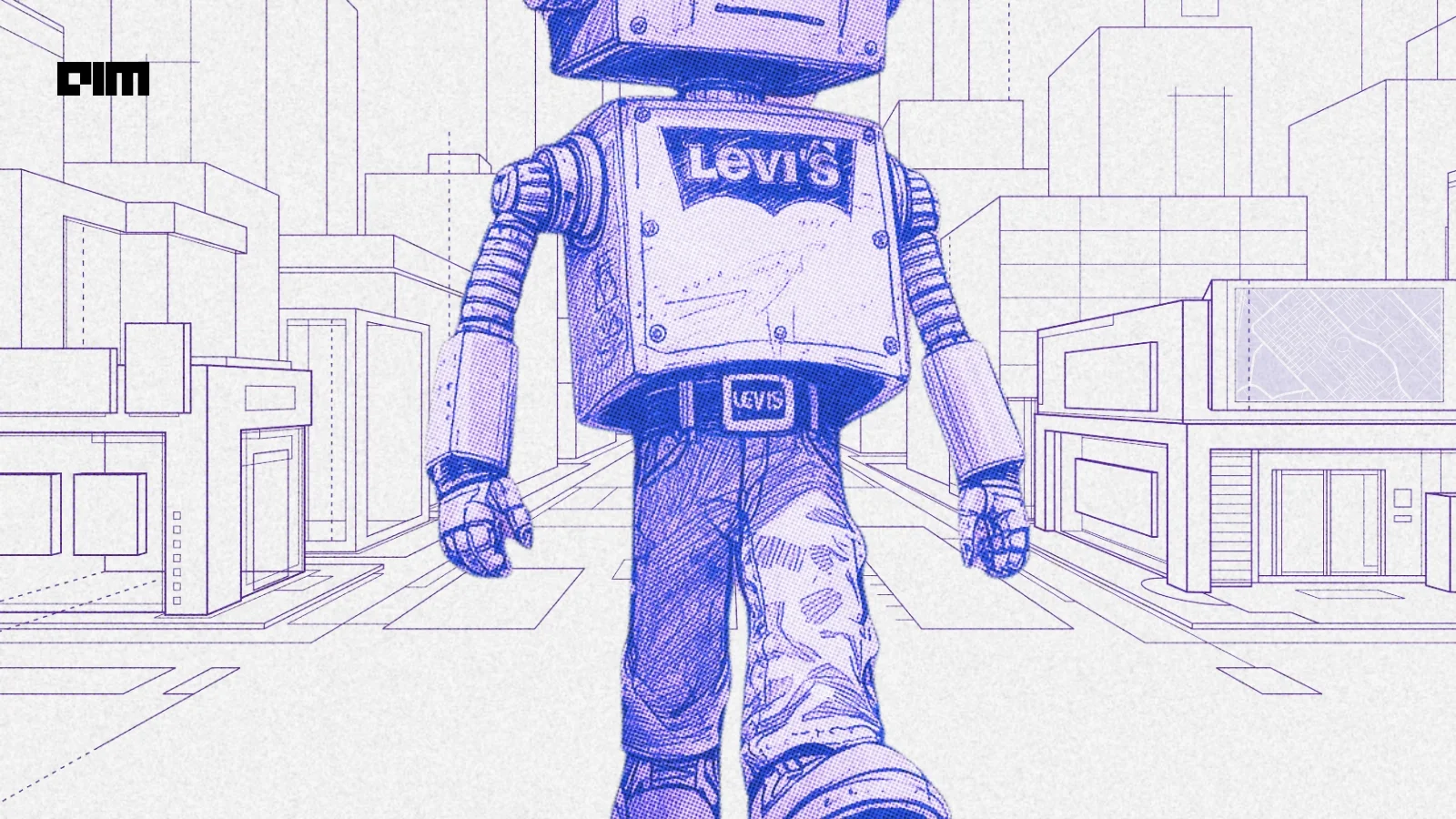
Levi Strauss & Co. just announced a partnership with Microsoft to develop an enterprise “super-agent” built on Azure and integrated into Microsoft Teams, designed to route employee questions to specialized sub-agents across functions including IT, HR and operations.
The rollout begins in early 2026. The initiative follows a year in which Levi’s introduced several AI systems across its stores, ecommerce operations and customer experience, including the STITCH store assistant, an AI-generated outfitting tool in the Levi’s app and new AI-based fraud-prevention capabilities.
Together, these projects show the company building a multi-layered AI infrastructure across its retail and digital operations.
The Enterprise Layer
The Microsoft partnership gives Levi’s a new Azure-native “orchestrator agent” embedded in Microsoft Teams that serves as a front door to multiple behind-the-scenes sub-agents covering IT, human resources, operations and more.
According to Levi’s, the platform is being built and tested now, with rollout scheduled in early 2026 and global expansion through the year.
Jason Gowans, Chief Digital & Technology Officer at Levi’s, said, “We’re rewiring Levi Strauss & Co. to be a DTC-first, fan-obsessed retailer making every interaction faster, smarter and more personal. AI sits at the center of that pivot, fueling innovation, elevating employee creativity, unlocking productivity and helping us deliver the connected, memorable experiences that keep our fans returning again and again.”
Under the hood, Levi’s is equipping its workforce with Microsoft Surface Copilot+ PCs, Windows 11 features (like the dedicated Copilot key), and using Microsoft Intune for zero-touch onboarding. The company is moving workloads from on-premises data-centres to Azure, deploying Azure AI Foundry and Semantic Kernel for intelligent automation, and building a zero-trust security posture as a foundation for this AI-driven architecture.
With that level of infrastructure investment Levi’s is shifting far beyond the incremental use of chatbots or analytics. The enterprise layer shows the company sees AI agents as the structural backbone of how work flows.
