

The marketing landscape has undergone a profound transformation over the decades, evolving from mass marketing strategies to highly personalized approaches. The concept of 'segmentation of one,' once a theoretical ideal in marketing, is now becoming a reality, thanks to the advent of generative AI. This article explores the journey towards this paradigm shift and its implications for businesses and consumers alike.
The Evolution of Market Segmentation
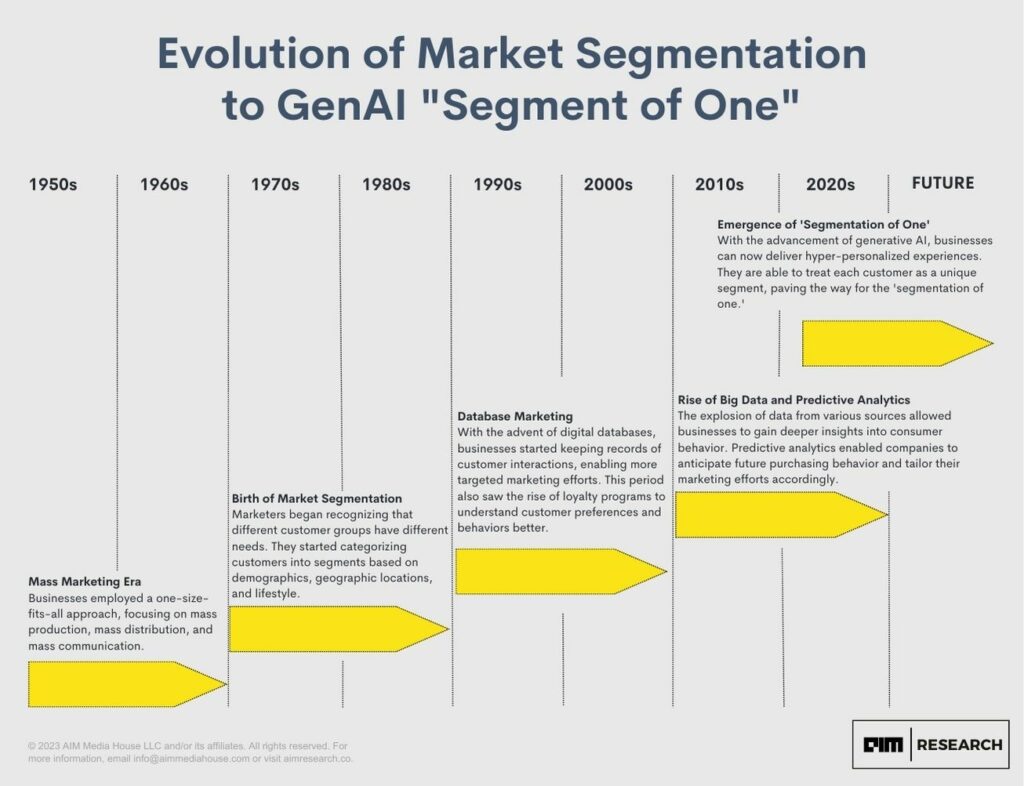
In the 1950s and 1960s, businesses employed a one-size-fits-all approach, focusing on mass production and communication. However, the inefficiencies of this method soon became apparent, leading to the birth of market segmentation in the 1970s. Marketers began categorizing customers based on demographics and geographic locations, a significant step towards personalization.
The 1980s and 1990s witnessed the rise of database marketing, with digital databases enabling more targeted marketing efforts. This period also saw the advent of loyalty programs, further refining customer understanding. However, these strategies still relied on broad categories, falling short of individualized marketing.
