



As artificial intelligence (AI) increasingly influences diverse aspects of society, establishing a robust framework for ethical and responsible AI governance is crucial. This framework should be built on foundational principles such as accountability, transparency and explainability, and fairness and non-discrimination. Accountability ensures that there are clear mechanisms for oversight and responsibility, making entities answerable for AI's decisions and impacts. Transparency and explainability advocate for AI processes that are understandable and accessible, fostering trust and facilitating system audits to prevent errors and biases. Fairness and non-discrimination are vital to prevent AI from reinforcing existing societal biases, ensuring equitable treatment for all individuals. These principles collectively guide the development and deployment of AI technologies in a manner that maximizes benefits while minimizing risks, promoting an ethical approach that aligns with societal values and norms.
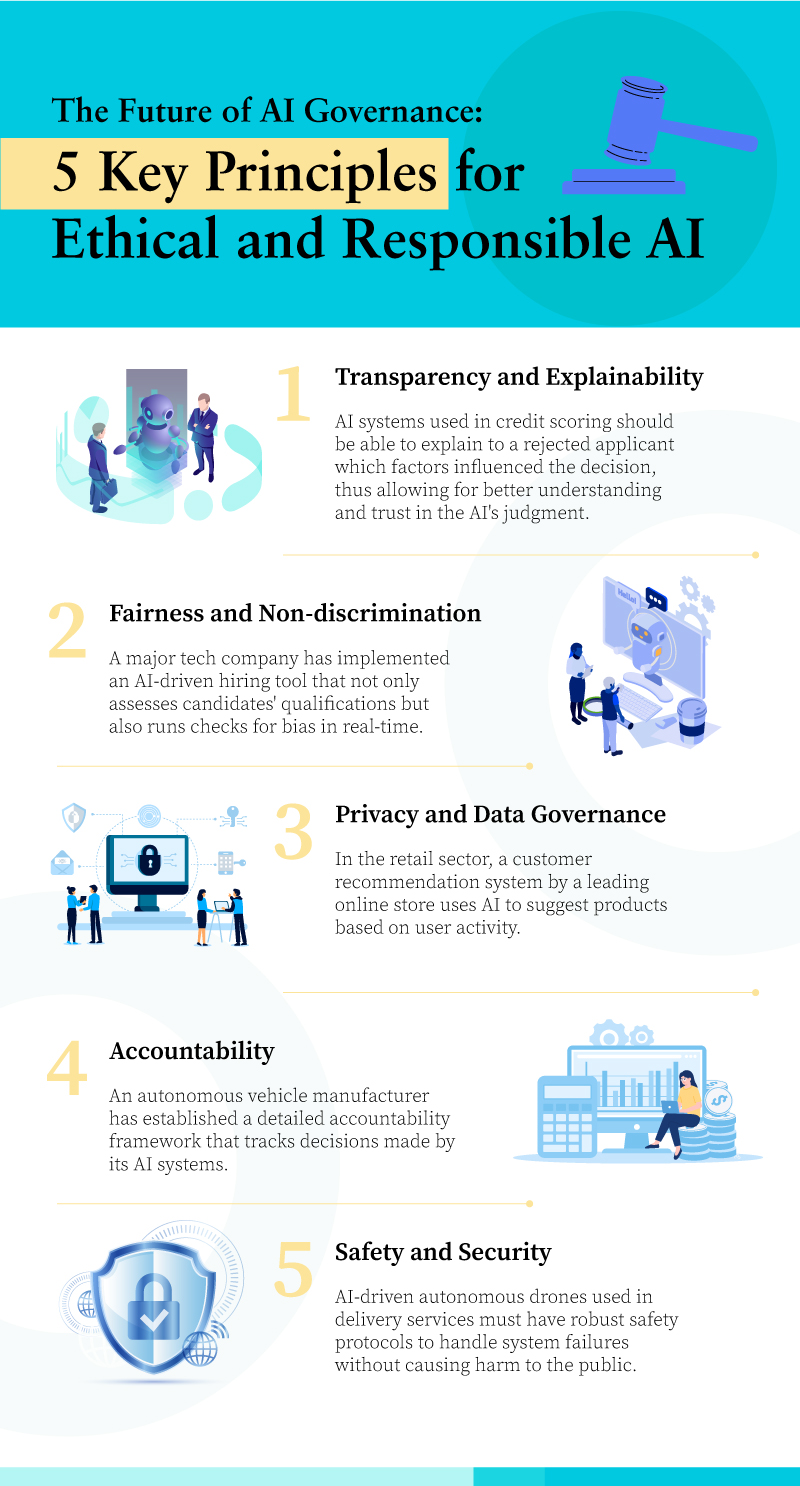
1. Transparency and Explainability
- What: AI systems should be open about how they operate and make decisions. This includes clear documentation of AI processes and the logic behind AI decisions.
- Why: Transparency builds trust with users and stakeholders by making AI operations understandable and scrutinizable.
