How did Decagon become a unicorn by listening?
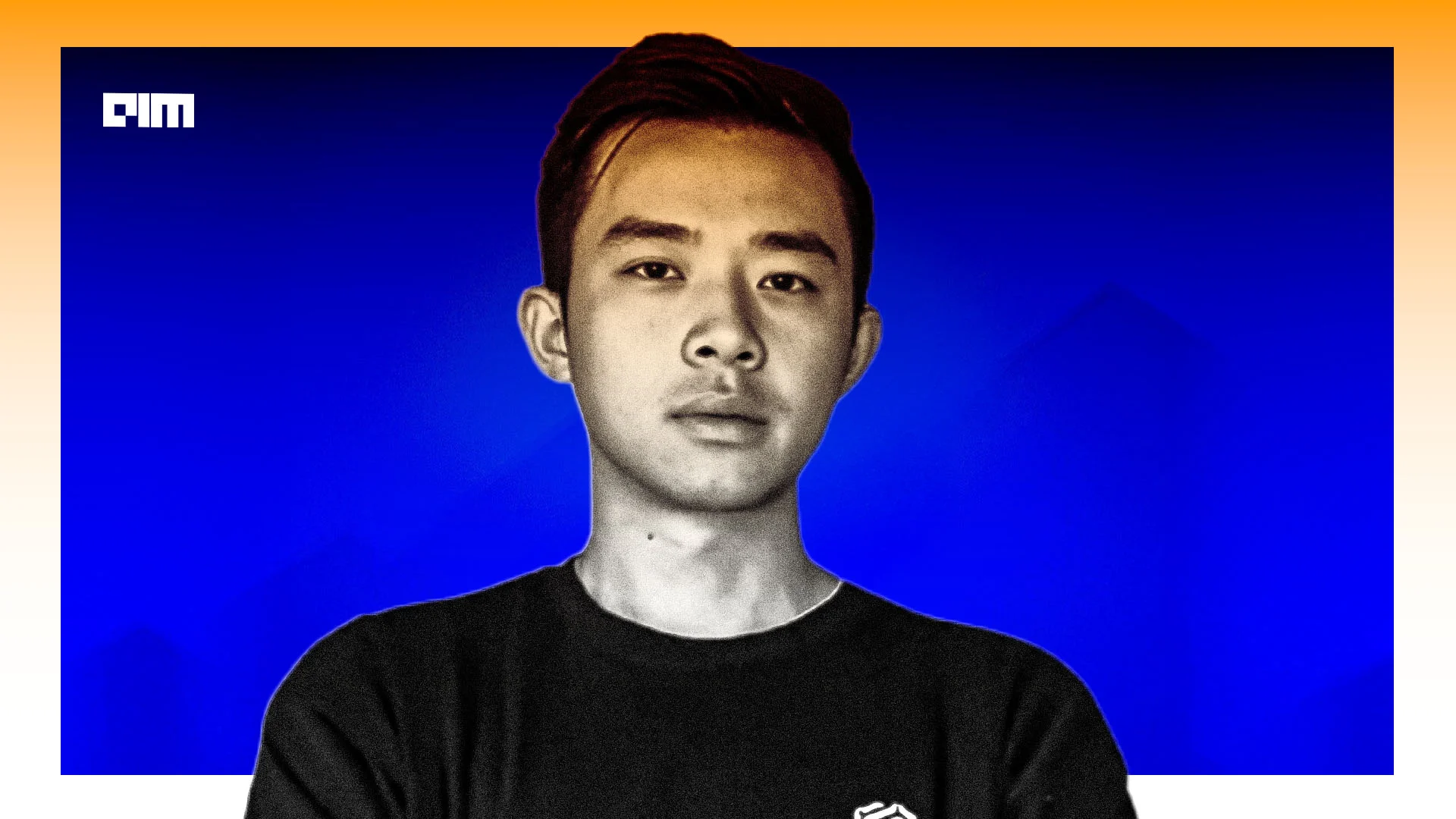
The AI agents are automating a lot of the more mundane things that honestly shouldn't require humans.
“You Just Have to Listen to Customers”
For Jesse Zhang and Ashwin Sreenivas, when they founded Decagon in 2023, the two had seen the same pattern play out across companies. Customer experience systems were rigid, resource-intensive, and no longer fit for the way businesses operate. Despite years of investment, customer support remained one of the least efficient functions in the enterprise stack.
The underlying problem was clear.
In an exclusive conversation with AIM Media House, Jesse Zhang laid out the disconnect he saw in the market. “Customer experience or customer support really is a very exciting category,” he said. When customer experience is asked about by an average person, seven out of ten responses would likely be negative and only three positive.
Zhang had seen those inefficiencies up close. His first company was a consumer app. A lot of customer support that was just done manually by me. All the systems had to be built by him manually. At the time, GenAI models weren’t widely available, so older forms of automation were relied upon. Through that process, empathy was developed, both for the support operation and the tooling required to make it successful.
That experience, combined with the arrival of GPT-4, shaped what Decagon would eventually become, an AI support platform built for speed, control, and end-to-end automation. “Simply put, we're an AI customer service agent,” Zhang said. Their whole vision is that in the future, any user of any product, any time is going to have a personal concierge there that they can talk to, respond instantly, and have access to all their data.
In under two years, Decagon has grown into a billion-dollar business or more better to say a Unicorn. In June 2025, it raised a $131 million Series C round at a $1.5 billion valuation, bringing total funding to $231 million. The round was co-led by Accel and Andreessen Horowitz, with participation from Bain, A*, Bond, Forerunner, Avra, and Ribbit Capital. Its AI agents now handle millions of customer interactions per month for enterprise clients across industries including Substack, Oura, Duolingo, and Bilt.
Building Around the Signal
In the early days of Decagon, Jesse Zhang and Ashwin Sreenivas didn’t start by writing code but they started by listening. The duo spent their first weeks in conversation with large enterprise stakeholders across industries, testing assumptions and collecting early signals.
“Let’s be very open-minded,” Zhang recalled. “Let’s be very attuned to the signals that we're getting from real customers.” Dozens of conversations followed, and a pattern quickly emerged that AI had broad potential, but customer support stood out. It wasn’t just a viable use case but the most obvious one. “The ROI was clear. The scale was massive,” Zhang said. “It made sense.”
The pair also found that while many in the market believed GenAI had promise in CX, the tools already available weren’t delivering on that potential. “At the time, we were just two people. No one knew about us,” Zhang said. And even then, they were getting serious interest. That was a signal that the existing solutions weren’t good enough.
Breaking from the SaaS Mold
Decagon’s early product strategy took a deliberate turn away from how most SaaS companies approached AI. “A lot of the traditional players are building AI solutions the same way they built their SaaS tools,” Zhang said. That, in his view, was the problem.
He pointed to Salesforce as a classic example while acknowledging being a very successful business. “But imagine I need a car. If I go to Salesforce, they’ll build me a car, but first, it’ll be built from scratch, and second, it’ll be built their way. You spend months of time, money, and specialized effort to get it up and running.”
Even once operational, the platform remained opaque. A car is received, but it can’t be driven easily because it has been built entirely using Salesforce’s custom configuration. And when something breaks, it must be returned to the vendor to be serviced, treated like a black box that only they are able to access.
The AOP Framework
Decagon’s counter-approach was built around what it calls Agent Operating Procedures (AOPs), a structured framework designed to mimic how human teams operate using SOPs. Unlike complex configuration interfaces or rules engines, AOPs can be written and updated in natural language. “The idea,” Zhang explained, “is to empower business users, not engineers to define how the AI behaves.”
The AOP model enables real-time updates, clearer governance, and embedded transparency. Decagon’s architecture includes five layers: the AI agent, a routing system to escalate to humans when needed, a QA system known as Watchtower, a layer for conversation-level analytics, and a recommendation engine that flags gaps or suggests new AOPs based on ticket patterns.
“If the system doesn’t know something, it should be able to recognize that,” Zhang said. “It should know, ‘Hey, I can’t help you with this—I need to escalate you to a specialist.’”
Over time, the AOP system is designed to evolve. The recommendation layer continuously feeds new insights back into the operating logic. “That’s the idea behind this engine,” Zhang added. “It’s reinforcing itself over time.”
Not Replacing People
“Anytime there is any level of technology shift or technology improvement, there will be some shift in the work that humans do. And almost every time, it is a positive shift.”
Zhang is measured when addressing concerns about AI-driven job displacement. At Decagon’s customer sites, that evolution is already underway. “The AI agents are automating a lot of the more mundane things that honestly shouldn't require humans,” he said.
Rather than eliminating jobs, many companies are restructuring them. Customer service teams are retraining into AI-native roles, with Decagon offering a formal program called Decagon University to support the transition. The program is designed to help business users and not engineers become fluent in agent oversight and optimization. “A lot of them maybe were CS managers in the past,” Zhang said, “and now their titles are akin to AI architects, people that are owning the AI agent and making sure it's constantly improving.”
The shift is already visible in day-to-day operations. Tasks previously classified as Tier-1, basic support queries are increasingly handled without human input. Agents, Zhang explained, are now focusing on “tier-two, tier-three harder questions” or transitioning into more strategic customer-facing roles like relationship management or sales.
Across industries, Decagon’s success metrics have remained consistent, with accuracy forming the baseline. AI agents are expected to deliver responses that match the tone and precision of a company’s best human representatives. “We have to make sure your accuracy is high,” Zhang said, emphasizing that agents should respond only to queries they’re trained to handle and do so reliably. Beyond accuracy, enterprises focus on deflection and satisfaction, two KPIs that Decagon emphasizes in every deployment.
Scaling with Discipline
Decagon has raised $231 million to date, most recently through an oversubscribed Series C round co-led by Accel and Andreessen Horowitz. The funding, according to Zhang, is being directed toward both product development and go-to-market expansion. R&D remains a core focus, though Zhang noted that team growth could also include strategic acqui-hires. “The reason to raise funding is that you want to accelerate,” he said.
In under two years, the company has scaled from zero to eight-figure annual recurring revenue and quadrupled its customer base. Investors have pointed to the company’s execution and customer-centric design as differentiators. Accel’s Ivan Zhou cited its “relentless focus on customer outcomes and differentiated approach to human-agent collaboration” as key reasons for backing the team.
While North America remains its home market, Decagon has built a strong presence across Europe, where customer use cases have proven largely similar. “That’s where the focus is right now,” Zhang said, leaving open the possibility of broader geographic expansion.
Internally, the company has remained anchored to the culture that shaped its earliest momentum. Zhang described a deliberate emphasis on office-based collaboration during the company’s formative stage. “There’s so much communication and the pace at which you can move is a lot faster,” he said. A second office has since opened in New York, but the leadership team continues to emphasize pace, trust, and team autonomy. “You have to meet your customers where they are,” Zhang added. “It’s harder for Ashwin and I to spend time with every single person now, so we’ve had to think hard about how to scale that culture.”
Shipping and Speed
Product velocity has remained a consistent priority. The company recently launched a voice agent and continues to expand its AOP infrastructure. It is also extending coverage across traditional service channels, email, SMS, phone and investing in analytics, observability tools, and performance guardrails.
Hiring remains active, but targeted. When asked what defines a strong candidate for the team, Zhang pointed to a shared value: pace. “We talk about clock speed,” he said, referencing how quickly someone can move, learn, and adapt. “People join because they want to work hard. They opt into an environment where they know they’re going to get a lot of career growth.”
Through all stages of growth, the company’s idea has remained unchanged.
“You just have to listen to customers.”
Key Takeaways
- Identify customer pain points: Decagon achieved unicorn status by addressing the inefficiencies in traditional customer support.
- Leverage AI for automation: The company utilizes AI agents to automate mundane tasks, freeing human resources for complex issues.
- Prioritize customer experience: Decagon's vision is to provide instant, personalized AI concierges for every user.
- Listen to customer feedback: The founders' personal experiences with customer support informed Decagon's development.