 Manufacturing
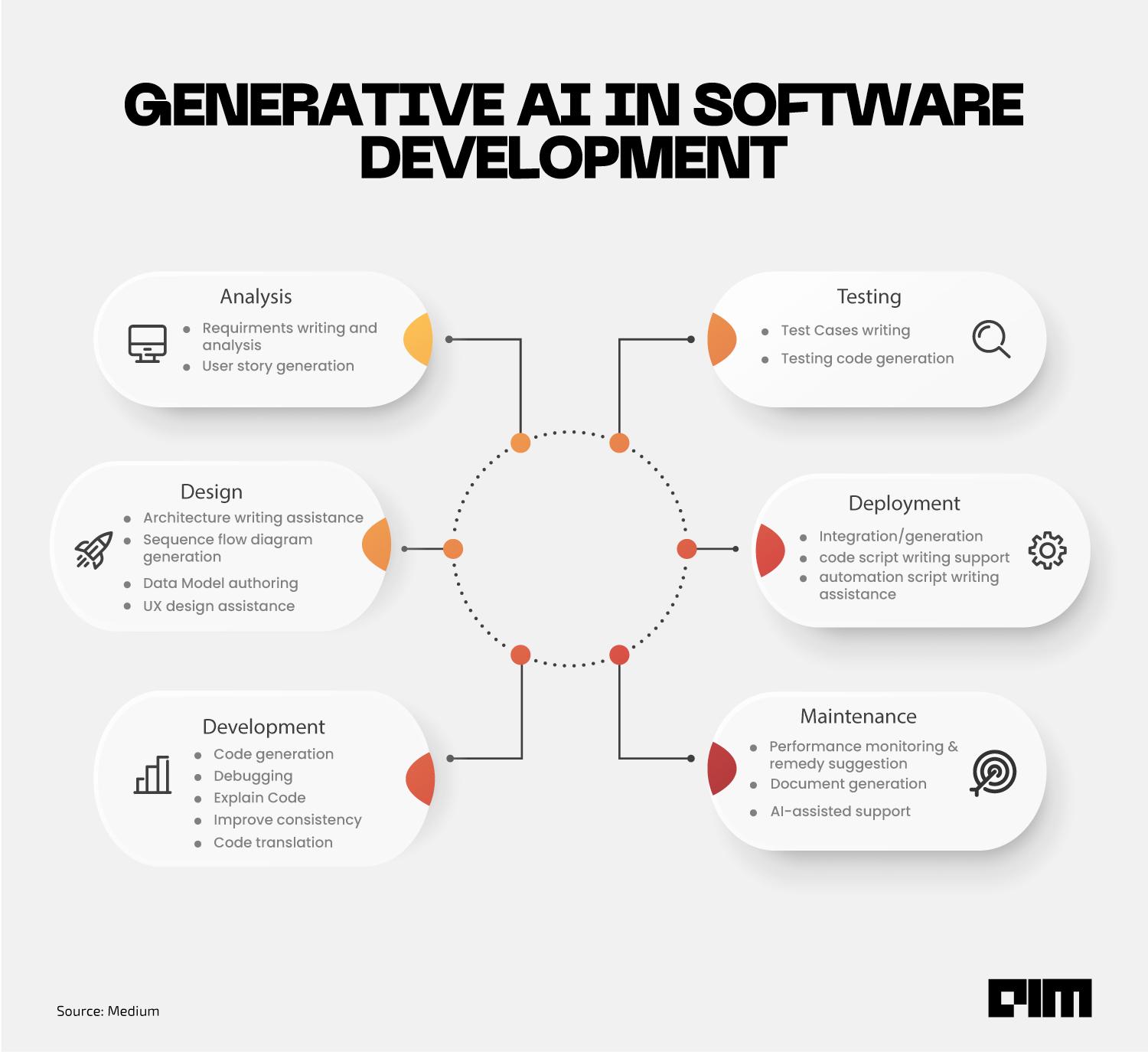
In an era where technology evolves at an unprecedented pace, Generative AI emerges as a beacon of innovation, particularly in the realm of software development. Before delving into the transformative impact of GenAI, it's essential to understand the Software Development Life Cycle (SDLC). The SDLC is a systematic process used for developing software that ensures quality and correctness. It encompasses several phases: Planning, Analysis, Design, Implementation, Testing, Deployment, and Maintenance, guiding the software from conception to completion.
GenAI is not just altering the landscape; it's fundamentally revolutionizing how we approach the initial stages of software creation. From conceptualization to prototype, GenAI is reshaping the very fabric of planning and design in software projects. Let's explore this transformative journey and how it's setting the stage for a future where imagination meets instant realization.
Deep Dive into Gen AI in Software Development
Generative AI stands out by its ability to create new, original content, learning from extensive datasets. This marks a departure from traditional AI's reactive nature, offering proactive creation capabilities instead. In software development, GenAI ushers in a new age of automation and creativity, enabling the generation of code, design elements, and even project planning from minimal input. This technology blurs the line between conceptualization and creation, making it a pivotal tool in modern software development