

 Manufacturing

Scout AI didn’t begin with the usual startup pitch deck or consumer-facing app. It began with a conviction that future military strength won’t be measured solely by troops or machines, but by how effectively humans and intelligent systems operate as a team. That idea, formed by founders Colby Adcock and Collin Otis, took shape in August 2023 and has now emerged in public view with $15 million in seed funding and a defense-first artificial intelligence model they’ve named Fury.
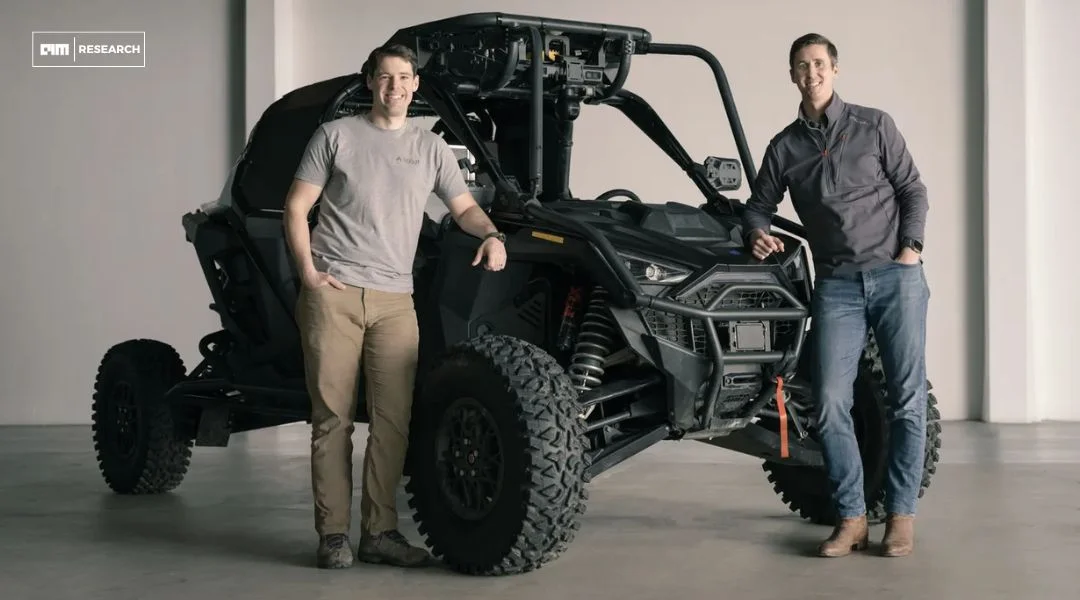
Based in Sunnyvale, California, Scout AI is building what it calls the robotic foundation model for defense not just smarter drones or vehicles, but AI that can think, interpret, and act like a soldier. At the heart of its work is Fury, a Vision-Language-Action (VLA) model engineered to perceive the real world, understand natural language instructions, and issue motor commands to robotic platforms. The model is already powering Scout’s own autonomous ground and aerial vehicle prototypes the G01 and A01 at a testing site in the Santa Cruz Mountains. Both systems are operating autonomously and designed to function in the types of high-stakes, low-connectivity environments common in modern warfare.
Scout’s approach isn’t just about building new machines. It’s about upgrading existing ones. The company has developed Fury to be modular and hardware-agnostic, capable of running on commercial off-the-shelf components. According to Otis, this enables rapid integration across a wide range of robotic systems air, land, sea, or space without requiring custom hardware. In essence, Scout aims to make the robots the military already has significantly more capable.
