



Enterprise AI, in production.
    Four desks, one beat.

    The Evolution of AI Architecture: From Traditional Machine Learning to Generative AI

    ManufacturingNews

    The Evolution of AI Architecture: From Traditional Machine Learning to Generative AI

    The evolution from traditional Machine Learning to Generative AI represents a significant shift in AI architecture, accompanied by changes in tech stack and a growing emphasis on AI governance and dialog interfaces.

    Last updated

    The architecture of Artificial Intelligence (AI) has been evolving rapidly, with the rise of Generative AI marking a significant shift from traditional Machine Learning (ML) approaches. This article explores the key differences between these two architectures and the evolving tech stack that supports them.
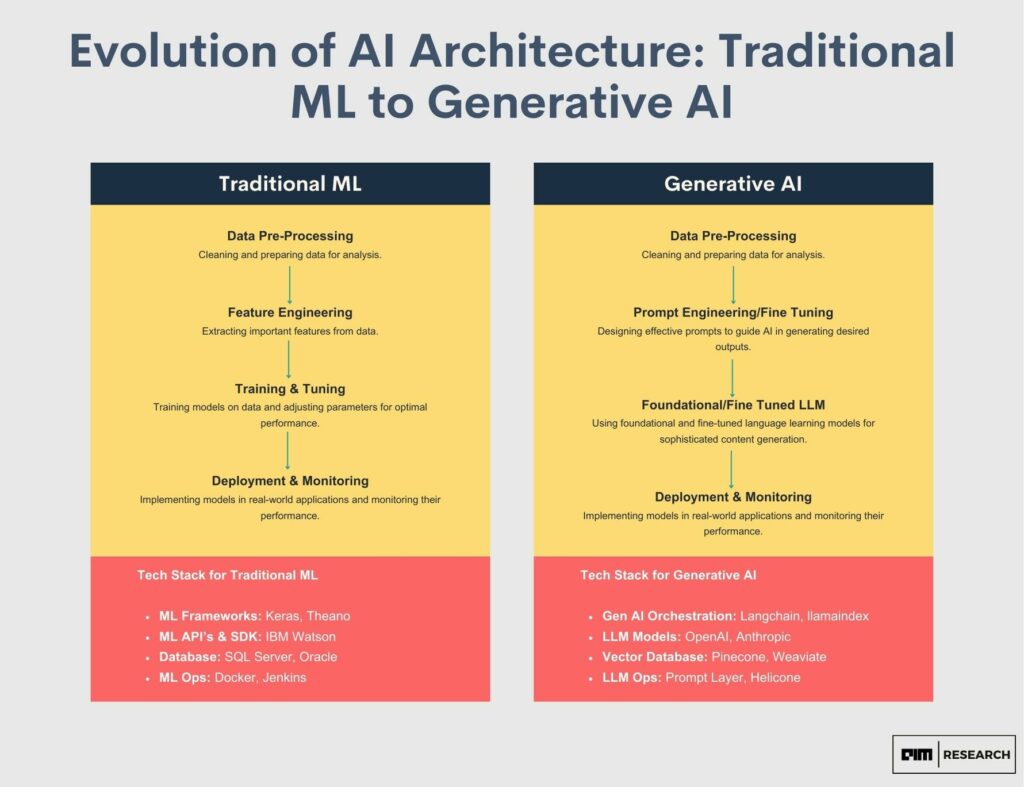
    Traditional ML vs. Generative AI

    Traditional ML involves a series of steps including data pre-processing, feature engineering, training & tuning, and deployment & monitoring. The primary focus is on extracting meaningful features from the data, training models to learn from these features, and tuning these models for optimal performance.

    Generative AI, on the other hand, involves data pre-processing, prompt engineering/fine-tuning, foundational/fine-tuned language learning models (LLM), and deployment & monitoring. The emphasis shifts from feature engineering to prompt engineering, where the focus is on designing effective prompts that guide the AI in generating desired outputs. The use of foundational and fine-tuned LLMs allows for more sophisticated generation of content.

    by AIM Media HouseFree · No paywall

    Keep reading. It's free.

    Create a free Deployed account to finish this story and every story on the site. Choose the briefings you want with it:

    or

    No credit card. One click to unsubscribe. Already a reader? Sign in

    About the author

    Deployed

    Related stories