


 Manufacturing
A recent graph circulating on LinkedIn shows major tech giants slashing software engineering headcount at rates that would terrify any fresh CS graduate. Instantly, fingers flew to AI automation as the culprit. But this narrative—AI devouring entry-level jobs—is a convenient red herring. In reality, these companies over-extended themselves in 2021–22, carrying massive R&D payrolls that never translated into proportional ROI. When macroeconomic headwinds hit, the first to go were the thousands of brand-new grads deemed “non-critical.” Blaming AI masks the real issues: reckless expansion, bloated bureaucracy, and short-sighted management.
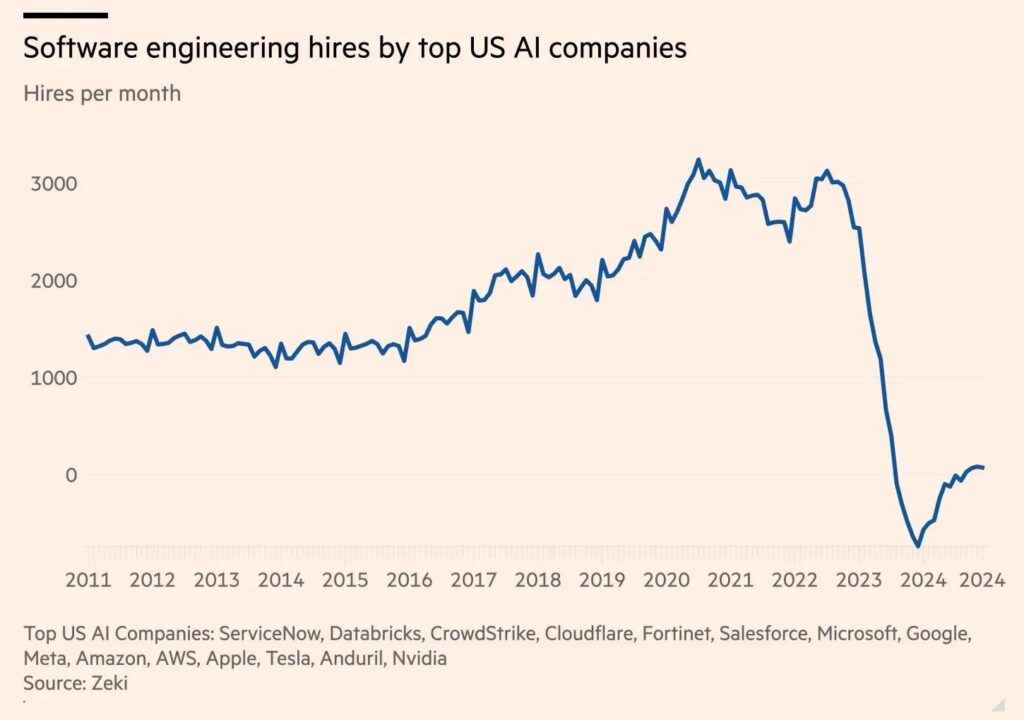
The AI Scapegoat: Easy, But Misleading
Anyone scrolling through Twitter or LinkedIn these days will see the same refrain: AI is stealing all the junior developer jobs. Yes, code-writing models like Cursor, Copilot, and ChatGPT have emerged in the past year, but they are far from replacing human engineers at scale. Cursor’s release was barely a year ago—hardly enough time to hollow out an entire generation of entry-level roles. Furthermore, AI tools still struggle with context, architecture, and complex debugging. They can automate boilerplate, but a junior engineer’s real value often lies in domain knowledge, teamwork, and learning adaptability—areas where AI is still years away from parity.
Yet the “AI killed my job” narrative thrives because it offers a neat storyline: shiny new technology arrives, and the old guard falls. It absolves executives of accountability, allowing them to wave away legitimate concerns about poor financial discipline. Citing AI as the cause of job cuts becomes a PR shield against criticism. But if you look beyond the headlines, you’ll find bigger culprits: aggressive hiring during low-interest rates, massive R&D teams absorbing capital with no tangible output, and a sudden pivot when markets tightened in 2023–24.
