



Enterprise AI, in production.
    Four desks, one beat.

    PharmaNews

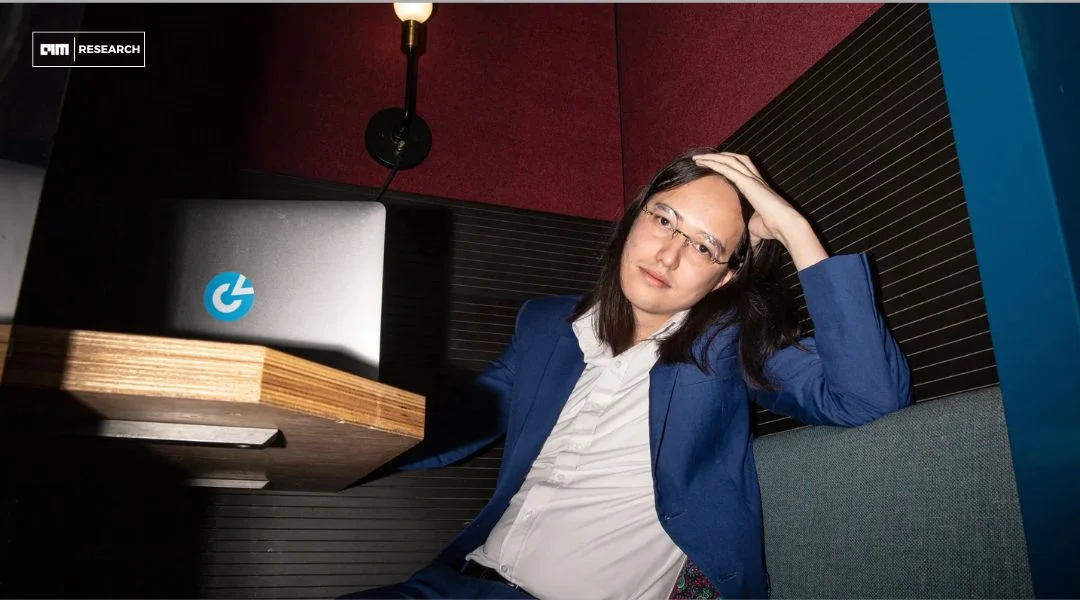
    30 Billion Faces Later Hoan Ton-That Is Out

    Now, years after his invention captured headlines and lawsuits, Hoan Ton-That is out at the company he founded.

    Last updated

    30 Billion Faces Later Hoan Ton-That Is Out

    Hoan Ton-That started out creating quirky apps, one let users slap Donald Trump’s signature hair onto selfies, another helped share videos through instant messenger. But those digital oddities were just the prelude to something far more consequential and controversial.

    In 2017, the Australian coder-turned-entrepreneur quietly co-founded Clearview AI, a company whose facial recognition software would soon redraw the lines of privacy and surveillance in the digital age. Clearview’s technology lets users upload a photo of any person and instantly uncover publicly available images of that individual scraped from Facebook, YouTube, Venmo, and millions of websites along with links to their online profiles.

    What makes Clearview’s tool so potent is the scale. With a claimed database of over 30 billion faces, it far outstripped anything built by the U.S. government or Silicon Valley’s largest firms. It also crossed boundaries those companies have long avoided: Google once shelved similar capabilities, warning they could be “used in a very bad way.”

    The AI behind Clearview is built on deep convolutional neural networks (CNNs), similar in architecture to what powers systems like FaceNet and DeepFace. The company trains its models on billions of publicly scraped images to generate facial embeddings, a kind of mathematical signature of a person’s face. When a user uploads a new photo, Clearview converts it into an embedding and compares it against its entire database using similarity metrics like cosine distance. This enables the system to return a ranked list of matching faces within seconds, even if the person’s image only ever appeared once online. The sheer size of the dataset gives it a matching accuracy that the company claims can reach 75%, though critics warn that independent benchmarking has been limited or absent.

    by AIM Media HouseFree · No paywall

    Keep reading. It's free.

    Create a free Deployed account to finish this story and every story on the site. Choose the briefings you want with it:

    or

    No credit card. One click to unsubscribe. Already a reader? Sign in

    About the author

    Anshika Mathews

    Anshika is the Global Media Lead for AIM Media House. She holds a keen interest in technology and related policy-making and its impact on society.

    Related stories