
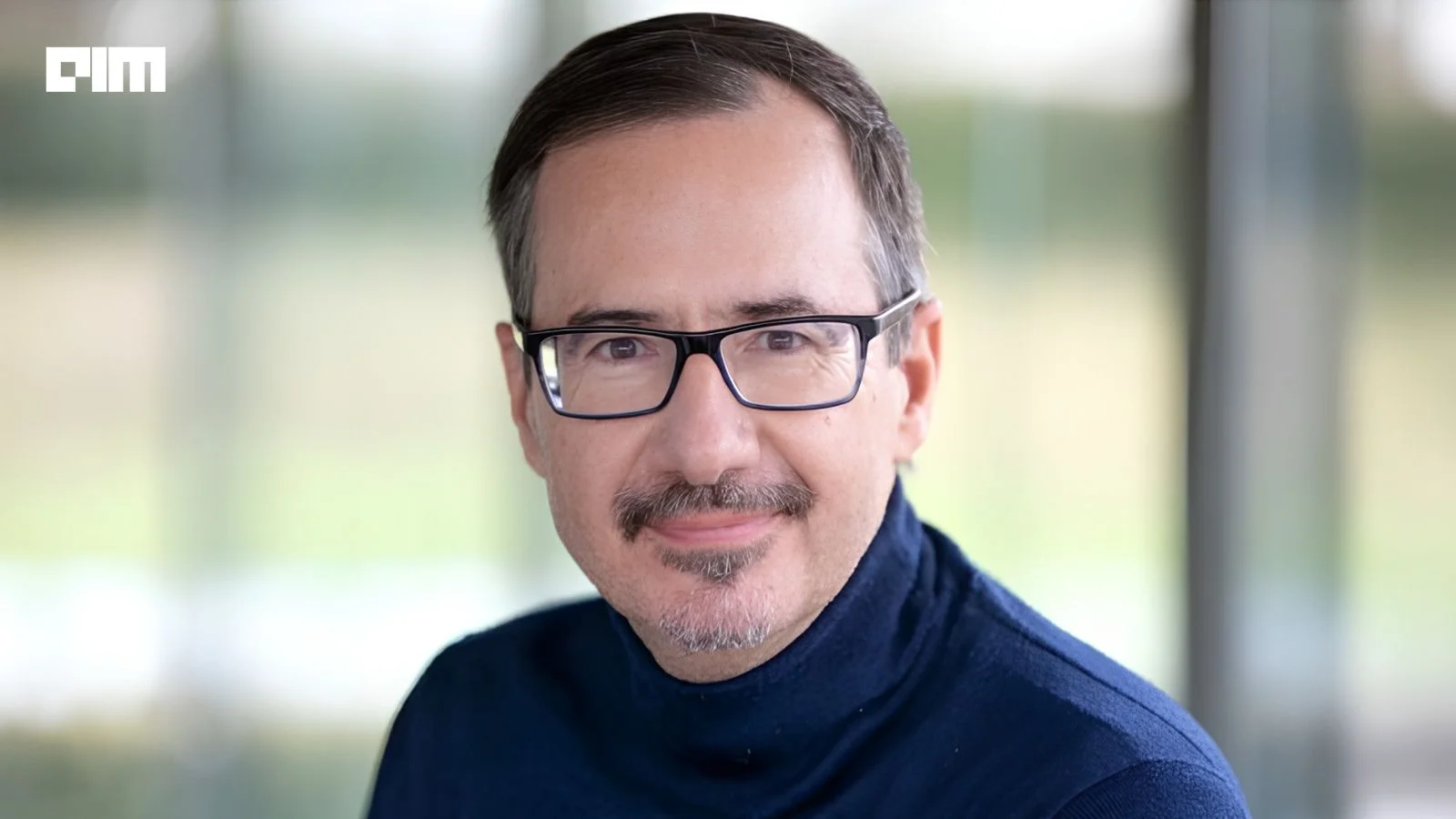
Alessandro De Luca has been watching AI move through Merck Group for nearly a decade. As Head of Digital Enterprise Solutions and Group CIO, he was talking about self-driving supply chains in 2016, when most pharmaceutical companies were still debating whether to invest in basic automation.
Ten years later, he has a clear-eyed view of what actually proved hard.
"Looking back I would say that convincing humans to trust autonomous supply-chain decisions was harder than teaching machines to decide," De Luca told AIM Media House. "The biggest obstacles were explainability, accountability, governance, risk management, and organizational change." The machines, he says, improved quickly. The people took longer.
The Governance Gap Behind Pilot Failures
The observation speaks directly to one of the most documented problems in enterprise AI: the gap between what AI systems can do in a controlled pilot and what they actually deliver when embedded in daily operations.
"AI has fallen short when initiatives were driven by hype rather than clear business need. Poor data quality, weak process readiness, limited governance, and low user adoption can prevent even accurate models from creating value," De Luca said.
Merck's response was to treat AI not as a technology project but as a business transformation agenda. That meant assembling cross-functional teams of business leaders, IT, data scientists, compliance staff, and domain experts around outcomes that could actually be measured.
"The biggest shift was cultural," De Luca says. "Scaling AI depends on trust, business ownership, and accountability for outcomes."
Where Merck Is Actually Seeing Returns
On the question of where AI has delivered real value, De Luca is specific. Demand forecasting, inventory optimization, predictive maintenance, quality control, and clinical documentation are the areas he names as producing measurable gains in productivity, cycle time, and service levels.
They are problems with well-defined parameters, strong underlying data, and outcomes that can be tracked directly against business metrics.
The company's SMARTfacturing platform sits at the center of this effort. Built around AI-driven scenario simulation, predictive analytics, real-time monitoring, and decision support, the platform is designed to make manufacturing operations more responsive and supply chains more resilient.
The Bengaluru capability center plays a central role in building and scaling these systems across Merck's Life Science, Healthcare, and Electronics business sectors.
On how Merck measures returns, De Luca draws a clear line between use case types. Manufacturing and supply chain ROI is tracked through cycle time, yield, forecast accuracy, inventory optimization, schedule adherence, and waste reduction.
For customer-facing AI, the metrics shift to engagement, response times, personalization, conversion rates, and field-force productivity.
"Every AI initiative must be linked to a specific business outcome or to support a workflow," he says. "If we cannot clearly identify what decision is being improved, who is using it, and which metric is changing, then it remains an experiment rather than a proven source of ROI."
India as AI Powerhouse, Not Back Office
"India is our AI powerhouse," De Luca told AIM media House, describing the Merck Global Capability Center in Bengaluru not as a support function but as a driver of both AI innovation and AI standardization.
The shift he describes is specific: the center has moved from delivering services to owning products, developing digital platforms, enterprise solutions, and AI-powered tools that shape how the broader company operates.
One concrete example is myGPT, an internally developed generative AI tool that De Luca holds up as a case study in responsible local innovation with global reach. Another is the Ignite AI hackathon program, which is led out of India but runs simultaneously in Germany, the United States, and other markets.
The model gives Bengaluru teams the authority to define problems and drive solutions while connecting to a global innovation framework.
De Luca is also investing in a GoGlobal Trainee Program for Data and AI, a rotational initiative between India and Germany that involves collaboration with Indian universities and is designed to move early talent through both markets, building capability at the intersection of science and technology.
The Drug Discovery Question
De Luca believes AI will deliver more visible and measurable impact in manufacturing, supply chain, and delivery over the next five years than in drug discovery, even though he considers drug discovery's long-term potential to be transformative.
The reasoning is practical: manufacturing applications operate in environments where outcomes can be measured quickly. Drug discovery does not.
"The journey from discovery to an approved medicine remains long, complex, and scientifically rigorous, which means the full impact will take longer to materialize," De Luca said.
The caution reflects something broader in De Luca's approach to AI. After a decade of watching technology outpace the organizational readiness to absorb it, he is not inclined to let the next cycle of excitement get ahead of governance.
"Every AI initiative must be linked to a specific business outcome or to support a workflow," he says. "If we cannot clearly identify what decision is being improved, who is using it, and which metric is changing, then it remains an experiment rather than a proven source of ROI."