 Pharma

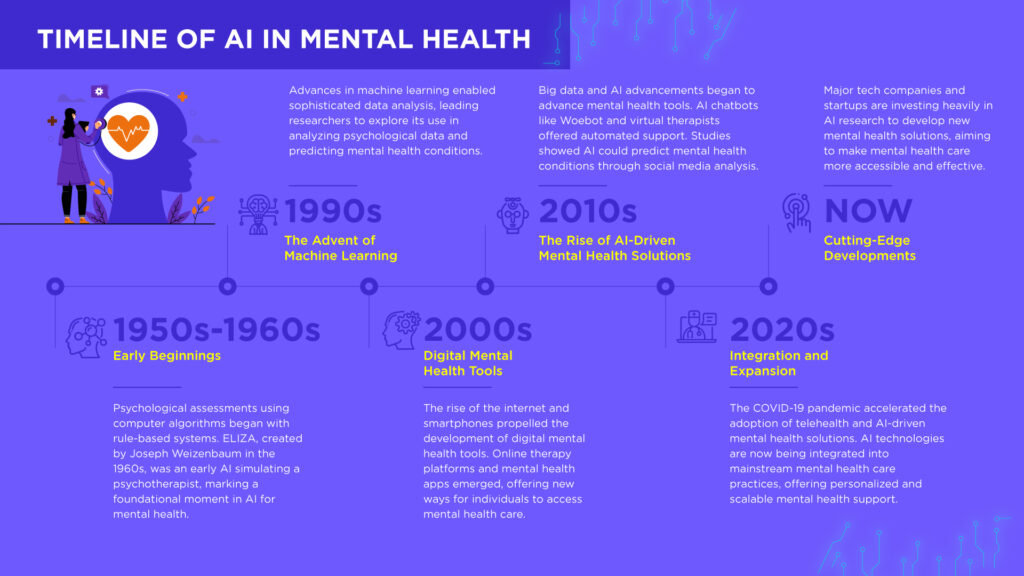
In recent years, technology has profoundly reshaped various sectors, and mental health care is no exception. The COVID-19 pandemic significantly accelerated the transition from traditional in-person therapy sessions to digital platforms. Today, artificial intelligence (AI) stands at the forefront of this digital transformation, poised to revolutionize mental health care even further.
The AI in mental health market was valued at $921.53 million in 2023 and is expected to grow to $10,334.09 million by 2032, with a CAGR of 30.8%. This rapid growth is driven by effective AI-based treatment solutions, predictions, and detections. Advances in natural language processing, machine learning, and predictive analytics have improved AI tools for mental health, further boosting the market.
In December 2023, MedByte launched Mia, a chatbot designed to diagnose and care for mental health risks. It is expected to benefit 50.8% of Colombians who have experienced mental health disorders. North America leads the market due to high healthcare spending, rising mental disorder cases, and significant R&D investments.
AI is enhancing mental health services by providing innovative ways to diagnose, treat, and support individuals. AI-driven tools can analyze speech patterns, detect emotional cues, and provide real-time feedback, making mental health care more personalized and efficient. With AI, mental health professionals can reach a broader audience, offering support and treatment to those who might not have had access otherwise. The potential for improved outcomes and greater accessibility is significant.