

Enterprise AI, in production.
    Four desks, one beat.

    PharmaOpinion

    Council Post: Amplifying Pharmaceuticals with AI: Unleashing Precision from Molecule to Medicine

    AI and machine learning continue to drive innovation in drug discovery, manufacturing, and personalized treatments. As these AI tools become more accessible and interpretable over the years, they will become part of the natural process within the pharmaceutical industry.

    Last updated

    Council Post: Amplifying Pharmaceuticals with AI: Unleashing Precision from Molecule to Medicine

    Today, we live in an “Age of With” where it is not a survival competition against AI but rather a collaboration to elevate human endeavors. AI has generated considerable buzz in the pharmaceutical sector over the past years, and the recent surge in interest around generative AI (ChatGPT) is intensifying discussions even further. Presently, there exists a divergence in perspectives, with some expressing enthusiasm for its potential, while others exhibit caution—this divergence is normal and quite expected. After all, AI have been supporting various sectors in the pharmaceutical world differently.
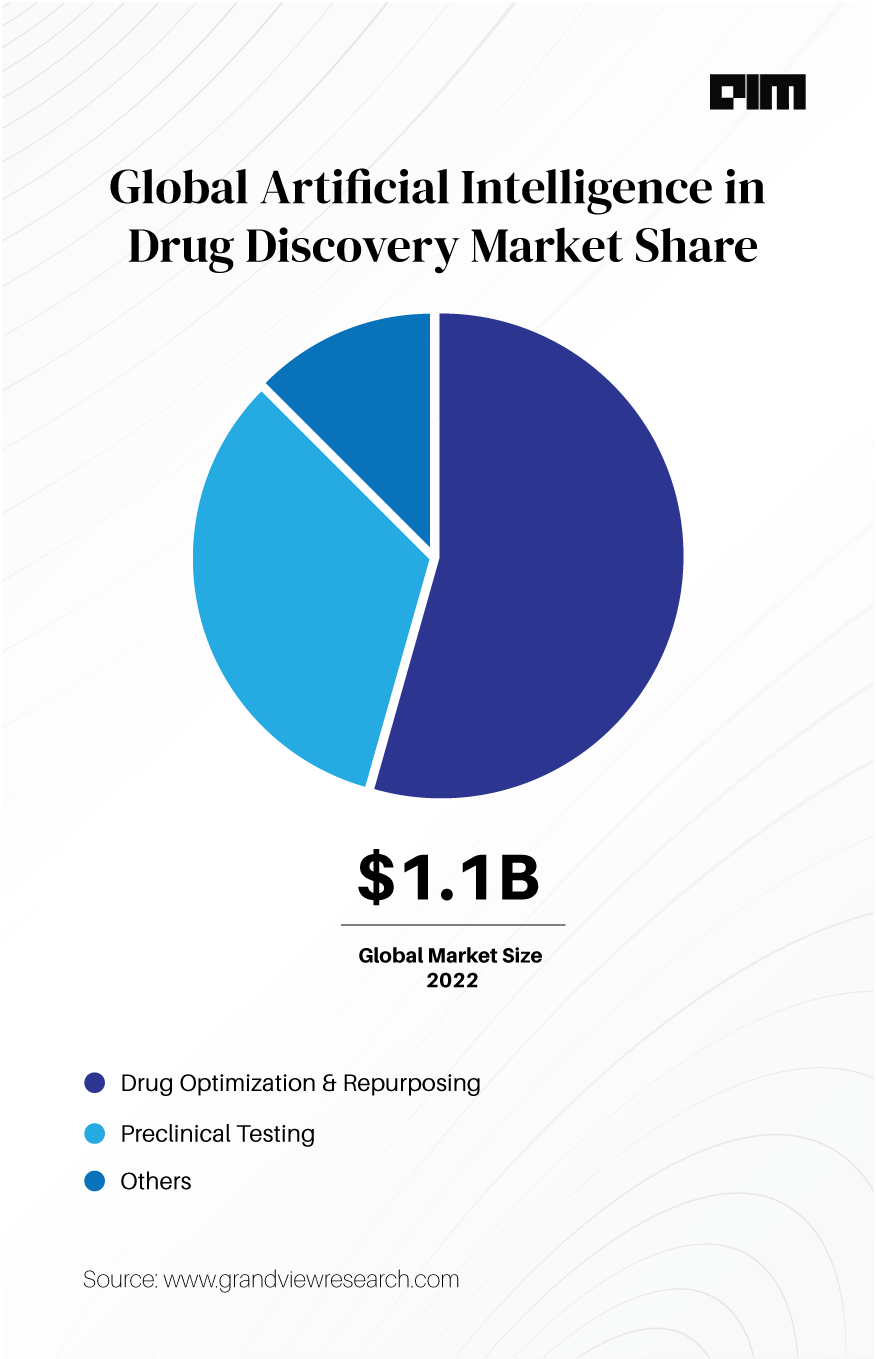
    A blue pie chart on a gray background

Description automatically generated

    AI Transforming the Pharmaceutical Industry

    The pharmaceutical industry is witnessing the steady integration of artificial intelligence (AI) across various domains, including drug development, operations, and marketing. Projections indicate that the AI market in the pharmaceutical sector is set to reach $10 billion by 2024. This encompasses a spectrum of AI applications, ranging from accelerated drug discovery and design, to supply chain management optimization to revolutionizing personalized medicine.

    AI's impact on the biopharmaceutical sector is multifaceted:

    Drug Discovery and Design

    AI plays a pivotal role in drug discovery and design, from creating new molecules to identifying novel biological targets. Its involvement spans target identification and validation, target-based and phenotypic drug discovery, drug repurposing, and biomarker identification. Leveraging AI during drug trials can significantly reduce timelines to bring essential and innovative medicine to a much needing patient population, translating into improving and extending patient’s lives. This also has a significant impact on overall drug discovery costs, which results in lower retail drug prices that improve patient access to treatment. A great example is how Pfizer was able to expedite early stages of drug research by using the IBM Watson for Drug Discovery initiative, where it leverages the use of natural language processing (NLP) techniques to analyze vast volumes of scientific literature, clinical trials data, and research papers and extract crucial insights, and generate hypotheses for potential drug candidates.

    by AIM Media HouseFree · No paywall

    Keep reading. It's free.

    Create a free Deployed account to finish this story and every story on the site. Choose the briefings you want with it:

    or

    No credit card. One click to unsubscribe. Already a reader? Sign in

    About the author

    Deployed

    Related stories