

 Pharma

The growing significance and widespread adoption of AI have raised concerns among researchers and healthcare practitioners regarding the lack of transparency and responsibility in various aspects, from data acquisition to implementing algorithms in the field. However, much of the research in this area has been conducted within Western and European contexts. This is problematic because AI-based systems are highly influenced by the context in which they are deployed. As a result, many non-Western scholars find that much of the existing research on using AI-based systems in the public sector is not directly relevant to their contexts.
AI/ML-enabled Medical Devices with Governance
Implement robust regulatory frameworks for AI/ML-enabled medical devices; strong data privacy and security measures must be incorporated to protect patient confidentiality and prevent data breaches. These frameworks should also address the need for fair and unbiased algorithms, promoting transparency and explainability to ensure that healthcare providers and patients can understand and trust the AI system’s decisions. Regulatory bodies are essential for the safe and responsible use of these devices by clarifying the responsibilities of manufacturers and healthcare providers. Additionally, adherence to interoperability standards is crucial for seamless integration into healthcare systems. Governance frameworks should promote the development and adoption of these standards. Education and training for healthcare professionals are also critical, with governance frameworks including provisions for ongoing education to ensure the effective use of AI/ML-enabled medical devices and improve patient care. Regulatory bodies such as the FDA in the United States and the EMA in Europe are actively working to develop guidelines for approving and monitoring these devices.
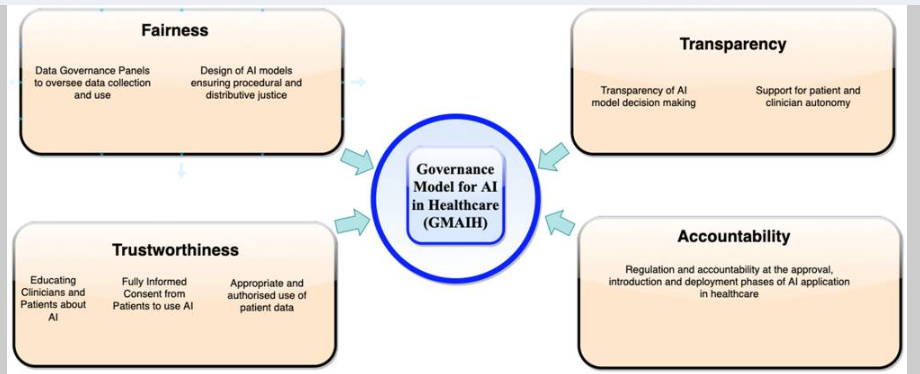
Image Source: nih.gov
