

 Pharma

Deployment record
In the tracker →- Organisation
- Ro
- System
- Robin
- Stage
- Live
- Function
- health agent
- 01Ro has introduced Robin, an AI health agent integrated into its telehealth app, which utilizes patient data such as prescriptions, lab orders, and side effects.
- 02Robin aims to streamline communication between patients and providers by drafting summaries of reported side effects for clinician review.
- 03The AI agent operates under Ro's Acceptable Use Policy, which states it provides general educational information but does not diagnose or prescribe treatments.
Show all 5Show less
- 04Ro's business model includes telehealth, lab testing, and pharmacy fulfillment, with a focus on retaining more patient care within its platform.
- 05The effectiveness and safety of Robin will be evaluated through outcome data, as Ro has previously demonstrated credibility with its obesity treatment study.
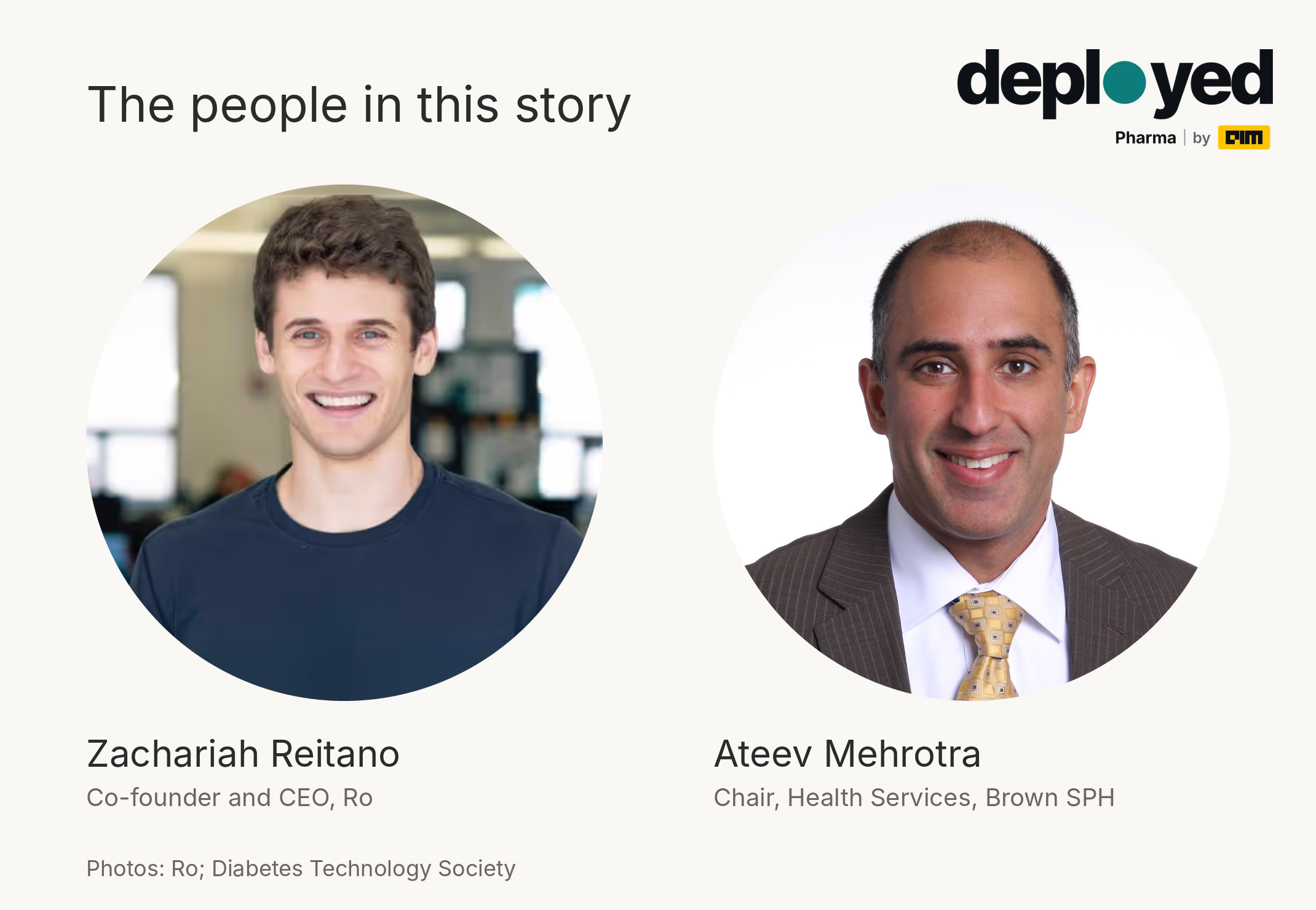
On 29 October, Ro co-founder and CEO Zachariah Reitano introduced Robin, an AI health agent built into the New York telehealth company's app. His pitch starts with a complaint most chatbot users will recognise. Asking ChatGPT about your health means repeating what you told your doctor, then repeating what your doctor said, then logging every dose change and side effect. "I'm a human telephone that also needs to be a prompting expert," he wrote.
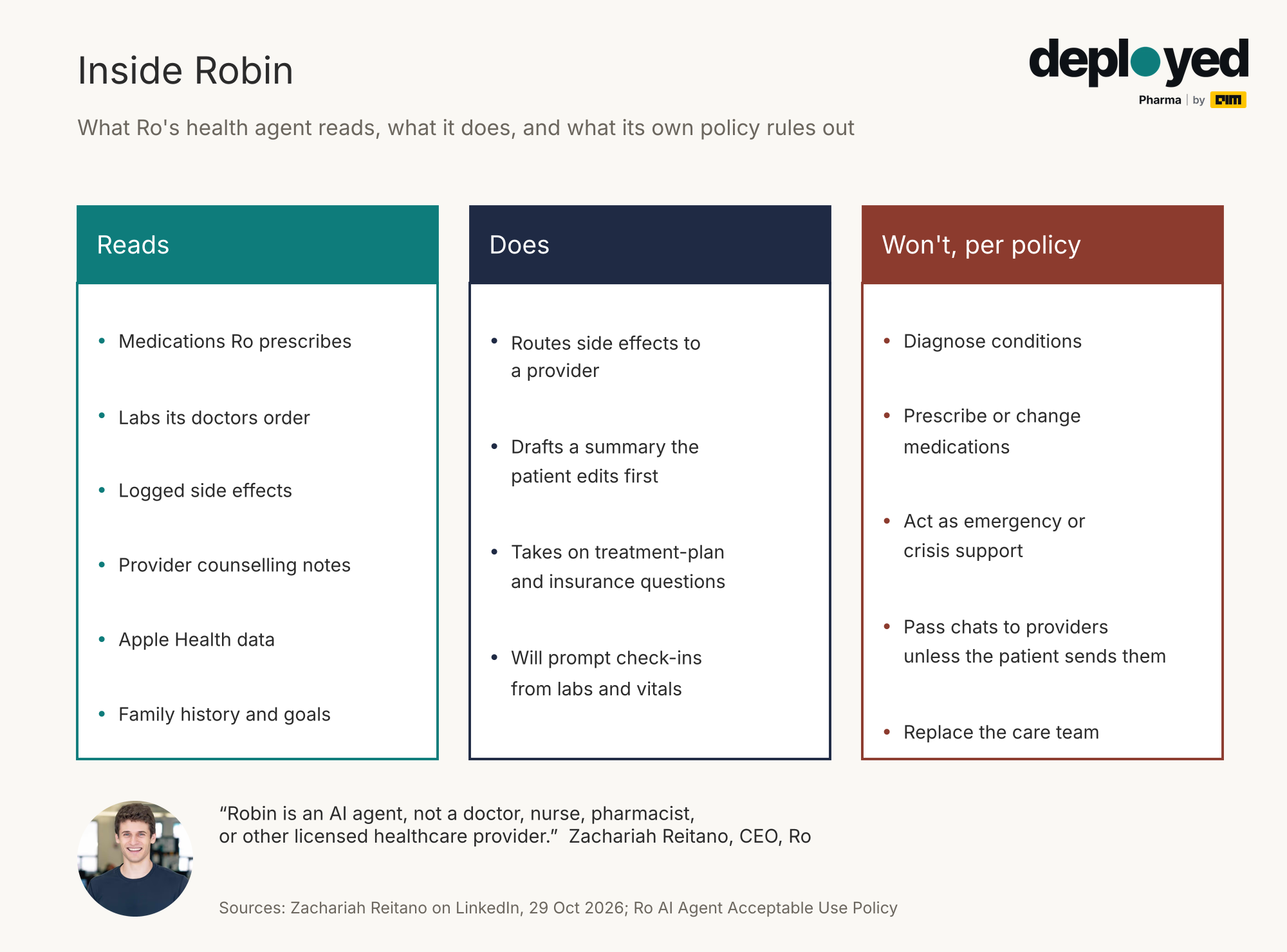
Robin removes the relay. It already sees the medications Ro prescribes, the labs its doctors order, logged side effects, provider counselling notes and weight data synced from Apple Health. When a patient reports a side effect, Robin routes them to a provider and drafts a summary the patient edits before anyone reads it.
The agent that sits next to the pharmacy
Ro already runs telehealth, lab testing and pharmacy fulfilment under one roof, and much of its growth has come from GLP-1 weight-loss care through direct deals with Novo Nordisk and Eli Lilly. That gives Robin something general chatbots lack, which is the clinical record of the company it works for.
It also gives Robin a commercial context. Reitano told Business Insider the starting point is convenience for current subscribers, and the longer-term aim is to keep more care in-house, with Ro serving as the patient's "quarterback." Asked whether the end state is a full-service virtual clinic, he said that is the hope. Ateev Mehrotra, who chairs health services, policy and practice at Brown University's School of Public Health, pointed to "weird financial incentives" and said, "I would love some evidence before millions of Americans start doing this."
Where help ends and advice begins

The week's drug discovery, trials and health-system deployments. Wednesdays.
The sharper question is scope. Ro's AI Agent Acceptable Use Policy says the agent offers general educational information only, does not diagnose or prescribe, is not monitored in real time, and that its answers are not reviewed by a person before the patient sees them. Reitano's own post closes with the same disclaimer. Yet the same post describes where Robin is heading: a rise in cholesterol prompting a check-in, an elevated heart rate bringing a nurse to reach out, and a nudge to ask the doctor about moving an injection from Wednesday to Friday before a Thursday night run.
Each step is designed to end with a clinician. The liability question is what happens when a patient acts on the nudge before the clinician replies, or when a proactive alert never fires. A provider-run agent carries the clinical record, and with it a much stronger expectation that it got the answer right. The policy page defers liability to Ro's terms of service and does not say how long conversations are kept.
A crowded race to own the record
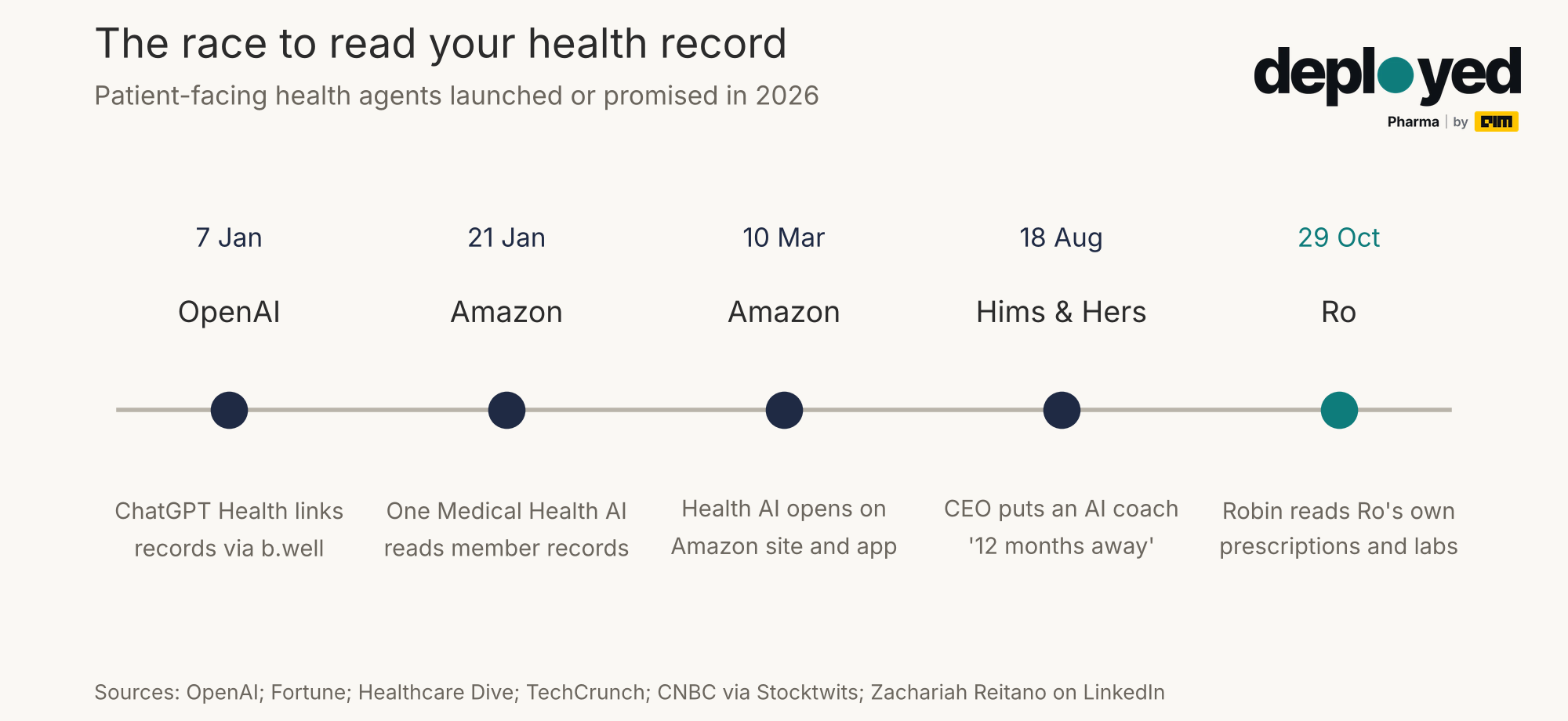
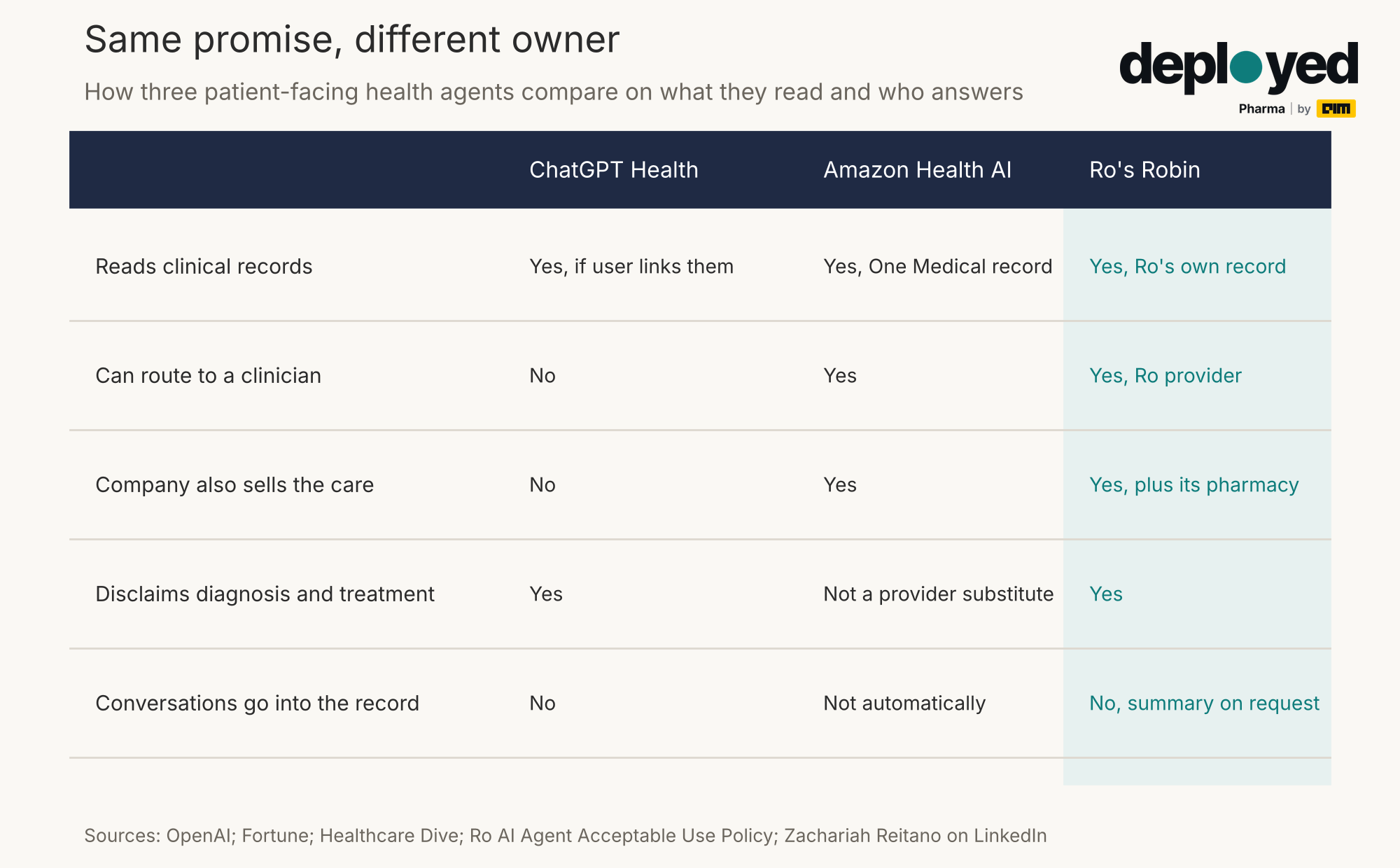
Ro is late to the idea and early to the version that sits inside the prescriber. OpenAI launched ChatGPT Health in January, after finding that more than 230 million people ask it health questions each week, and lets users link records through b.well and apps such as Apple Health. Amazon's One Medical rolled out a Health AI assistant that reads member records and can renew prescriptions and book visits. Andrew Dudum of Hims & Hers said in August that an AI health coach was about 12 months away.
Deployed's pharma desk has tracked the same tension on the provider side. Blue Cross Blue Shield found hospital AI coding tools added $942 million in spending without changing treatment, and AI tools from OpenEvidence's clinical search to Altera's AI scribe are spreading faster than the rules around them, the governance problem we have flagged in hospital imaging. Critics asking who holds the whistle when the agent belongs to the seller of the drug have a fair question.
Five questions for Zachariah Reitano
- Q1Which actions can Robin take on its own, and which always wait for a clinician?
- Q2Who reviews proactive nudges about dosing or timing before a patient sees them?
- Q3Will Robin ever recommend care Ro does not sell, including no treatment at all?
- Q4How long are conversations kept, and are they used to train or tune the model?
- Q5What outcome data will Ro publish to show Robin improves care?
Ro has earned some credibility here. Its semaglutide study in Obesity reported 16.6% average weight loss over 68 weeks, close to trial results, and Reitano has written that it is on innovators to prove their work with data. Robin will need the same treatment. An agent that already knows the patient's record could make care easier to follow, and the first published numbers on safety and outcomes will show whether it does.
Last updated
