

 Pharma
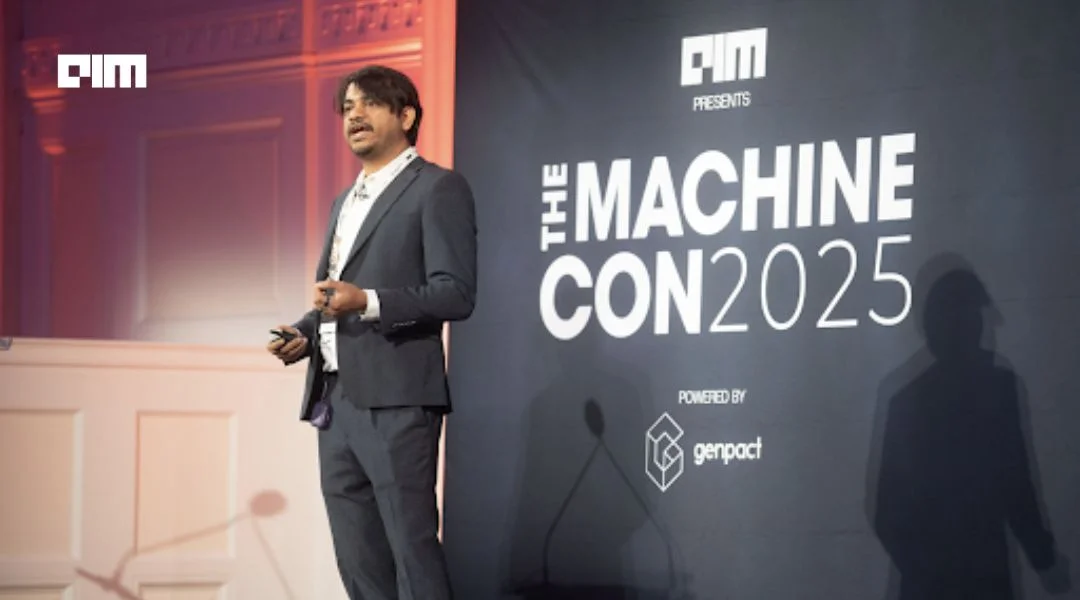
The conversation around enterprise technology has entered a decisive phase. Across industries, leaders are weighing the impact of emerging tools, questioning how automation and intelligence can genuinely transform their businesses rather than just add more pilots to the stack. In his session “Systemic AI: The Next Paradigm in Enterprise Transformation” at MachineCon 2025, Anuj Krishna, Co-Founder and President of Technology & Growth at MathCo, placed this discussion into sharper perspective. He argued that while enterprises have experimented widely with new technologies, what is required now is a systemic approach that brings purpose and context together. He called this shift “Systemic AI”.
Krishna began with an anecdote that captured the mood of the executives he meets. A pharmaceutical CEO told him, half in jest and half in frustration, that if another visitor mentioned the word “agentic” in his office, the meeting would end abruptly. This represented a broader AI fatigue in the market. Over the past two years, organizations have seen a flood of proof-of-concepts around generative AI, and more recently, agentic AI, yet many of these experiments remain isolated. As Krishna explained, leaders are asking whether these pilots truly deliver business outcomes. “We have seen a lot of POCs with respect to agentic and generative AI. We have also seen questions around the ROI that people are getting out of it. There has been some disillusionment with how useful it really is,” he said.
The limitations, particularly that of agentic AI, he argued, are tied to how the conversation has been framed. Much of the focus has been on the idea of agents, with insufficient attention to what they are meant to accomplish. “Agentic AI emphasizes the word agent and does not talk enough about what the agent is going to do,” he observed. This emphasis produces implementations that may look sophisticated on dashboards but struggle to integrate with core systems. The result is context blindness, technically correct answers that do not translate into actionable insights, and siloed solutions that never scale across the enterprise.
