How is AI Transforming Drug Discovery Partnerships?
“New cutting-edge technologies are enhancing our ability to innovate with the potential to bring important new therapies to patients faster”
Merck and Mayo Clinic announced a research and development agreement on Tuesday that will allow the pharmaceutical giant to apply artificial intelligence and advanced analytics to drug discovery and development by tapping Mayo Clinic’s clinical and genomic datasets.
The collaboration integrates Mayo Clinic’s Platform architecture with Merck’s AI-enabled virtual cell technologies to enhance disease understanding, improve target identification, and drive early development decisions. Mayo Clinic has described this as its first strategic collaboration of this scale with a global biopharmaceutical company.
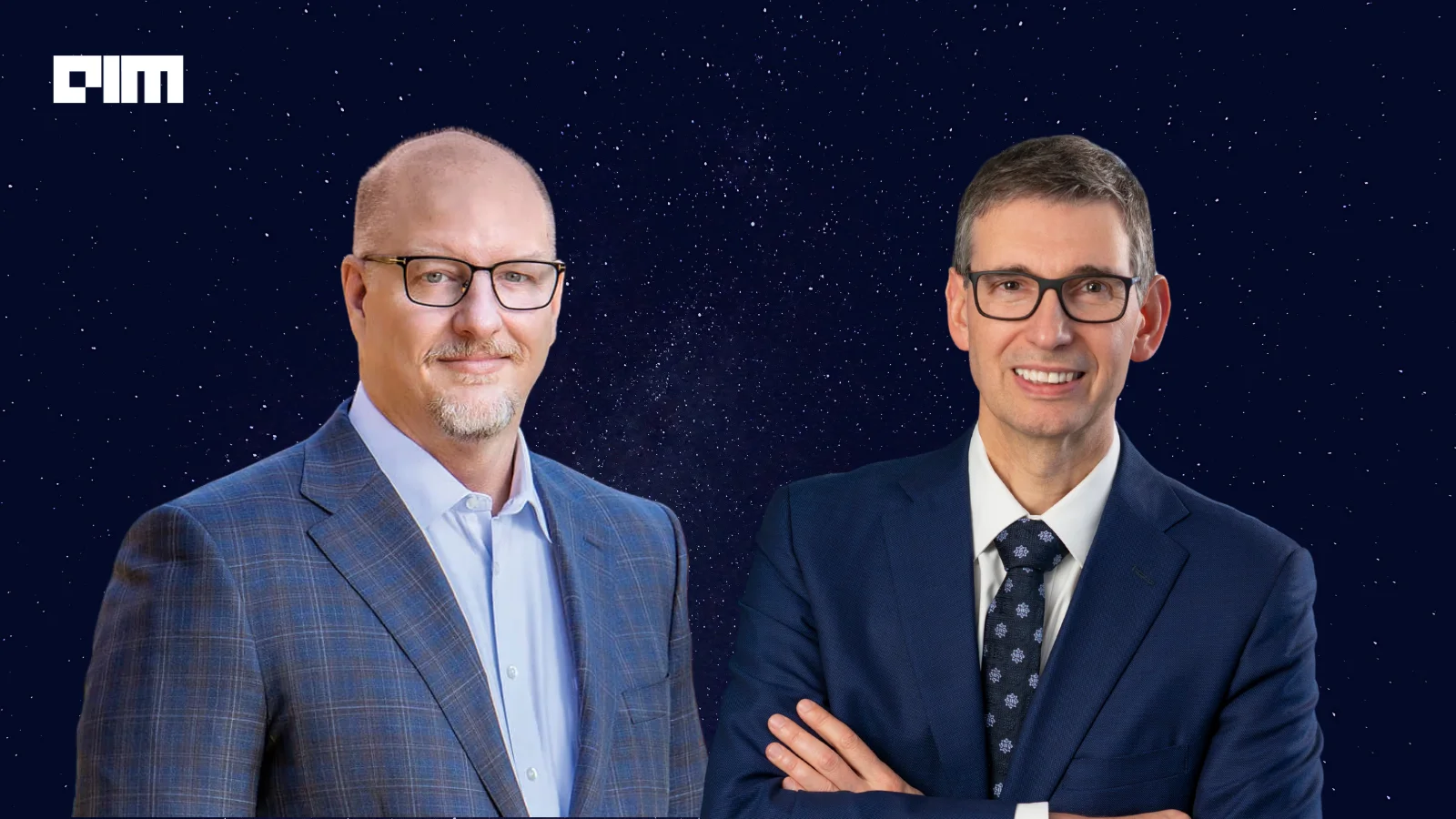
Robert M. Davis, chairman and CEO of Merck, framed the partnership in terms of what AI-enabled insights can unlock. “New cutting-edge technologies are enhancing our ability to innovate with the potential to bring important new therapies to patients faster,” he said. “By working with Mayo Clinic, we aim to integrate high-quality clinical data and AI-enabled insights into discovery research to improve target identification and, ultimately, the probability of success for our programs.”
Gianrico Farrugia, president and CEO of Mayo Clinic, stated the collaboration aims to “speed innovative breakthroughs to patients and redefine drug development.”
Access to Multimodal Data
The partnership depends on the Mayo Clinic Platform, which brings together de-identified data from Mayo Clinic U.S. and its international partner network in a secure environment.
Under the agreement, Merck will access Mayo Clinic’s extensive multimodal datasets, including laboratory results, medical imaging, clinical notes, and molecular data to support validation of AI models and help translate research insights into discovery and development strategies.
“Mayo has a really unique wealth of de-identified clinical, molecular multimodal data sets, and these are not readily available in the healthcare landscape, at least in a really clean and highly curated way,” said Greg Hersch, Merck’s SVP of enterprise strategy and venture.
The new Mayo Clinic Platform_Orchestrate program provides Merck with direct access to Mayo Clinic’s clinical and scientific expertise, platform data including registries and biorepositories, advanced AI tools and analytics, and the ability to scale solutions.
Maneesh Goyal, chief operating officer for the Mayo Clinic Platform, described the platform concept as a deliberate departure from healthcare’s traditional approach.
“The whole platform concept was born out of our CEO looking at other industries and how they’ve embodied platform thinking, which is shared resources, collaborative models, modular thinking,” he said. “Healthcare has been fairly against this, because there’s proprietary contracts, proprietary data sources, proprietary everything.”
The Focus Point
The collaboration will initially focus on three high-need therapeutic areas. Inflammatory bowel disease in gastroenterology, atopic dermatitis in dermatology, and multiple sclerosis in neurology.
Goyal said the strategy was to “look at the entire data set and identify where there’s opportunity, where there’s gaps in coverage that are aligned with Merck’s core areas.” They arrived at five areas that way, then ultimately narrowed it to these final three.
Hersch added, “What we did is we started engaging with Mayo and we looked at a lot of different scientific hypotheses. These were just the ones that lined up the best with our areas of research, and where Mayo felt that they could make a real foundational difference.”
Goyal stated that the Mayo Clinic Platform allows researchers to move beyond narrow data sets focused on specific patient cohorts and gain a bigger-picture understanding of disease progression. That includes deep analysis of clinical notes and integration of clinical data, omics data, and waveform data.
“All of the clinical data and omics data and waveform data all together will give us a view on disease progression unlike any time in history, and AI is just an accelerant toward that,” Goyal said. “We’re just at the precipice of looking at this data and saying, ‘What have we missed that’s been right in front of us?’”
For Merck, the Mayo Clinic partnership is part of a broader AI adoption strategy. The company recently partnered with Nvidia on a small-molecule drug discovery model called KERMT, and previously created a genomics-focused foundation model called TEDDY.
Merck has also been integrating AI into regulatory responses, supply chain operations, forecasting, and commercial operations. “We don’t go out a lot and talk about it, but we have a pretty end-to-end approach going on with technology and AI here at Merck, and we’re very proud of the progress we’ve made, but we understand that there’s a whole bunch more to do,” Hersch said.
The collaboration builds on a relationship between Merck and Mayo Clinic that dates back to the 1940s, but the structure of this partnership shows a new model for how these institutions work together.
Key Takeaways
- Merck and Mayo Clinic partner to enhance AI-enabled drug discovery and development.
- Collaboration leverages Mayo's clinical and genomic datasets with Merck's advanced technologies.
- Aim to accelerate innovative therapies to patients and redefine drug development processes.
- Partnership utilizes the secure Mayo Clinic Platform for multimodal data integration.
- Leaders emphasize potential for improved target identification and increased success rates.