

 Pharma
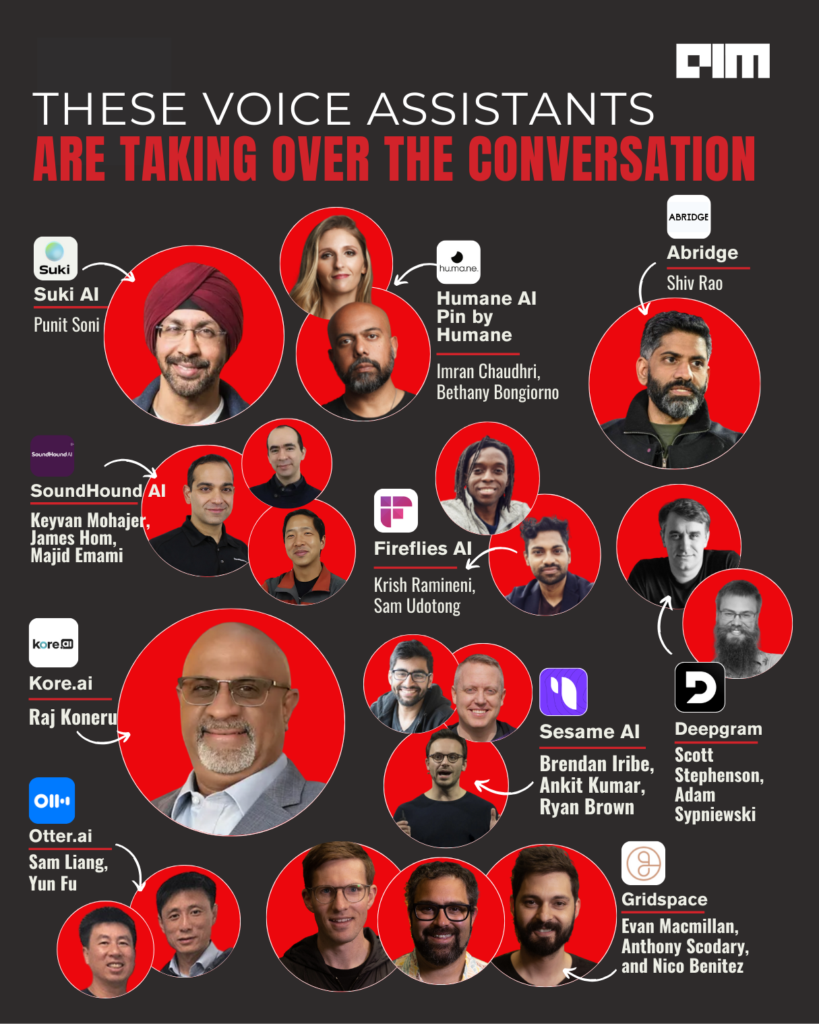
Speaking to machines is now an everyday reality, thanks to rapid advancements in Voice AI and AI voice assistants. Though they sound similar, these terms refer to different but connected layers of technology. Voice AI is the core technology that powers the ability of machines to understand and respond to spoken language. It includes tools like automatic speech recognition (ASR), natural language understanding (NLU), and text-to-speech (TTS) synthesis. Think of it as the engine that hears your voice, interprets what you mean, and speaks back. Companies like Deepgram specialize in building this foundational layer, providing developers with APIs to create intelligent voice experiences across call centers, mobile apps, and smart devices. On the other hand, AI voice assistants are the practical applications built using Voice AI. These assistants interact directly with users to carry out specific tasks. For example, Suki AI acts as a clinical assistant for doctors, transcribing patient conversations and generating medical notes to reduce burnout. Fireflies AI and Otter.ai are popular in business settings, where they automatically transcribe and summarize meetings. In customer service, Gridspace's Grace handles routine support calls with emotional awareness, escalating complex cases to human agents when needed.
Suki
Founder: Punit Soni
Suki is a healthcare technology startup reimagining clinical workflows with its AI-powered voice assistant, Suki Assistant. Designed to reduce the administrative load on physicians, the assistant uses ambient voice recognition and natural language processing to automatically generate medical notes from doctor-patient conversations. According to the company, this can cut documentation time by up to 72%, enabling clinicians to focus more on patient care. The company has raised $165 million to date, with major rounds including $20 million Series B in 2020 led by Flare Capital, $55 million Series C in 2021 led by March Capital), and a $70 million Series D in October 2024, led by Hedosophia. Now valued at $500 million, Suki is scaling its AI voice assistant for doctors, streamlining clinical notes and easing EHR workflows
Humane AI Pin by Humane
Founders: Imran Chaudhri, Bethany Bongiorno
The Humane AI Pin is a wearable device designed to function as a screenless, AI-powered assistant. Users interact with the AI Pin primarily through voice commands and touch controls. By tapping the touchpad on the device, users activate the assistant to perform tasks such as making phone calls, sending text messages, setting reminders, and retrieving information. The device also features a laser projector that displays information onto the user's hand, providing a visual interface when needed. Unlike traditional voice assistants that rely on wake words, the AI Pin requires manual activation, ensuring it listens only when prompted. This design choice emphasizes user privacy by preventing the device from passively listening to conversations. Founded in 2019 by former Apple employees Imran Chaudhri and Bethany Bongiorno, the company is based in California.
