


Deployment record
In the tracker →- Organisation
- Walmart
- System
- Walmart AI Workforce Insights
- Stage
- Announced
- Function
- employee feedback on AI
- Scale
- 2.1 million associates worldwide
- 01Walmart surveyed 2.1 million associates about their experiences with AI, achieving an 81% response rate, with over 1.7 million participating.
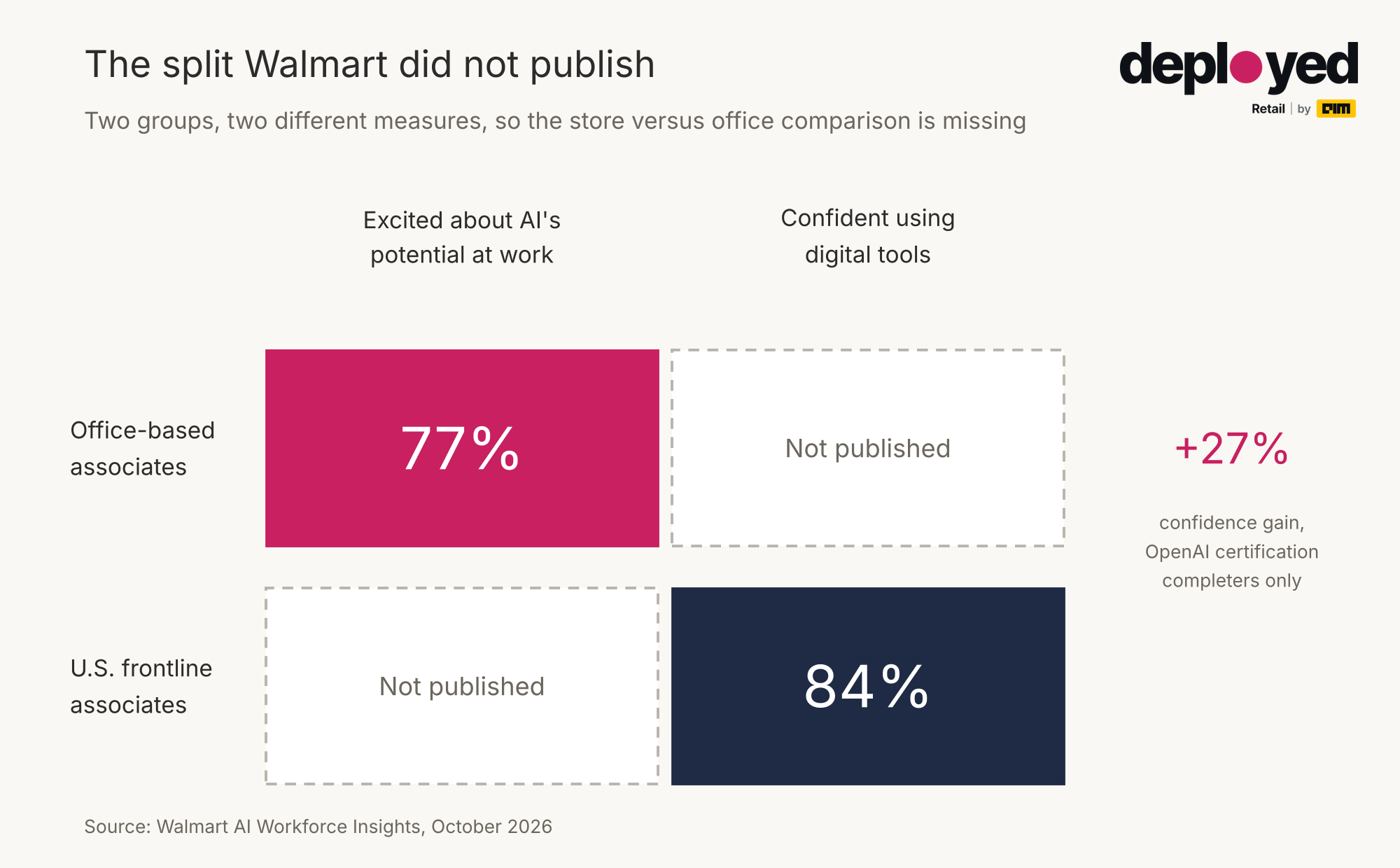
- 0277% of office-based associates expressed excitement about AI's potential to improve their work, while 84% of U.S. frontline associates reported confidence in using digital tools.
- 03The report did not provide a specific measure of excitement for AI among frontline associates, which is a significant portion of Walmart's workforce.
Show all 5Show less
- 04Walmart's approach to AI has not resulted in role displacement, and the company expects to maintain its workforce size while growing the business.
- 05Walmart is one of the few employers to conduct such a large-scale survey on AI in the workplace, but it faces questions about the methodology and the lack of consistent metrics between office and frontline associates.

Walmart
Follow Deployed on Google
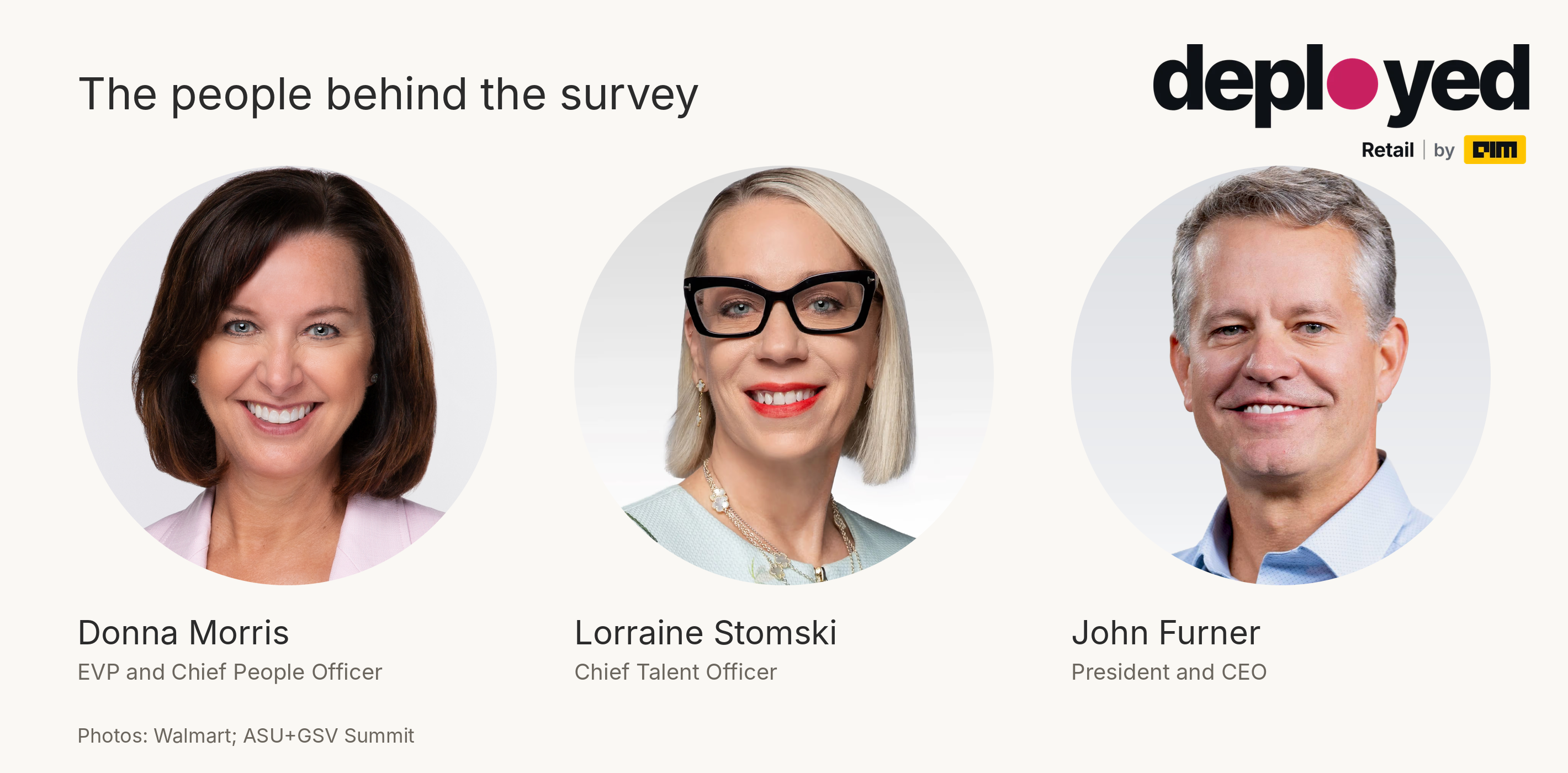
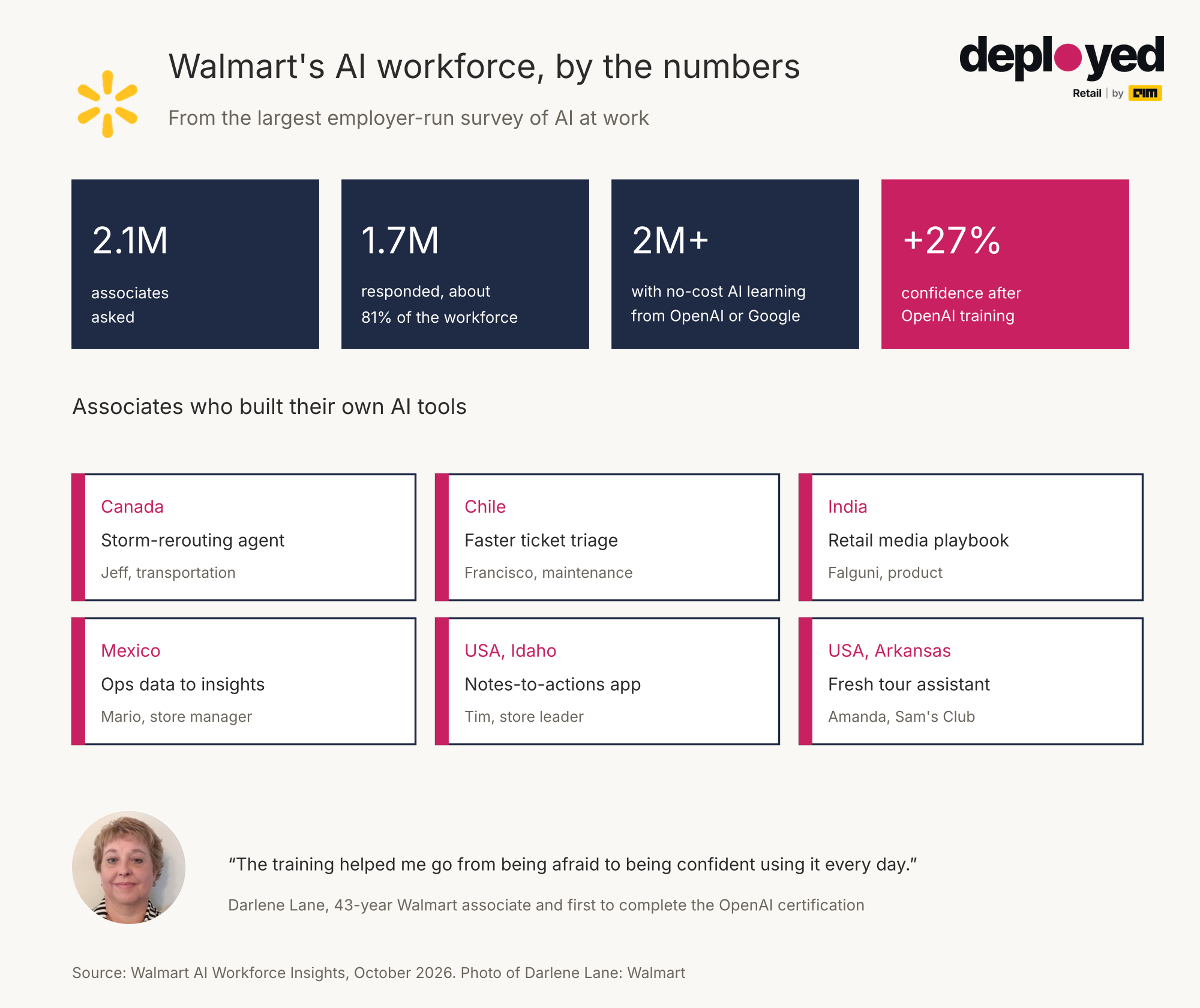
On 28 October, Donna Morris, Walmart's executive vice president and chief people officer, released Walmart AI Workforce Insights. The company asked its 2.1 million associates worldwide how they experience AI at work, and more than 1.7 million answered, a response rate of roughly 81%. No other employer has published a survey of AI at work on this scale.
The headline numbers in the full report are upbeat. Some 77% of office-based associates say they are excited about AI's potential to improve their work, 84% of U.S. frontline associates say they are confident using digital tools, and associates who completed OpenAI's certification report a 27% increase in confidence using AI. More than 2 million associates now have no-cost AI learning through OpenAI, Google or both. Lorraine Stomski, Walmart's chief talent officer, wrote on LinkedIn that "excitement for AI spans roles, geographies and tenure."
Two groups, two questions
Read closely, the report measures its two biggest groups differently. Office staff were reported on excitement about AI. Frontline associates in stores, clubs and distribution centres were reported on confidence with digital tools, which covers scanners and scheduling apps as much as generative AI. The report says excitement is similar across tenure, and Stomski says it spans roles, yet it does not publish a frontline figure for AI excitement or an office figure for digital confidence.
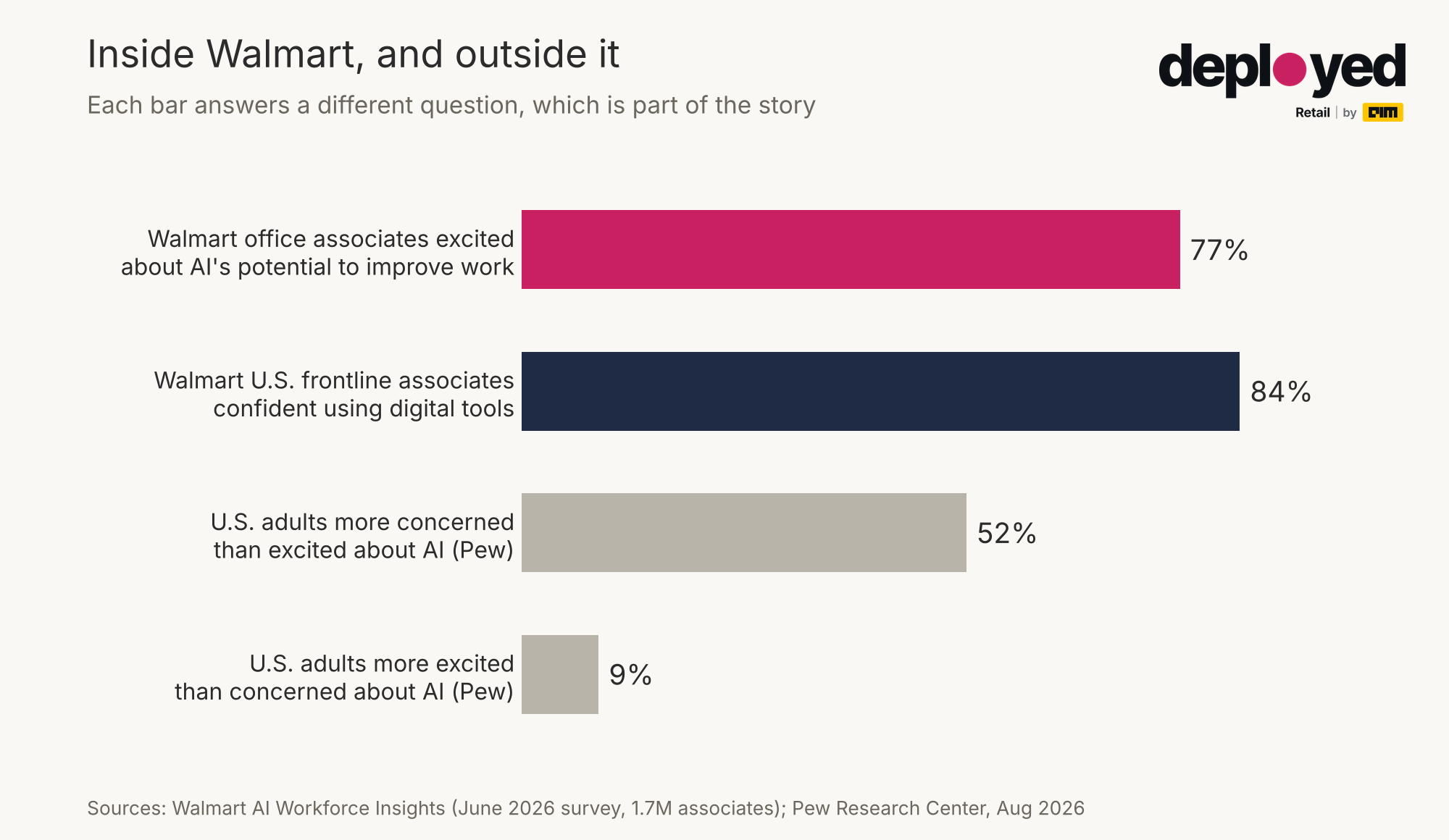
That gap matters because the frontline is most of Walmart. The U.S. business alone employs about 1.6 million people, and those are the jobs where AI agents now build shift task lists, find stock and translate conversations with customers. BCG's AI at Work survey found frontline use of generative AI well behind managers, and Pew Research Center reports that 52% of U.S. adults are more concerned than excited about AI while only 9% are more excited. Whether Walmart's store associates sit closer to their office colleagues or to the national mood is the most useful number the company holds, and the clearest question for Morris and Stomski.

The week's store, brand and commerce deployments. Fridays.
An employer asking about its own tools
Scale does not settle method. The survey ran in June 2026, inside the company, about tools the company chose and training it paid for. The report does not say whether answers were anonymous, how questions were worded, or how the 27% figure compares with associates who skipped the training, since it covers only those who completed the OpenAI pathway. Shareholders asked for an independent report on how AI and automation affect Walmart's workforce at the June annual meeting; the company opposed the shareholder proposal and it did not pass.
Why the people-first bet still stands out
The case for Walmart's approach is strong. Speaking at MIT Technology Review's EmTech AI in April, Morris said the company had seen no role displacement from AI and that "the vast majority of our jobs will have some shaping," with four agent platforms behind associate tools. John Furner, who became chief executive in February, said in 2025, while running Walmart U.S., that he expected to employ roughly the same number of people for years while the business grew. Amazon's Andy Jassy told staff in 2025 that generative AI would shrink its corporate workforce.
The report also shows associates building their own tools. Jeff in Canada built a storm-rerouting agent, Francisco in Chile sped up maintenance tickets, Tim in Idaho turned handwritten notes into action lists, and Amanda in Arkansas built a fresh-department assistant for Sam's Club. Darlene Lane, a 43-year associate and the first to complete the OpenAI certification, said training took her "from being afraid to being confident."
Deployed's retail desk has tracked how Walmart has argued that AI doesn't work if people don't, even as it is opening its store to AI agents for shoppers. Rivals are moving too, from Amazon rolling out AI glasses to 20,000 delivery drivers to Albertsons reporting returns on four AI bets, and manufacturers such as Stadler US are training foremen on LLMs. None has published employee data at Walmart's scale.
Five questions for Donna Morris and Lorraine Stomski
- Q1What share of store and club associates said they are excited about AI?
- Q2How confident with AI, as opposed to digital tools, is the frontline?
- Q3Were responses anonymous, and who wrote and analysed the questions?
- Q4How did associates who skipped the training answer on confidence?
- Q5Will Walmart publish the survey again next year so trends can be tracked?
Walmart has done something few employers try, which is to ask nearly its whole workforce about AI and publish the result. Releasing the store versus office split, and repeating the survey with the same questions next year, would turn an encouraging snapshot into the benchmark the rest of retail could use.
Last updated
