Can American Express Survive AI Transaction Changes?
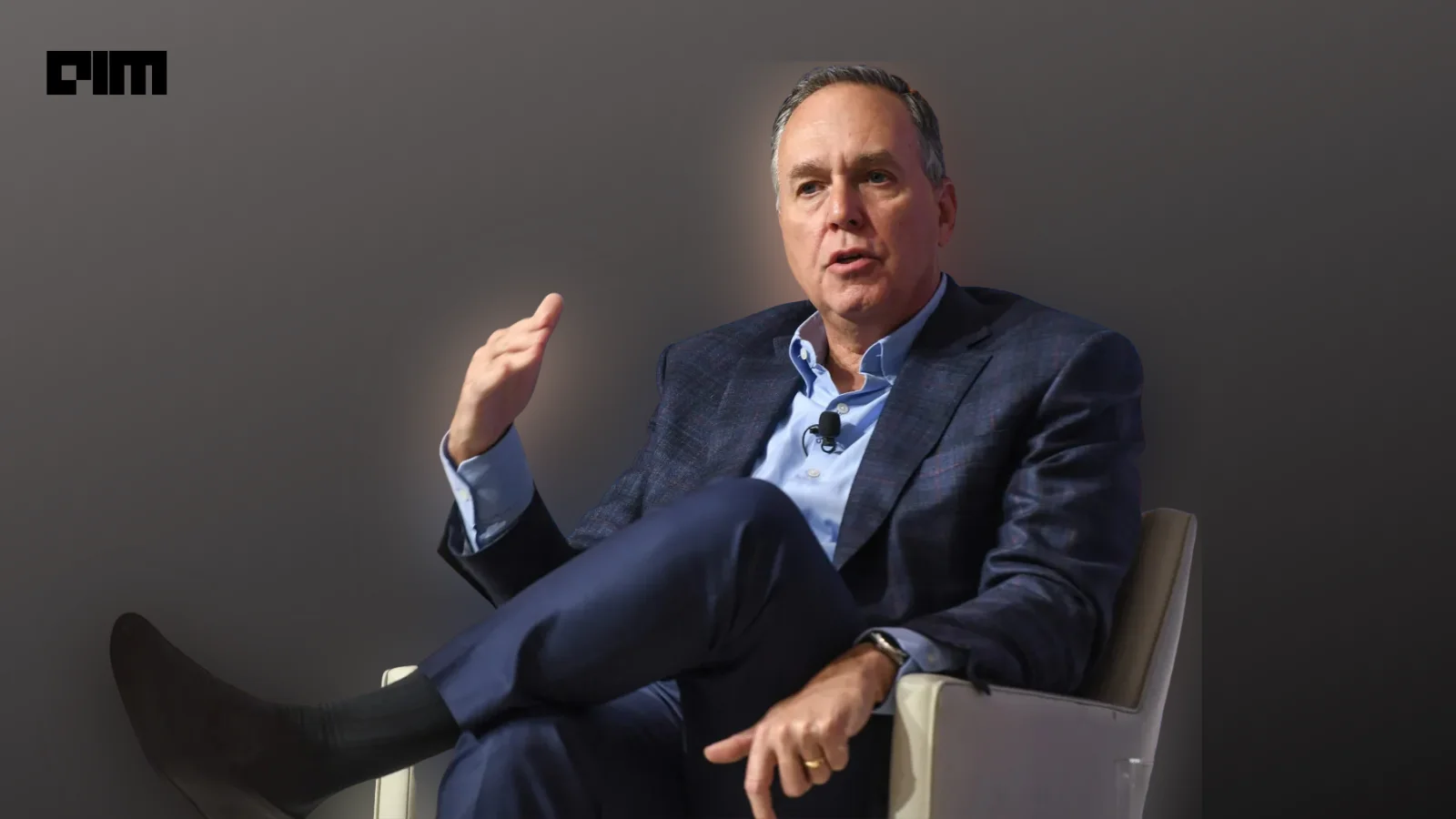
“The next big trend is agentic commerce. AI will help consumers not only find the best deals but also choose the best payment method"
According to McKinsey & Co, agentic AI could orchestrate anywhere from $3 trillion to $5 trillion in global commerce, with the U.S. B2C market alone capturing up to $1 trillion through AI shopping agents by 2030.
American Express has already processed thousands of AI-assisted transactions through pilots with leading AI platform partners. In a recent article, they claimed that payment networks matter more than ever in a world where autonomous agents handle purchasing decisions.
But not all payment networks are equally prepared for this shift. American Express, with its unique closed-loop architecture, has positioned itself with structural advantages that its competitors, Visa and Mastercard simply cannot replicate overnight. The question now is whether its advantages can hold up against an entirely new category of risks that didn't exist in traditional payment networks.
American Express's competitive advantage in agentic commerce rests on a simple architectural advantage. It is simultaneously the issuer, the network, and the acquirer. When you swipe an Amex card, the transaction flows directly from merchant to Amex and back. There are no intermediaries or fragmented data pipelines.
This matters enormously for AI. While Visa and Mastercard see transactions, they lack the full context. They don't know who's buying, where they're buying, what they're buying, or whether the purchase makes sense within the customer's spending patterns. Amex, conversely, ingests a complete, real-time stream of granular data with cardholder identity, merchant profile, product details, location, time, and amount.
For machine learning models that power agentic purchasing decisions, this data richness is crucial. Amex's algorithms can validate whether an AI agent is acting with legitimate authorization, identify anomalies in real time, and process frictionless transactions at scale. The company has already demonstrated this with its Gen X model, which leverages this closed-loop insight to deliver hyper-personalized merchant recommendations.
The Trust Problem
Agentic commerce sounds simple in theory. An AI agent sees that you need to book a flight, finds the best price, negotiates terms, and processes payment, all without you touching a screen. It sounds efficient but also terrifying if you're a cardholder, merchant, or CFO managing risk.
The industry has been focused entirely on the wrong problem. Everyone wants to know if the AI makes good decisions. The real question should be something different. When the AI makes a wrong decision, who's accountable, and how do we fix it?
This is where Amex's closed-loop network matters. Because Amex is simultaneously the issuer, the network, and the acquirer, it sees the complete picture of every transaction. When an agent books a flight, Amex knows who booked it, at what merchant, for what price, and whether it matches the cardholder's historical patterns. It can spot anomalies in milliseconds. More importantly, it can resolve disputes without three different institutions playing telephone tag across incompatible databases.
Open networks like Visa and Mastercard are fundamentally fragmented. The bank knows the customer. The merchant knows their own inventory. The payment processor knows the transaction. Nobody sees the whole picture. In a manual commerce world, that fragmentation is tolerable. In an agentic world, where decisions happen in microseconds and at scale, fragmentation becomes dangerous.
Today, most agent-initiated transactions look identical to bot-driven automated fraud, because they are bots. Merchants' fraud systems are trained to block bot behavior. There is currently no reliable, standardized way to distinguish a legitimate shopping agent authorized by a consumer from a malicious bot attempting account takeover. Until that changes, early agentic payments face inherently higher fraud rates and chargebacks.
AI-powered fraud tools like FraudGPT are available for $1,400 annual subscriptions and are improving monthly. In 2025 alone, agentic AI was leveraged to create synthetic identities, deepfake video calls, and coordinated fraud schemes that cost companies like Arup $25 million in a single incident. A 2026 forecast from fraud prevention firm SEON predicts autonomous, agentic fraud systems will operate across messaging apps, email, and web interfaces simultaneously, testing defenses, learning from responses, and iterating in real time.
Amex's 175-year legacy of trust is genuinely valuable. But it cannot prevent an AI agent from executing a transaction autonomously. The trust equation has shifted. It's no longer about trusting Amex to keep criminals out. It's about trusting that the AI agent acting on your behalf is actually authorized by you, and not a compromised system or a deepfake manipulating you into approving fraud.
Where Amex Gets It Right
The company is actively shaping industry standards for agentic payments, including contributing to Google's Agent Payments Protocol (AP2). The company understands that trustworthiness in agentic commerce requires transparent, standardized mechanisms for authenticating agents, securing credentials, and establishing audit trails.
However, Amex's closed-loop network advantage becomes a liability in one critical respect. It is, by definition, closed. Agentic commerce is inherently an ecosystem play. Consumers will authorize AI agents from a multitude of platforms. These agents will need to interact seamlessly across payment networks. An Amex-only experience, no matter how frictionless, isn't enough.
The real competitive test isn't whether Amex can process agentic transactions faster or more securely in isolation. It's whether Amex's closed-loop advantages can translate into trust and convenience when operating as one node in a vast ecosystem of AI agents.
The Dining Companion example that Amex highlighted is modest on its surface. A GenAI tool to help cardholders discover restaurants via Resy inventory, with a roadmap to full agentic booking. But it's actually a blueprint for how Amex plans to compete.
Amex doesn't have to compete with OpenAI or Google on raw AI capability. What it has is Membership, decades of relationships with high-value merchants, curated inventory, loyalty data, and preference signals that no generic AI model can replicate.
When an agent needs to book you a restaurant, it can apply Amex Membership benefits, optimize for your preferences, negotiate pricing, and clear payment all within a single ecosystem. A generic wallet can't do that.
American Express enters agentic commerce with genuine structural advantages. But agentic commerce also poses a fundamentally new class of risks that even Amex's historical strengths cannot completely mitigate. Autonomous agents, synthetic identities, and deepfake fraud are not problems that a premium brand or a closed-loop network alone can solve.
“The next big trend is agentic commerce,” said CEO Stephen J. Squeri. “AI will help consumers not only find the best deals but also choose the best payment method based on rewards, warranties, or other benefits.”
Key Takeaways
- Leverage AI technology to capture significant market share in agentic commerce, projected at $1 trillion by 2030.
- Capitalize on American Express's unique closed-loop architecture to maintain a competitive edge over Visa and Mastercard.
- Prepare for emerging risks associated with autonomous AI transactions that traditional payment networks haven't faced.