
Logistics Companies Invest In AI, But Only 13% Report Financial Results
Logistics companies are increasing AI investment, but a new BCG survey found only 13% reported measurable financial results from those deployments.
By Mukundan Sivaraj ·
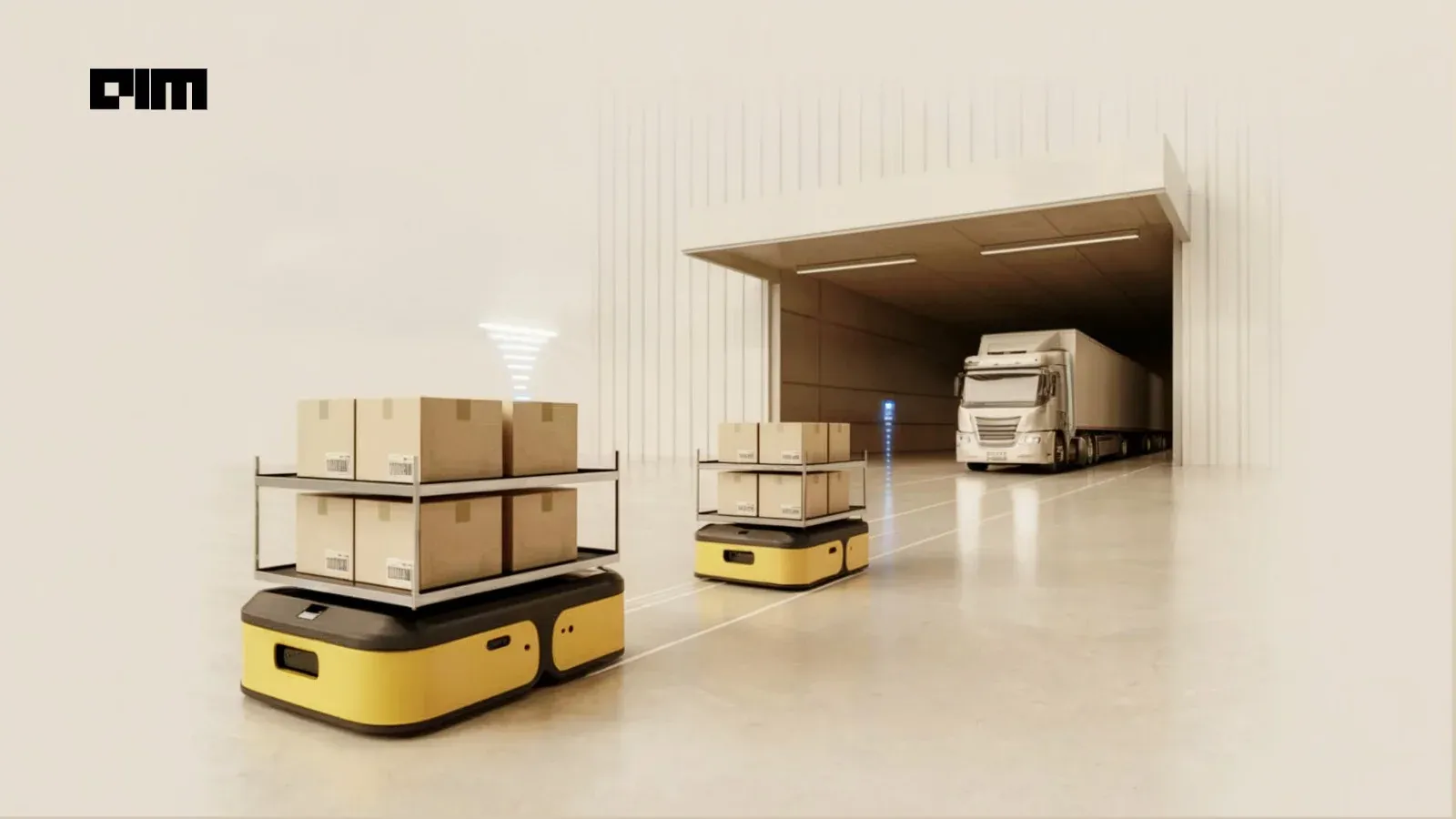
Logistics companies are increasing their spending on artificial intelligence (AI), but most have yet to see measurable financial returns from those investments, according to a new Boston Consulting Group (BCG) survey of 30 global logistics companies.
BCG found that 97% of logistics executives surveyed considered AI a strategic priority, while 70% said their companies had an AI strategy and 67% had a dedicated AI budget. Yet only 13% reported measurable financial impact from AI.
The findings point to a gap between deploying individual AI tools and integrating them into broader operational workflows. BCG said fragmented data, legacy systems, isolated AI applications and a shortage of internal AI expertise were among the factors limiting returns.
Logistics AI Is Moving Into Operations
The findings come as major logistics companies continue to expand AI beyond pilot programs. UPS, for example, said in June that it had been deploying AI for more than three years and was expanding its use across planning, transportation, customer service and international shipping. Its latest initiatives include a digital twin of its logistics network and agentic control tower capabilities.
Other operators are also focusing on connecting operational data. Penske Logistics introduced an AI platform in May designed to bring transportation, warehousing and third-party data into a unified view. The system includes an AI assistant that lets users query operational information using natural language.
The challenge, according to BCG, is that many companies are still deploying AI as standalone tools. In its survey, 80% of respondents identified a single standalone application as their most impactful AI solution, while only one respondent described a capability approaching an end-to-end workflow.
That pattern can limit the financial impact of automation. Automating one stage of a process while leaving the following stages manual can shift work rather than eliminate it, BCG said.
The issue is also visible in logistics companies' efforts to automate routine operations. DHL Supply Chain has more than 8,000 collaborative robots operating across its global network and is using software from SVT Robotics to accelerate integrations between robotics systems.
AI agents are being deployed alongside physical automation. DHL has also used AI agents for appointment scheduling, driver follow-ups and warehouse coordination, with deployments processing large volumes of emails and voice interactions.
Data And Skills Remain Barriers
BCG identified fragmented data as another constraint on AI deployment. Logistics companies often rely on legacy systems that were not designed to exchange information, making it difficult for AI applications to access consistent data across an operation.
The industry is responding with investments aimed at connecting those systems. Penske's platform, for example, was built to combine data from transportation, warehousing and external partners into a unified operational layer.
Internal expertise is another hurdle. BCG found that 37% of logistics executives identified a lack of AI expertise within their organizations as their primary barrier to adoption.
BCG also estimated that an end-to-end AI transformation could increase logistics companies' earnings before interest, taxes, depreciation and amortization (EBITDA) margins by roughly five percentage points. It estimated that the potential industry-wide impact could amount to about $250 billion in additional annual profit.
The figures are projections rather than reported industry results. BCG's survey suggests that reaching that potential will depend less on the number of AI tools deployed than on whether companies connect them across workflows, data and organizational processes.
The shift is already visible at companies such as UPS, which is expanding AI across its network, and DHL, which is scaling both software and physical automation. The immediate challenge for the wider industry is turning those deployments into measurable financial results.