

 Banking

As we step into the year 2024, the realm of artificial intelligence (AI) continues to evolve at an unprecedented pace, reshaping industries, augmenting human capabilities, and pushing the boundaries of what was once deemed possible. The year ahead promises to be a pivotal moment for AI, marked by transformative trends that are set to redefine how we interact with technology and each other. From advancements in machine learning and natural language processing to the integration of AI into various aspects of our daily lives, the landscape is dynamic and multifaceted. In this rapidly evolving environment, staying abreast of the emerging trends in AI becomes not just a choice but a necessity for individuals and organizations alike.
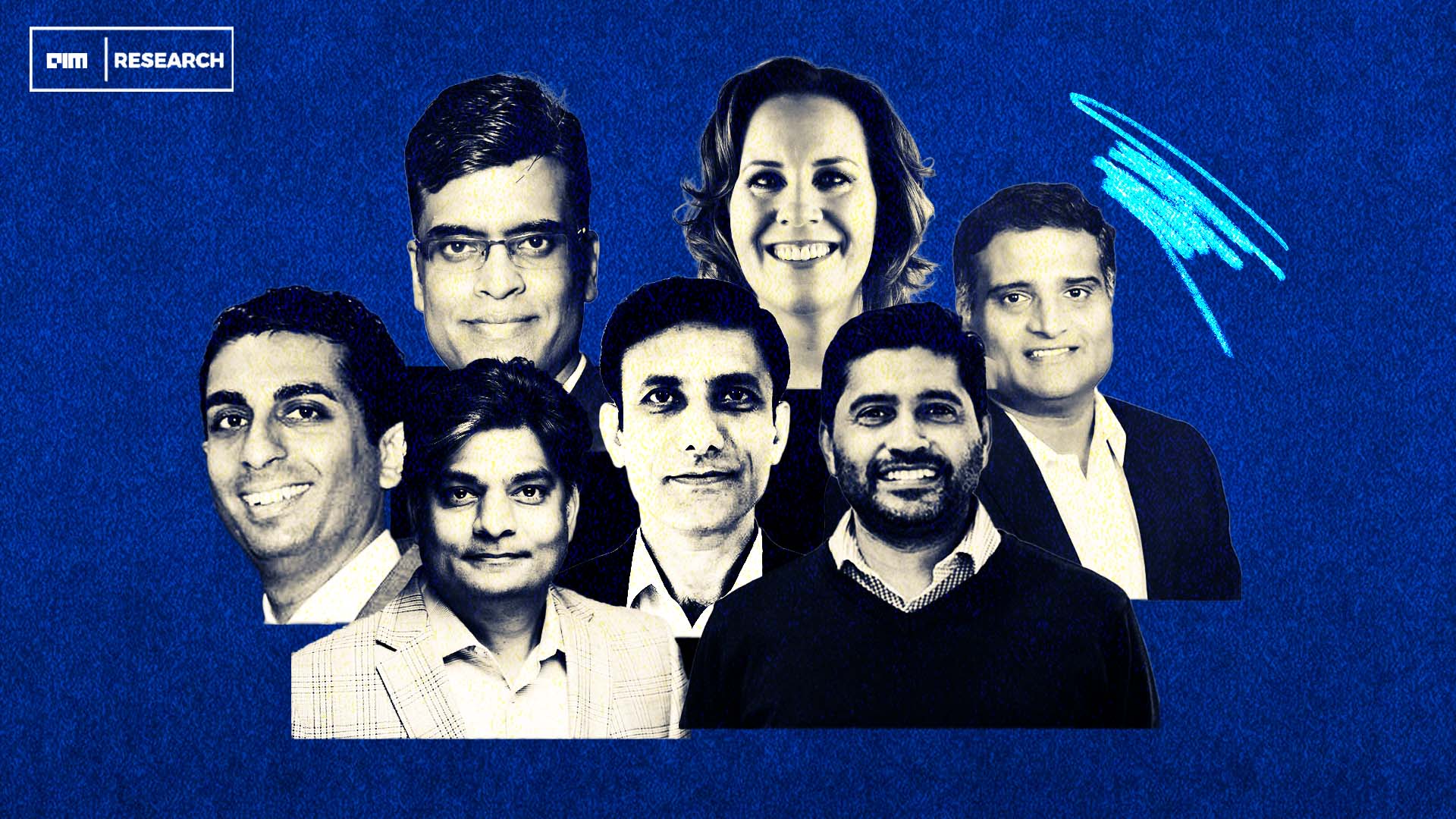
We had a roundtable discussion on the topic with a set of experienced and distinguished leaders in the industry. The session was moderated by Kashyap Raibagi, Associate Director – Growth at AIM along with panelists Rajvir Madan, Chief Digital and Information Technology Officer at Arcutis Biotherapeutics, Carolyn Duby, Field CTO and Cyber Security GTM Lead at Cloudera, Anil Prasad, Vice President Of Technology & Engineering at Cloudmed, Krishna Cheriath, Chief Data & Analytics Officer at Zoetis, Srini Tanikella, Vice President Information Technology at SMART Global Holdings, Amitabh Mishra, Executive, Data & Analytics, US Pharma & Oncology at Novartis and Vinod Malhotra, Senior Vice President Of Engineering at BlackLine.
Trends Paving the Path to 2024 and Beyond
I look at this question first from a business lens. While technology is important, the key question for me is do you apply the technology to a set of business problems? So the first trend I think about extensively is about what the problem that AI (whether Gen AI or Narrow AI) is trying to solve. I talked to a group of peer CIOs the other day and I asked them to tell me about all of the AI use cases they have and this was across multiple industries. Then we discussed which of those AI use cases are generative AI, and only one person put their hand up. So, I think what's been missing for me has been this bridge between the technology out there and the use cases and how we apply that technology within each one of our domains and industries. So that's one of the big trends that I see - I think more and more work will be done next year to figure out how we apply that technology to various business problems. As Einstein once said, if I had 60 minutes to solve a problem, I would spend 55 minutes thinking about the problem and 5 minutes solving it. Recently we have spend more time on creating solutions, and in the future I see us focus more on defining the problem that these solutions will help with.
