

 Banking
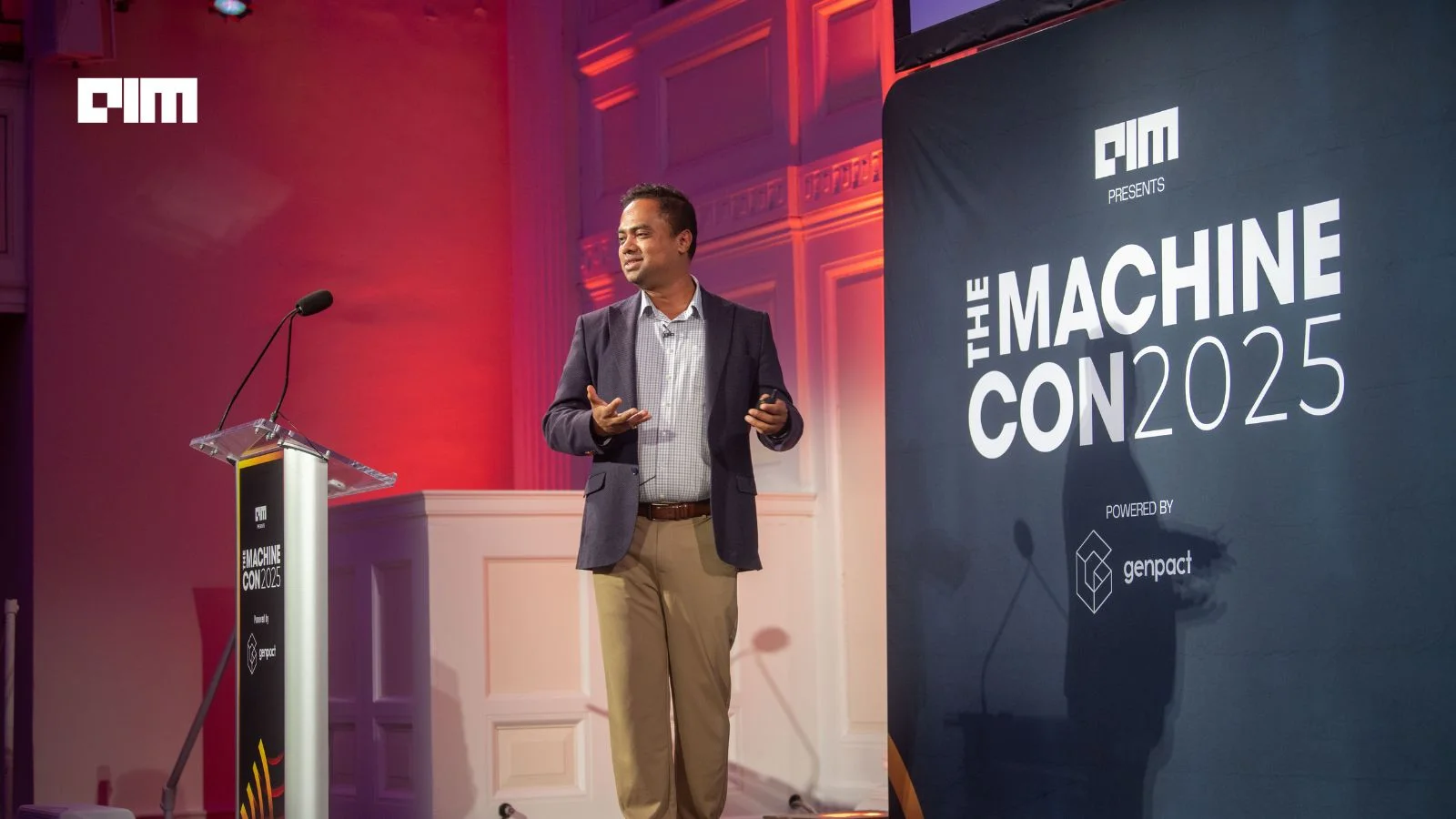
By 2025, many large organizations are still grappling with the realities of AI adoption. Experiments are plenty, but the number of initiatives that have scaled into core business operations remains small. Conversations often circle around potential use cases, with fewer examples of tangible, enterprise-wide transformation. At MachineCon New York 2025, Bhaskar Kalita, Global Head of Financial Services and Insurance at Quantiphi, cut through the noise with a practical roadmap for embedding agentic AI into complex enterprise environments. His focus was on what it takes to move from trial projects to embedded capability anchored in governance, measured execution, and deliberate adoption.
Kalita opened by revisiting the milestones in AI’s evolution. The earliest systems were narrow in purpose, single-task programs hard-coded to follow strict “if-then-else” logic. They could execute a function flawlessly within their narrow lane but were blind to anything outside it. Then came multi-task AI, which allowed a single system to perform a small cluster of related functions. Early optical character recognition was a classic example: scanning an image, recognizing text, and deciphering fonts. It may seem basic now, but at the time it represented a shift toward more adaptable, generalizable intelligence.
The arrival of deep learning accelerated this progression. By training models on massive datasets, AI moved from rigid rules to adaptive pattern recognition. It could now interpret complex, variable inputs in real time, unlocking applications like Tesla’s driver-assist features—systems capable of recognizing lanes, detecting objects, and making rapid, context-aware decisions.
