

 Banking
The AI migration journey confronts organizations with an uncomfortable truth; while leadership debates strategy, employees are already feeding company data into public AI models to work faster. Meanwhile, legacy data systems crumble under new demands, and expensive pilots fail to move beyond proof-of-concept. Add regulatory pressures, governance gaps, and workforce fears, and the challenge becomes existential. Provide secure AI access in your enterprise without delay, understand that waiting for flawless data slows progress, and concentrate on use cases with quick payoffs. Winning requires viewing AI adoption as a cultural transformation, creating education programs, enabling business champions, and designing frameworks that foster safe experimentation.
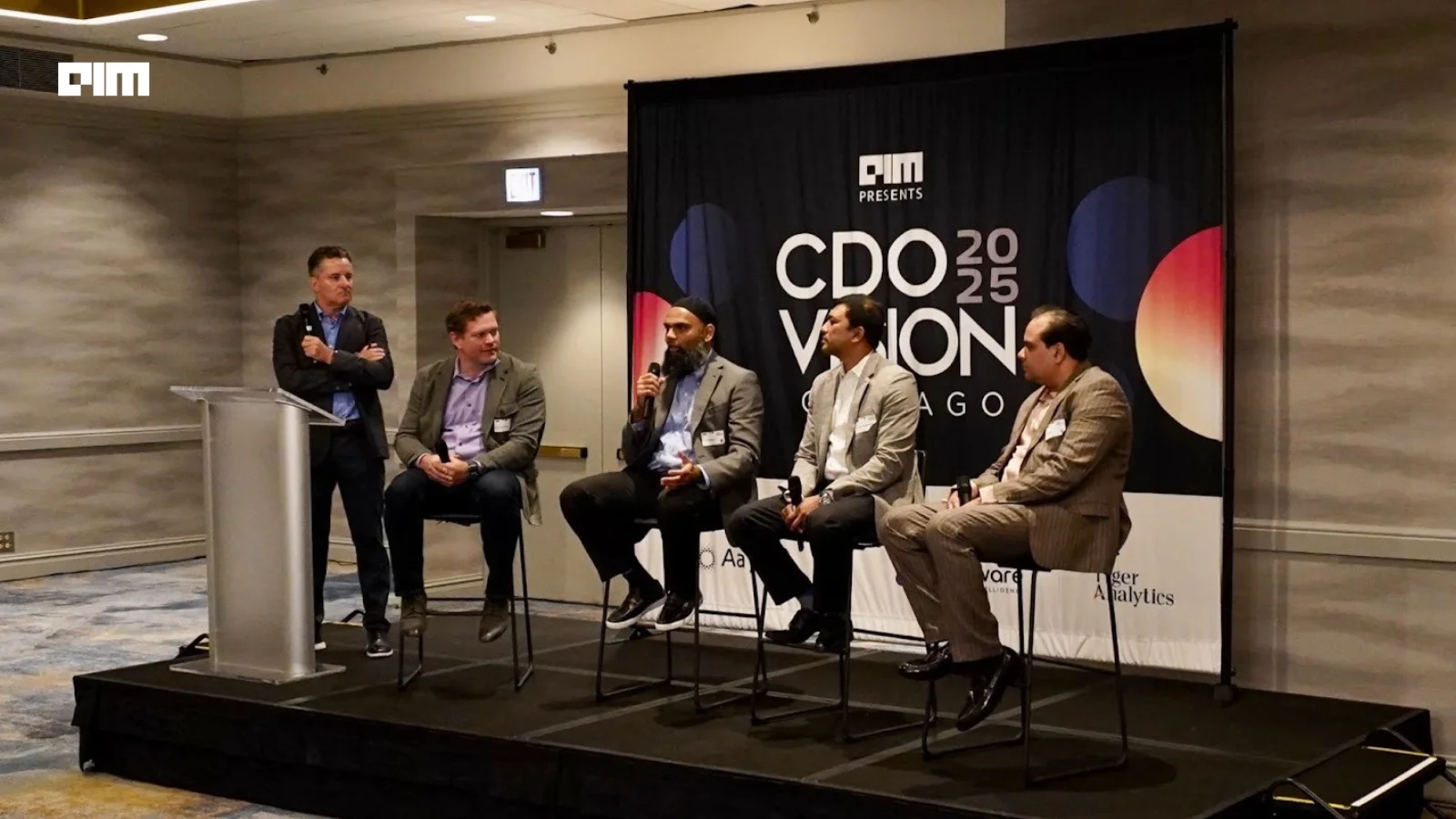
The discussion featured insights from experienced Chief Data Officers and technology leaders navigating AI-first transformations across diverse industries. Anupam Pattanayak, Head of Enterprise Data Science and AI at Regions Bank. Vijay Jakka, Global Data Governance at MetLife. Sayeed Shariff, Sr. Director Data and AI at Hollister Inc. David Roberts, Chief Data Center Officer at MasTec and Sean Maccarthy, VP of Analytics at Good Sam
AI Strategy & Business Alignment
The foundation of effective AI implementation lies in targeting specific use cases that generate concrete returns rather than pursuing technology for novelty's sake. Organizations are achieving results by enhancing revenue forecasting, streamlining customer interactions, and improving operational workflows. Success comes from concentrating efforts on proven applications that deliver clear benefits instead of scattered AI deployment across every business function.
Modern AI strategies represent fundamental business transformation rather than mere technology upgrades. This involves enabling predictive capabilities in decision-making processes, delivering hyper-personalized customer experiences, and establishing proactive engagement systems that operate in near-real-time. Cloud migration serves as the infrastructure foundation, while integration into core business operations,not siloed pilots,ensures sustainable impact.
