

 Banking

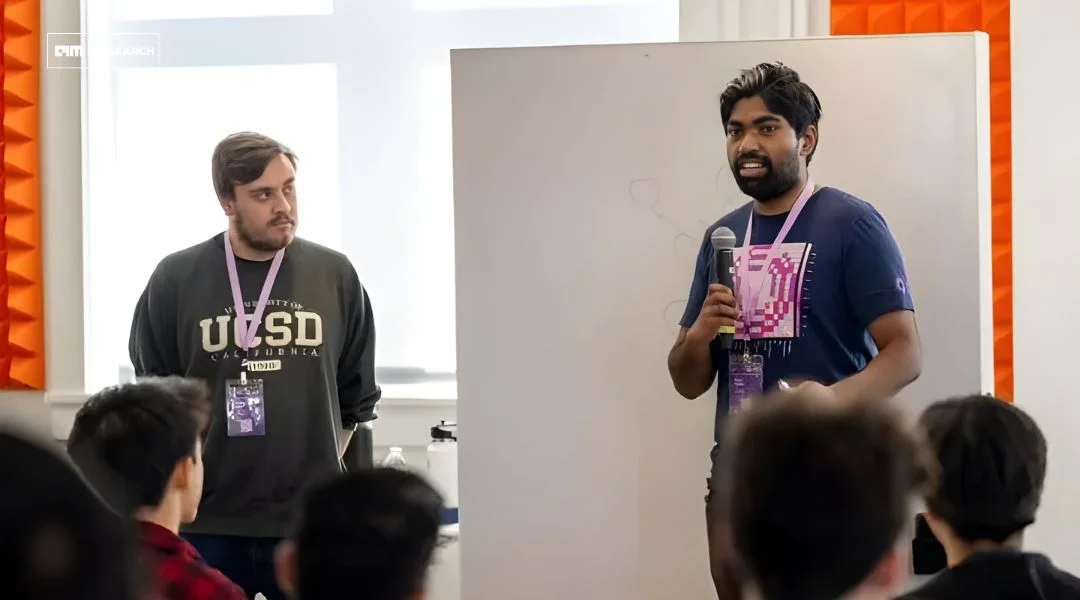
A decade ago, Cyril Gorlla was a teenager watching Google I/O, captivated by the early promises of artificial intelligence. With only an aging laptop at his disposal and a household that sometimes faced utility disconnections, he began experimenting with rudimentary machine-learning models. Fast forward to today, and he is the co-founder and CEO of CTGT, a startup tackling one of AI’s most pressing issues: the immense computational cost of training and deploying large-scale models.
CTGT, which Gorlla started with his former classmate Trevor Tuttle, has secured $7.2 million in a funding round led by Gradient Ventures, Google’s AI-focused investment arm. The round also saw participation from General Catalyst, Y Combinator, and Liquid 2 Ventures, along with notable angel investors such as Paul Graham (Y Combinator), Mike Knoop (Zapier), François Chollet (creator of Keras), and Taner Halıcıoğlu, one of Facebook’s first employees.
Addressing AI’s Compute Problem
AI models have rapidly advanced in capabilities, but the fundamental inefficiencies of deep learning remain. Training large models today costs tens of millions of dollars, making it inaccessible for many businesses. Companies like Amazon are spending billions to build AI data centers just to keep up with the growing demand for compute. While models such as DeepSeek R1 have introduced optimizations, they are still constrained by traditional deep learning approaches.
