How does Manav Misra lead AI transformation at Regions Bank?
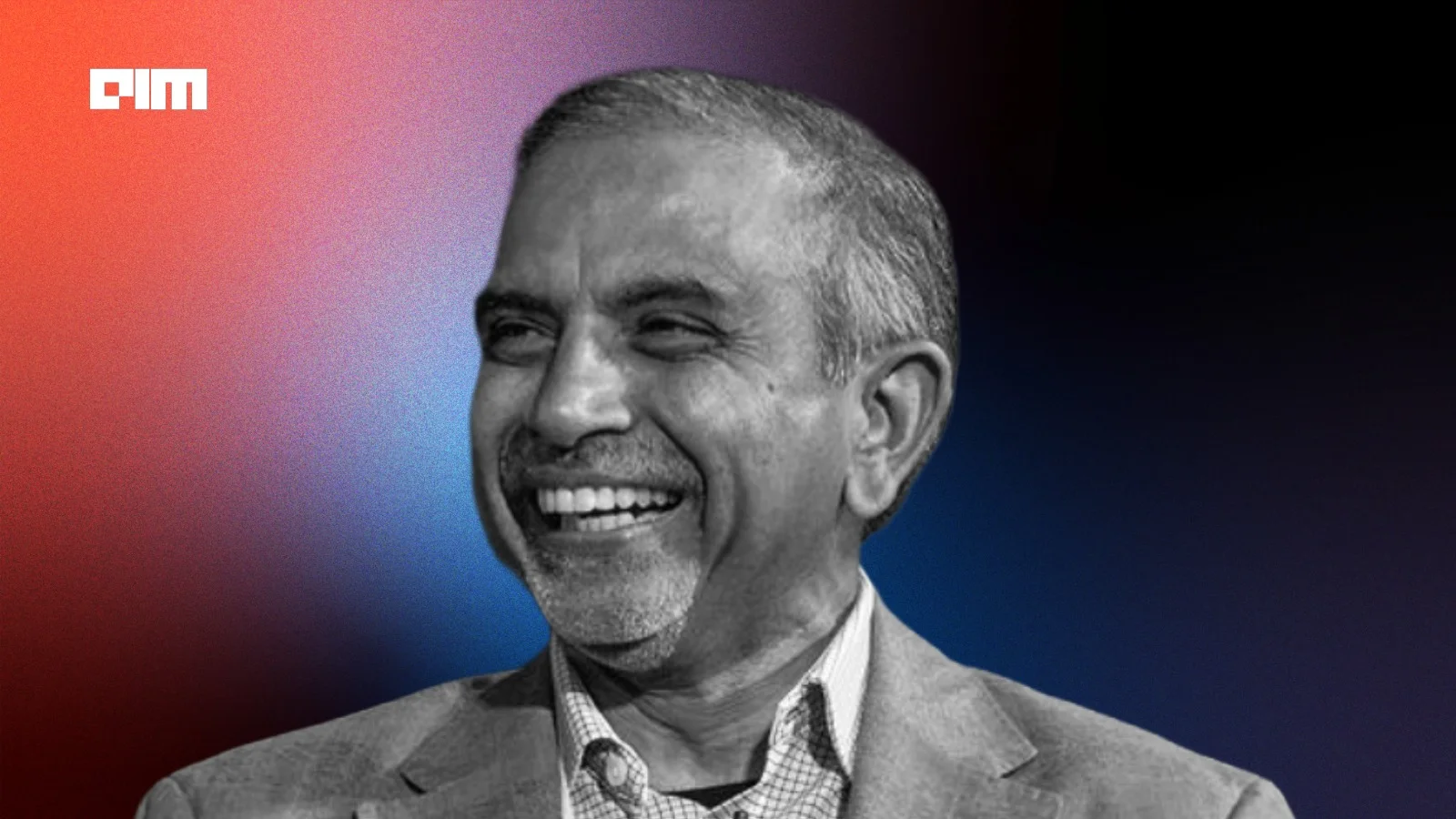
For the first time, data is being treated as a true strategic asset, and AI has finally crossed from experimentation into real transformation.
The question that no bank leader can ignore today is whether artificial intelligence will truly transform day-to-day operations or remain trapped in a cycle of experiments that never scale. For Manav Misra, Chief Data and Analytics Officer at Regions Bank, that question sits at the center of his work.
Misra is no stranger to complex, high-stakes technology. He holds a PhD in Computer Engineering from USC and has moved through diverse industries, from financial services to telecom to retail. He founded Cognilytics, an AI-driven analytics company, and led it through its acquisition by CenturyLink. Today, he brings that combination of technical depth, operational rigor, and entrepreneurial pragmatism to a regulated banking environment. His recent recognition in AI100 at MachineCon 2025 reflects the weight of his voice in shaping practical, responsible AI across industries where stakes are high and oversight is exacting. We spoke to him about what it really takes to run data and analytics transformation at scale beyond the noise, the tools, and the jargon.
Laying the Groundwork Before the Algorithms
“This is an exciting time to be in data and analytics,” Misra says. “For the first time, data is being treated as a true strategic asset, and AI has finally crossed from experimentation into real transformation.” But he tempers that excitement with pragmatism. “You cannot build advanced analytics on weak data. If the foundation is not solid, everything that comes after it is compromised.”
At Regions, that principle guided the first phase of transformation. Enterprise data management received renewed focus: governance had to be consistent across the organization, lineage fully traceable, and data quality reliable enough to inform executive-level decisions. Misra frames it simply that when business leaders question the data they’re using, progress stops. Trust has to come first.
Once the foundations were secure, the bank shifted from a project-driven mindset to a product-oriented approach. Misra explains the difference plainly: “Projects end. Products endure. If we want sustainable value, we have to build capabilities, not one-off deliverables.” At Regions, data products are end-to-end software solutions designed to solve specific business problems while embedding analytics directly into operational workflows. Their success is measured not by dashboards or reports, but by adoption and impact. “If teams think of it as analytics, we haven’t finished the job,” Misra says. The product works when it becomes part of how the business runs.
The shift required more than technical reorientation. Teams had to embrace a new mindset that prioritized outcomes over output. “I don’t want applause for models,” Misra says. “I want applause for impact. The only thing that matters is whether we moved the business.” Durability replaced volume as the measure of success where systems are monitored like enterprise software, governed like critical infrastructure, and improved incrementally rather than rebuilt.
Embedding Analytics into Core Operations
Data products have reshaped how Regions approaches risk, customer engagement, and revenue growth. Predictive models in anti-money laundering identify linkages across accounts and bad actors, while machine learning informs next-best-action recommendations and financial wellness insights, improving relevance and deepening customer relationships. Revenue strategies leverage analytics for lead prioritization, attrition reduction, and next-best-solution recommendations. All of these capabilities are delivered as operational products, designed for usability, monitored for adoption, and measured for performance.
Concrete examples underscore the impact. Regions Client IQ, or RCLIQ, predicts client attrition, financial risk, and share-of-wallet for commercial bankers, achieving high adoption and consistently driving measurable revenue growth. Another, rVoice, aggregates feedback across channels, reducing vendor costs and accelerating issue resolution. “These products were designed with usability and operationalization in mind,” Misra notes. They deliver significant economic value while improving customer experience.
Scaling Innovation with Discipline
Misra’s experience spans both startups and large enterprises, and that perspective informs how Regions scales data and AI. “Startups require speed and pragmatism where we ship value fast and stay close to the customer,” he says. “Scaling in an enterprise requires the same principles, but with added governance, architecture fit, and talent systems that compound value over time.” A product orientation ensures solutions are designed for adoption, measurable impact, and sustainable growth.
Balancing innovation with governance is another critical challenge in financial services. “AI at a bank cannot be a science experiment,” Misra says. “It has to run every day, scale under pressure, and hold up against regulatory scrutiny.” At Regions, the approach is disciplined: robust governance, model risk management, cyber guardrails, and explainability are embedded early. Standardized patterns allow the bank to deploy new use cases quickly without rebuilding controls, creating a framework where innovation and compliance coexist.
Leadership in this environment requires alignment around outcomes. Global, multidisciplinary teams of data scientists, technologists, and business strategists must share a clear definition of success tied to business impact. Translational leaders bridge technical and business perspectives, while design integration ensures usability drives adoption. “Culture matters,” Misra emphasizes. Curiosity, lifelong learning, ethics, and adaptability is cultivated intentionally. When these elements come together, teams can innovate responsibly at scale.
Where Generative AI Actually Fits
Generative AI is the newest frontier, but it isn’t approached casually. Regions evaluate every opportunity through four practical lenses. How much control exists around the context being used, whether the technology fits naturally into an existing workflow, the level of risk the bank is willing to accept, and the real economic value the use case can deliver. Only the applications that meet all four criteria such as agent assist, document summarization, or improvements in developer efficiency move forward, and even then they do so under strict guardrails with humans firmly in the loop. The priority is to deliver outcomes that are auditable and dependable, not to chase open-ended experimentation.
Misra also sees lessons in banking that other industries can apply. “Governance should be seen as an accelerator, not a constraint, clear standards reduce friction and improve delivery.” Explainability, he noted, has to be part of the system design from the start once a model is in production. Transparency is treated as a requirement, not a value statement. Regions also works through industry alliances and standards groups to contribute to practical approaches for AI safety. These are principles that apply broadly across any sector where accountability and trust carry real weight.
ROI is tracked rigorously. All products start with a business case, and economic value whether revenue lift, cost savings, or fraud prevention is measured against it. Adoption tracking ensures solutions are integrated into workflows, while quality and risk indicators monitor model performance and compliance. Velocity and reuse measure how quickly products move from concept to production and how often components are leveraged across use cases. This disciplined approach ensures analytics investments deliver sustained, enterprise-wide value.
From Metrics to Momentum
Misra sees a decade in which AI agents work alongside humans to deliver safer, more personalized banking experiences. “AI will transform every process and function in banks to be more efficient, customer-focused, safe, and inclusive,” he says. Achieving that vision requires continued investment in governance, collaboration on industry standards, contributions to regulation, and a commitment to AI as a force for customer trust and societal good.
“At the start, I said this is an exciting time to be part of the data and analytics ecosystem,” Misra concludes. At Regions, that excitement is grounded in a simple principle which is to build the infrastructure once, get the foundation right, and the transformation will follow, quietly, pervasively, and sustainably.
Key Takeaways
- Recognize data as a strategic asset to drive AI transformation in banking.
- Establish strong data foundations to ensure reliable analytics and informed decision-making.
- Focus on consistent data governance and traceability to enhance enterprise data management.
- Leverage AI beyond experimental phases to achieve scalable operational improvements.
- Acknowledge the importance of leadership in navigating AI implementation challenges.