


 Manufacturing
Introduction
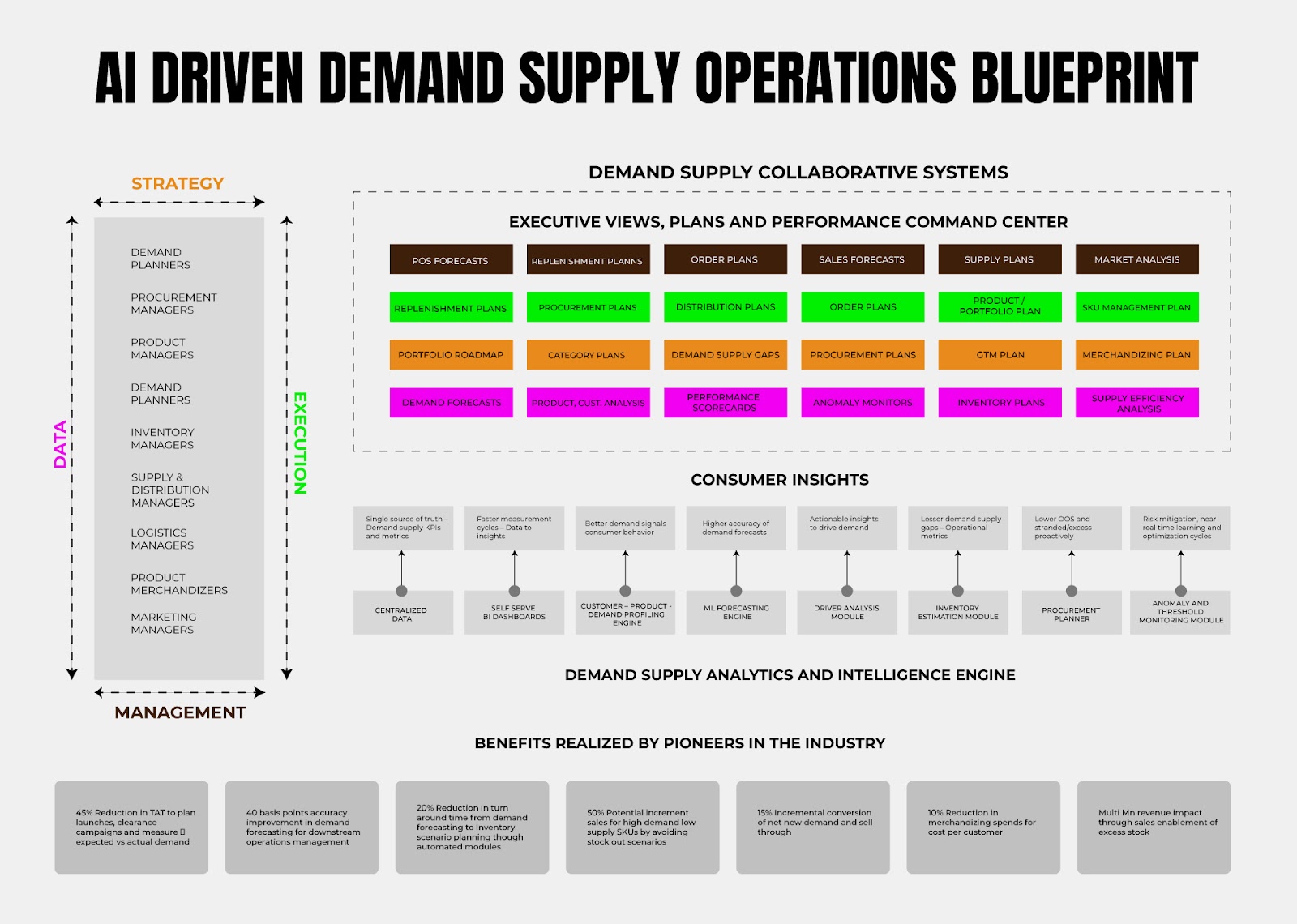
The demand-supply landscape is evolving rapidly, driven by globalization, heightened customer expectations, and market volatility. Traditional approaches to supply chain management often struggle to meet the agility, accuracy, and responsiveness required in this dynamic environment. Enter artificial intelligence (AI) as a crucial solution. AI offers advanced data analysis capabilities, processing vast amounts of structured and unstructured data to generate accurate demand forecasts, optimize inventory levels, and streamline resource allocation. AI-driven optimization algorithms enhance various aspects of the supply chain, such as inventory management and transportation routes. Additionally, AI enables risk identification and mitigation by analyzing diverse data sources. By enhancing visibility and transparency, AI empowers organizations to collaborate effectively, improve communication, and achieve greater customer satisfaction. Embracing AI in supply chain management is not only essential for staying ahead, but it is also a strategic imperative to unlock opportunities, mitigate risks, and achieve sustainable growth in today's rapidly evolving business environment.
AI Applications in Demand-Supply Planning
Algorithms and machine learning techniques have unlocked unprecedented possibilities. AI empowers organizations to tackle complex challenges and make informed decisions in real time. One notable application is demand forecasting, where AI algorithms analyze historical data, market trends, and external factors to provide accurate predictions. These advanced predictive models identify patterns, seasonality, and consumer preferences, enabling organizations to optimize production and inventory levels. Another area where AI excels is inventory optimization. AI-driven inventory management systems leverage real-time data, demand patterns, and supply constraints to optimize inventory levels, reducing costs, improving service levels, and minimizing wastage. Additionally, AI technologies aid in supply chain risk management by analyzing supply chain data and external factors to identify potential risks and disruptions. This proactive approach enhances resilience, ensures continuity, and minimizes the impact of unforeseen events.
The Positive Impacts of AI in Demand-Supply Planning
AI algorithms leverage data-driven insights to improve demand forecasting accuracy, resulting in reduced forecast errors and improved decision-making capabilities. With the ability to analyze vast amounts of real-time data, AI systems enable organizations to make quicker and more informed decisions, ensuring optimal inventory levels, production schedules, and order fulfillment. Moreover, AI-driven optimization algorithms identify opportunities to streamline operations, reduce waste, and maximize resource utilization, leading to cost savings and increased operational efficiency. Demand-supply synchronization is also significantly enhanced through AI, allowing organizations to align supply capabilities with demand fluctuations, resulting in improved responsiveness, reduced stockouts, and enhanced customer satisfaction.
