Oura: AI for Women's Health? Birth Control, Menopause?
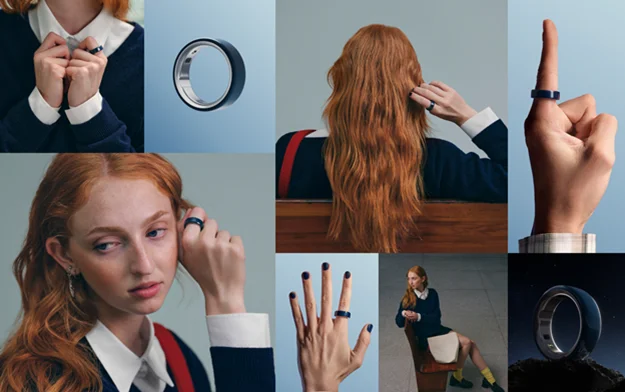
Oura is rolling out Hormonal Birth Control support and Menopause Insights to its global Ring members on May 6 — backed by a proprietary AI model, a clinically-validated questionnaire, and a same-day care partnership in the U.S.
Oura, the Finnish-American smart ring company that has spent the past decade building one of the most precise consumer biometric platforms in the market, is making its biggest expansion into hormonal health to date. On May 6, the company is rolling out two new features globally to Oura Ring Gen3 and Oura Ring 4 members: Hormonal Birth Control support in Cycle Insights, and Menopause Insights built around a proprietary clinically-validated questionnaire.
Together, these features mark what the company is positioning as a step-change in how femtech is built — moving beyond symptom logging into a system that connects subjective experience with continuous biometric data, layered on top of a proprietary women's health AI model Oura has been quietly developing.
For enterprise AI watchers tracking healthcare deployments, this is one of the cleaner examples in 2026 of consumer AI moving into clinically meaningful territory — not as a chatbot wrapper, but as a multimodal system combining sensor data, validated clinical instruments, and same-day care delivery.
What's actually launching
The two features address two of the most under-served stages in women's health.
Hormonal Birth Control support integrates directly into Oura's existing Cycle Insights feature, adapting its tracking model to over 20 unique combinations of hormonal birth control methods — pills, patches, IUDs, implants, and more. More than 300 million women globally use hormonal birth control, and Oura's pitch is that members can now see how their specific contraceptive choice shapes their temperature, sleep, recovery, bleeding, and symptoms over time.
The U.S. rollout adds a partnership with Twentyeight Health, letting members move from insight to same-day, insurance-enabled care with licensed clinicians directly inside the Oura App. That insight-to-action loop is unusual for consumer wearables, which typically stop at data presentation and leave the care navigation to the user.
 >
>Menopause Insights is the more ambitious launch. At its core sits the Menopause Impact Scale (MIS) — a proprietary, research-backed questionnaire developed by Oura that measures menopause's impact on quality of life and daily functioning across 22 symptoms. Unlike traditional menopause screening tools that produce a single score, the MIS generates personalized, on-demand explanations of results, grounded in both questionnaire responses and longitudinal biometric data from the ring.
The system shows how symptoms correlate with physiological trends — heart rate variability, sleep disturbances — and lets members track the long-term impact of lifestyle adjustments like sleep hygiene changes, medication, or stress management. The output is a shareable dashboard members can take into clinical conversations.
Why the architecture matters
Holly Shelton, Oura's Chief Product Officer, framed the underlying logic in the company announcement: by connecting hormonal context to the biometric data Oura already tracks, the company is giving women visibility, language, and evidence at a scale that has not previously existed.
The technical architecture deserves attention because it reflects where serious health AI is heading.
First, continuous biometric sensing. Oura's ring has been collecting high-fidelity sleep, temperature, heart rate, and HRV data from members for years — generating one of the largest longitudinal women's health datasets outside of formal clinical trials. That data depth is the substrate.
Second, a proprietary women's health AI model. Oura has been building this model alongside its general health features, and these new launches sit on top of it. The model is what allows the system to adapt cycle tracking to 20+ birth control methods, generate personalized explanations of MIS results, and surface meaningful patterns across hormonal life stages.
Third, clinically-validated instruments. The MIS is presented as research-backed and developed by Oura — meaning the company has done the work to validate the questionnaire against clinical standards before deploying it. This matters enormously for credibility in healthcare. Wellness apps that ship un-validated screening tools tend to attract regulatory scrutiny and clinician skepticism. Oura is positioning itself the other way.
Fourth, insight-to-action workflows. The Twentyeight Health partnership in the U.S. is the operational layer. Generating an insight is one thing; routing the user to a licensed clinician who can prescribe within the same app is qualitatively different.
This stack — continuous data plus AI model plus validated clinical instrument plus integrated care delivery — is becoming the template for serious consumer health AI in 2026, a pattern visible across the broader enterprise AI buildout in regulated verticals.
The femtech market context
 >
>The global femtech market has been growing at double-digit rates, but most of the growth has been concentrated at the symptom-logging and education layer. Real clinical integration has been rare, and AI integration rarer still. Oura is now competing on both fronts.
The competitive set worth watching is fragmented. Apple has been gradually expanding the Health app's women's health capabilities through Apple Watch, but its approach has been incremental rather than transformative. Fitbit (now part of Google) has women's health features, but the platform has lost momentum in recent years. WHOOP, often discussed alongside Oura, has been more focused on athletic performance than hormonal health — though one comment on Oura's announcement post specifically called out a recent WHOOP study on alcohol's biometric impact as a parallel example of what wearable datasets can reveal at population scale.
Then there are the femtech-specific platforms — Flo Health, Clue, Natural Cycles — which lead in cycle tracking but lack the continuous biometric layer. Oura's competitive advantage is the ring itself: a platform that collects high-quality data 24/7 without requiring user attention, paired with an AI model trained specifically for women's health patterns.
The ambition Oura is signalling — building "an adaptive companion for every hormonal life stage" — is the kind of cradle-to-grave product framing that, if executed, could create unusual customer lock-in in a market that has historically struggled with retention.
Why this matters beyond femtech
Three things are worth pulling out for enterprise AI strategists tracking how consumer AI products mature.
First, proprietary data plus a domain-specific model is the durable moat. Oura's general advantage is sensor data; its women's health advantage is having spent years building a model on that data specifically for women's health patterns. General-purpose foundation models cannot replicate this without comparable longitudinal data — and the data takes years to accumulate.
Second, augmentation framing wins in healthcare. Oura is explicit that these features support clinician conversations rather than replace them — every MIS result is shareable with clinicians, every birth control insight feeds into the Twentyeight Health care pathway. The company is not trying to be the doctor; it is trying to be the best-prepared patient ever to walk into the appointment. This is the same pattern visible in chip design's agentic AI buildout and other regulated verticals — augmentation, not replacement.
Third, the same-day care integration is the killer feature. For most consumer health products, the gap between "I noticed something" and "I got care" is where users drop off. Oura collapsing that gap through Twentyeight Health turns insight into outcome. Expect comparable integrations across the consumer health AI market — and watch which payer and clinician networks become the default integration partners. This is also a recurring conversation at global tech and enterprise AI events like MachineCon GCC Summit 2026, where healthcare AI deployments are increasingly central.
What to watch next
 >
>A few things will determine whether the launch matures into a category-defining position or remains an interesting feature update.
Geographic expansion of the care partnership. Twentyeight Health is U.S.-only. Oura's member base is global, and member comments on the launch post specifically asked about access in markets like Canada, the UK, Australia, and parts of Europe. Replicating the integrated-care model in regulated healthcare markets is non-trivial — each country requires separate regulatory navigation, clinician licensing, and prescription pathways.
MIS validation publishing. Oura will need to publish the clinical validation work behind the Menopause Impact Scale — peer-reviewed, ideally — for it to gain genuine credibility with the clinical community. Several comments on the launch post from clinical advisors and product leaders flagged validation as the key thing to watch.
Integration with adjacent conditions. One thoughtful comment on the launch came from a Type 1 diabetic asking whether the new features will integrate with Oura's existing strategic partnership with Dexcom to surface actionable insights for managing blood sugar through hormonal shifts. Expect the most valuable femtech use cases to sit at exactly these intersections — hormonal health × diabetes, hormonal health × cardiovascular risk, hormonal health × mental health.
Competitive responses. Apple's WWDC in June will be the first natural moment for a competitive announcement. Watch whether Apple Watch's women's health features get a serious upgrade in response.
For now, Oura has done what mature consumer health platforms increasingly need to do: ship features that are clinically credible, AI-powered without being AI-gimmicky, and tied to care delivery that closes the loop. The bet is that this becomes the template for serious femtech. On current evidence, it should be.
Key Takeaways
- Oura launches AI-powered hormonal birth control support and menopause insights for global members.
- The new features integrate subjective experiences with biometric data via a proprietary AI model.
- Oura's expansion represents a significant move beyond symptom logging in femtech development.
- US rollout includes a partnership for same-day care delivery related to hormonal health.
- The initiative leverages sensor data and clinical instruments, showcasing meaningful consumer AI in healthcare.