How Is Skild AI Transforming Warehouse Automation?

Skild AI has acquired Zebra Technologies' robotics arm — the former Fetch Robotics — combining a foundation-model "brain" with a production-grade orchestration platform to go after full-warehouse autonomy.
Skild AI, the Pittsburgh-founded robotics software startup valued at over $14 billion after a $1.4 billion Series C earlier in 2026, has acquired the robotics automation business of Zebra Technologies — the unit formerly known as Fetch Robotics. Financial terms were not disclosed. The deal marks one of the most consequential consolidations in embodied AI to date, and a clean exit for a robotics asset that has changed hands under very different strategic premises.
The announcement, first reported by Bloomberg on April 15, 2026, hands Skild two things it did not have before: a production-deployed fleet of autonomous mobile robots (AMRs) working in real warehouses, and Zebra's Symmetry Fulfillment orchestration platform — the software layer that coordinates those robots alongside human workers using real-time data from Zebra's wearable devices.
For Skild, this is the missing piece of a very deliberate stack. For Zebra, it is a clean cut from a business it has publicly said it wanted to exit. And for the broader enterprise AI community tracking the agentic wave, it is the clearest signal yet that foundation models are moving off the screen and onto the warehouse floor.
What Skild is actually building
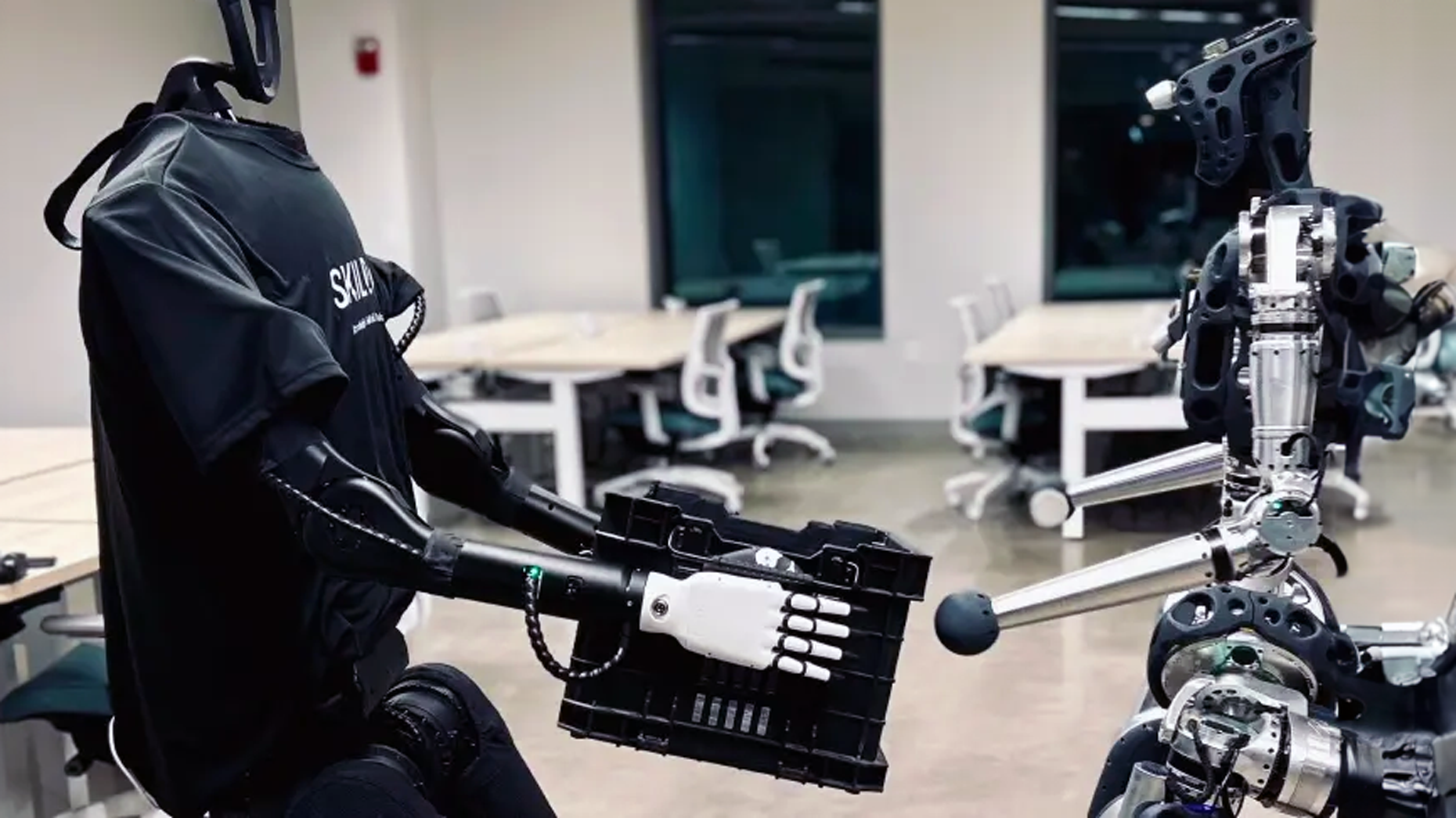
Skild's pitch is what the company calls an "omni-bodied brain" — a single foundation model designed to control robots regardless of form factor. Quadrupeds, humanoids, tabletop arms, mobile manipulators: the same underlying model generalises across all of them without retraining from scratch.
This is a meaningful departure from how robotics has historically worked. Classical deployments are brittle and task-specific — programmed against the exact kinematics of one robot. Change the hardware, and the software essentially starts over. Skild's architecture argues that a sufficiently capable foundation model can abstract the body away entirely, with the same policy network driving a humanoid picker and an AMR from the same underlying weights.
 >
>Deepak Pathak, Skild's co-founder and CEO, has framed the vision simply in interviews announcing the deal: integrating Zebra's fleet management software will let Skild control large groups of robots at once, up to and including running an entire warehouse. That is a step-change from the traditional model of programming each machine for one task.
Co-founder and president Abhinav Gupta has added that the combination will specifically sharpen robotic dexterity and object manipulation — the hardest and most human-bottlenecked parts of fulfillment, where classical approaches have consistently fallen short.
What Zebra and Fetch bring to the table
The acquired business traces back to Fetch Robotics, the AMR pioneer Zebra bought in 2021 for roughly $290 million. But the real asset here is not the hardware — it is Symmetry Fulfillment, Zebra's orchestration platform that has been running in production across high-volume logistics environments where reliability is non-negotiable.
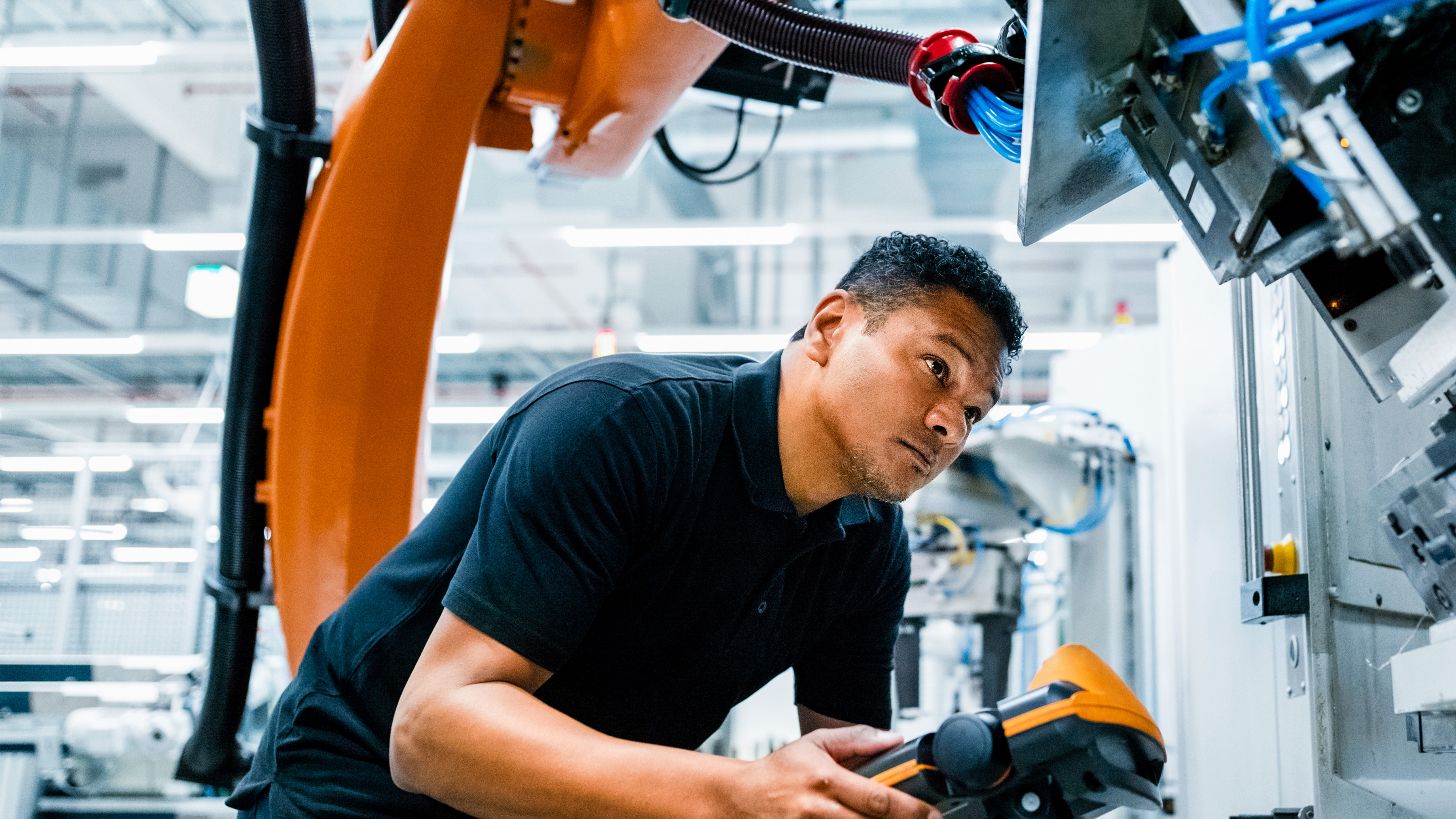
Symmetry does the scheduling and fleet-management work: task allocation across robots, collision avoidance, dynamic re-routing, and human-robot coordination. That layer is notoriously hard to replicate because it is deeply integrated into real-world warehouse operations with long deployment cycles. Layering Skild's decision-making model on top of Symmetry's execution engine is, in the cleanest framing, intelligence meeting orchestration.
The timing is also commercial. Zebra disclosed in its December 2025 SEC filings that it expected to incur up to $80 million in one-time pre-tax charges tied to disposing of the robotics automation business, offset by roughly $20 million in net annualised cost savings. The business that was a strategic bet in 2021 had become a cost problem by late 2025. Skild's acquisition is effectively a rescue of the Fetch lineage — and, according to Pathak, the broader robotics community has long rooted for that outcome.
 >
>The competitive field just tightened
This deal lands in the middle of a sprint to build robotics foundation models. Skild now sits in tighter competition with Physical Intelligence, Rhoda AI, and a growing list of startups racing to deploy "universal brains" into production lines, fulfillment centres, and e-commerce operations. The hyperscalers — Amazon, Alibaba, Walmart — have their own proprietary fleets, but those are vertically integrated by definition. What Skild is building is horizontal: a hardware-agnostic intelligence layer that, in theory, any 3PL operator can plug into.
The investor signal matters too. Skild has backing from Lightspeed among others, and the Series C round earlier this year — $1.4 billion at a $14-billion-plus valuation — is among the largest private rounds in robotics this cycle. The company grew from near-zero to roughly $30 million in revenue in a few months of 2025, a trajectory that makes the Zebra acquisition look less like a bet and more like an inevitability.
For AIM Research-tracked enterprise AI buyers, the takeaway is less about the deal itself and more about the emerging playbook: foundation-model startups are buying operational infrastructure to close the gap between model capability and real-world deployment. This is the same pattern visible in agentic AI stacks across enterprise software.
Why this matters beyond warehouses
 >
>Warehouse automation is a $12-billion-plus market by 2028 according to industry estimates, driven by e-commerce volume and persistent labour shortages. But the deeper story is what happens when foundation models start operating in physical environments with zero tolerance for error — the same unforgiving deployment bar that has forced agentic AI in chip design to invent new architectural primitives like knowledge graphs and principled tool-calling.
Robotics will demand similar rigour. A warehouse robot that "hallucinates" a picking decision does not just produce a wrong answer — it drops inventory, damages product, or injures a co-worker. Expect the next wave of robotics engineering to look a lot more like safety-critical systems engineering than consumer AI. Coverage of the GCC and hyperscaler community at MachineCon 2026 has already started tracking this shift.
What comes next
Three things to watch over the next two quarters.
First, whether Skild can actually deliver unified, cross-embodiment warehouse autonomy at scale. The architecture is promising; the deployment record is still short. Second, how quickly the Symmetry platform expands beyond its current footprint — into new verticals, new use cases, and a broader range of robot form factors than Fetch ever serviced. Third, whether competitors respond with their own platform plays, and whether Zebra's divestment triggers a broader reshuffling of robotics IP across the industry.
Skild has picked up infrastructure, customers, and a data flywheel in a single move. The harder work — proving the omni-bodied brain at production scale — starts now.
Key Takeaways
- Skild AI acquires Zebra Technologies' robotics arm to enhance warehouse automation capabilities.
- The acquisition provides Skild with a fleet of autonomous robots and an orchestration platform.
- Skild aims to develop a universal 'omni-bodied brain' for diverse robotic applications.
- This consolidation signals a significant shift towards full-warehouse autonomy in the AI sector.
- Zebra Technologies exits robotics, aligning with its strategic focus on core business areas.