

 Banking
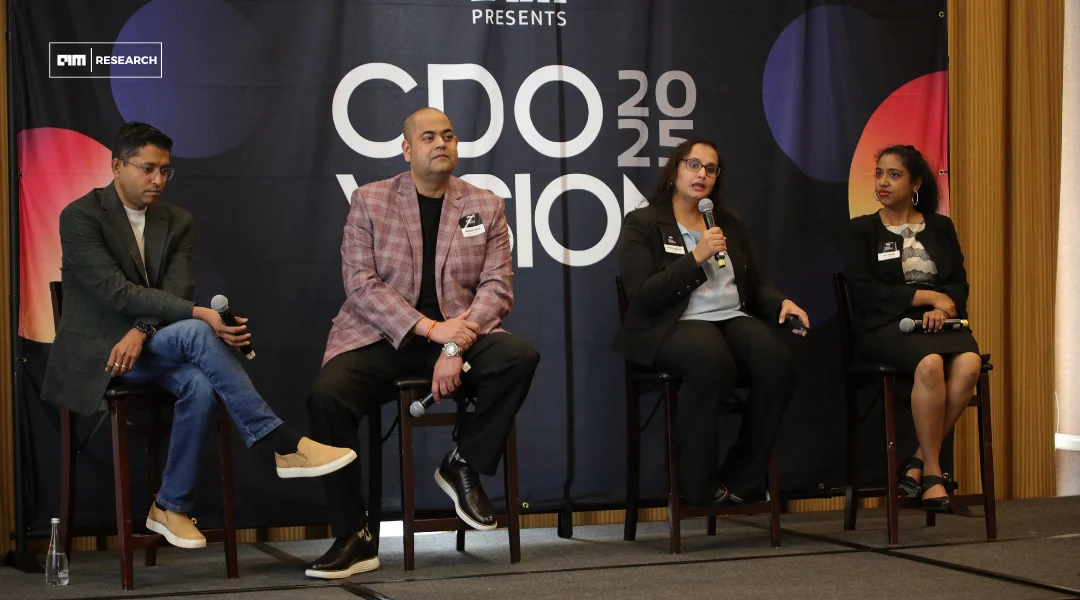
The financial services industry stands at a pivotal moment in its digital transformation journey. As artificial intelligence evolves from a support function to the core of business operations, industry leaders are grappling with fundamental questions about implementation, governance, and trust. A recent panel discussion featuring Shuchi Agarwal, CDO of Global Head of Data Tooling Adaption, Automation and Data Provisioning at Citi. Jaya Eripilla, VP Senior Technology Manager, Data Analytics and Insights Technology at Bank of America. Kamlesh Singh, Regional Sales Head at Tiger Analytics. provided valuable insights into what it truly means to be "AI-first" in today's enterprise landscape.
Redefining AI-First: Beyond Efficiency to Business DNA
The concept of being "AI-first" represents a fundamental mindset shift that goes far beyond traditional automation initiatives. Companies have been implementing AI and machine learning for over a decade. However, the AI-first approach involves "integrating AI into the DNA of their business" rather than simply using technology to reduce costs or increase efficiency.
This transformation manifests in tangible ways across customer interactions. Consider a typical customer service call that traditionally takes five to six minutes while agents research account information, relationship histories, and potential solutions. An AI-first approach leverages augmented intelligence to analyze customer data, transaction patterns, life events, and cross-selling opportunities in real-time, reducing call duration to approximately one minute while significantly enhancing the customer experience.
