Vinod Khosla: Betting on Outsiders, Not Experts
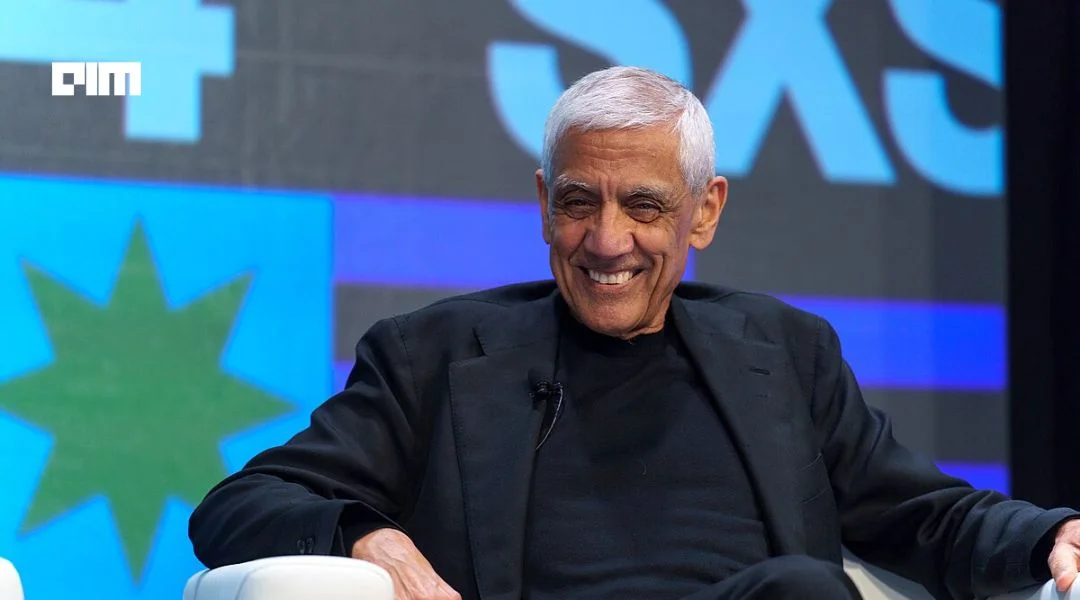
I’d rather try and fail than fail to try.
“The need to work will go away.”
That’s how Vinod Khosla, founder of Khosla Ventures and the first major investor in OpenAI, describes the future of labor. He believes artificial intelligence will render most jobs economically unnecessary, dismantle corporate incumbents, and reshape global influence. The transition, in his view, is already underway.
“People will work on things because they want to, not because they need to pay their mortgage,” he said.
Khosla is not concerned with long-term AI alignment theories. He is focused on accelerating adoption, rebuilding critical infrastructure, and making sure Western democracies, not authoritarian regimes, dominate the future of AI. His firm’s early bet on OpenAI in 2018, which he calls “more than twice the largest initial investment I’d made in 40 years” was based not on hype but on conviction.
Almost Every Job Is in Play
Khosla believes AI will take over most professional work, starting with what he calls “AI interns” specialized agents that shadow and assist professionals. “Every MD, a practicing physician, will get five fresh MDs as if they are fresh out of Stanford medical school that’ll work for them,” he said. “But at some point, these interns grow up.”
He pointed to a Stanford-led study where AI outperformed doctors in diagnosing complex conditions. Physicians had a 73 percent accuracy rate. The AI model scored 88 percent. When doctors were given AI suggestions, accuracy dropped to 76 percent. “A quarter of all diagnoses were wrong from doctors in top academic centers,” he said. “That’s a problem AI can fix.”
This transition is already underway. Microsoft has demonstrated that its multimodal AI model MAI-1 can outperform human doctors in diagnostic reasoning. Startups like Mediwhale are deploying AI to detect early-stage chronic illnesses from retinal scans, bypassing traditional exams altogether. Khosla-backed firms such as Curie are also building AI-based primary care systems designed to deliver medical expertise for less than a dollar per month per person.
Incumbents Will Not Survive the Shift
Khosla predicts a wave of collapse across traditional enterprises. “The 2030s will see a faster rate of demise of Fortune 500 companies than we’ve ever seen,” he said.
He argues that incumbents are structurally incapable of transformation. “Most innovation doesn’t come from experts. It doesn’t come from people in the industry. It comes from outsiders who don’t know what’s not allowed.”
The pattern is consistent across sectors. Netflix reshaped media, not NBC. Uber redefined transportation, not Hertz. SpaceX built reusable rockets while Boeing and Lockheed lagged behind. Khosla makes the point plainly: “There’s zero chance a company like Siemens or GE could do fusion. Experience is a set of biases that prevent you from making mistakes but it also prevents you from inventing.”
His investments reflect this belief. In recent years, he’s backed companies that aim to replace, not reform, legacy players.
The Real AI Risk Is Authoritarian Influence
Khosla’s biggest concern is not rogue models but geopolitical power. “The largest risk in AI, far exceeding any other, is AI in the hands of President Xi or President Putin,” he said.
He believes authoritarian states will use AI not just for control but for global ideological influence. “President Xi said the next battle will be fought for people’s minds. He was thinking TikTok.”
In his view, platforms like TikTok are already reshaping cultural perception. As AI doctors, tutors, and creators become widely available, whoever distributes them at scale will shape not just consumer behavior but social values. “If we’re giving away the free doctors, the free tutors, the cultural products, we shape the political philosophy that follows.”
This argument is increasingly resonant. The proliferation of AI-generated content, recommendation algorithms, and large-scale tutoring platforms raises concerns about soft-power manipulation especially in regions with weak information governance.
Rebuilding the Physical World
Khosla’s investments go far beyond generative software. He is also targeting the industrial backbone of energy, materials, and transit through what he calls “hard tech reinvention.”
In geothermal energy, his portfolio includes startups working to access superhot rock at depths of 20 kilometers. At temperatures exceeding 450°C, energy output becomes 6 to 10 times greater than at today’s commercial geothermal levels. Companies like Quaise Energy are using millimeter-wave drilling to reach those depths, positioning geothermal as a scalable base-load energy source cheaper than natural gas.
In materials, Khosla is backing firms that decarbonize cement and steel production without raising costs. His approach is to turn carbon emissions into valuable inputs. “Instead of shutting plants down, we capture CO₂ and turn it into carbonates. It’s cheaper and produces more cement from the same limestone,” he said.
He’s also investing in next-generation public transit. Glydways, a Khosla Ventures portfolio company, is building autonomous, on-demand pods that travel in narrow lanes or elevated tracks. These lightweight systems promise 10 times the throughput of light rail for a fraction of the infrastructure cost. “We’ve bid on four city projects and won every one,” Khosla noted.
Redefining Venture Capital
Khosla openly rejects the norms of venture investing. “I don’t get on boards. I don’t calculate IRR,” he said. “And I don’t believe in this ‘founder-friendly’ label. It’s like telling your kids to eat as much candy as they want.”
His model is to act as a coach, not a sponsor. “Even the strongest founders need a coach,” he said. He points to ongoing one-on-one working sessions with Jack Dorsey (Block, Square) and Max Levchin (Affirm), long after their IPOs. “I told one founder, give me two hours to make my case against your decision. I signed the approval first. But I wanted the debate.”
In his view, “founder-friendly” often means passive and uncritical. What matters is increasing the magnitude and probability of success not protecting egos.
Where He’s Looking Next
Khosla sees humanoid robotics and defense as the next major frontiers.
In robotics, startups like Figure and 1X Technologies are developing general-purpose humanoids capable of performing household and industrial tasks. Figure’s robot has been piloted by BMW in manufacturing environments. 1X’s NEO robot is already being tested in home settings as a mobility and companionship solution. Khosla believes these systems will become as commonplace and affordable as a car lease. “It will likely start in the kitchen, cooking and cleaning, and cost $300 to $400 a month,” he said.
In defense, he’s funding autonomous weapons and software-defined military systems. His rationale is geopolitical stability. “Iran doesn’t have nukes, so Israel attacks. Deterrence matters,” he said. “Software will define warfare.”
Mach Industries, a Khosla-backed company, is building low-cost, AI-driven munitions and autonomous defense platforms designed to outperform traditional multi-million-dollar defense systems.
Across sectors, Khosla applies the same formula, find a system that is broken, backed by incumbents, and governed by legacy economics. Then rebuild it from first principles.
“Fusion, OpenAI, geothermal. Some things are too important not to try,” he said. “I’d rather try and fail than fail to try.”
Key Takeaways
- Vinod Khosla predicts AI will render most jobs economically unnecessary, shifting work to passion-driven pursuits.
- Khosla prioritizes accelerating AI adoption for Western democracies, moving past alignment theories.
- AI is projected to surpass human professionals, with studies showing AI outperforming doctors in diagnoses.
- Khosla Ventures' significant early investment in OpenAI reflects conviction in AI's transformative power.