

 Pharma

Deployment record
In the tracker →- Organisation
- Alexion
- System
- Head of AI
- Stage
- Hiring
- Function
- enterprise AI strategy
- 01AstraZeneca is hiring a Head of AI for its Alexion unit, with a salary range of $258,000 to $387,000, to develop a multi-year AI roadmap across various functions.
- 02The new role will involve defining Alexion's AI operating model, governance, and responsible AI practices, while also building relationships within AstraZeneca.
- 03AstraZeneca already has an established Enterprise AI Unit led by Anne-Claire Gerbaldi, focusing on R&D, Commercial, and Operations, including rare diseases.
Show all 5Show less
- 04Rare diseases represent a significant market opportunity for AstraZeneca, accounting for 16% of its $58.7 billion revenue, with 95% of known rare diseases lacking approved therapies.
- 05The creation of a separate AI leadership role for Alexion raises concerns about potential duplication of efforts and governance challenges within AstraZeneca's AI strategy.

Alexion
Follow Deployed on Google
On 28 October, AstraZeneca posted a role titled Head of AI, Alexion, AstraZeneca Rare Disease Unit, based in Boston. The hire will act as senior AI advisor to the Alexion Leadership Team and set "a multi-year enterprise AI roadmap" covering investment, adoption goals and value measures. The scope runs across Research, Development and Regulatory Sciences, Operations and Commercial, from discovery to market. Base pay is listed at about $258,000 to $387,000, and applications close on 5 November.
The brief reads like a chief AI officer for a company within a company. The new leader will define Alexion's AI operating model, including decision rights, governance and delivery standards, decide which AI opportunities get funded and which are retired, and embed responsible AI practices on validation, bias, privacy and auditability. The ad also asks the hire to build relationships "across Alexion and AstraZeneca," which is where the interesting tension sits.
AstraZeneca already has an AI centre
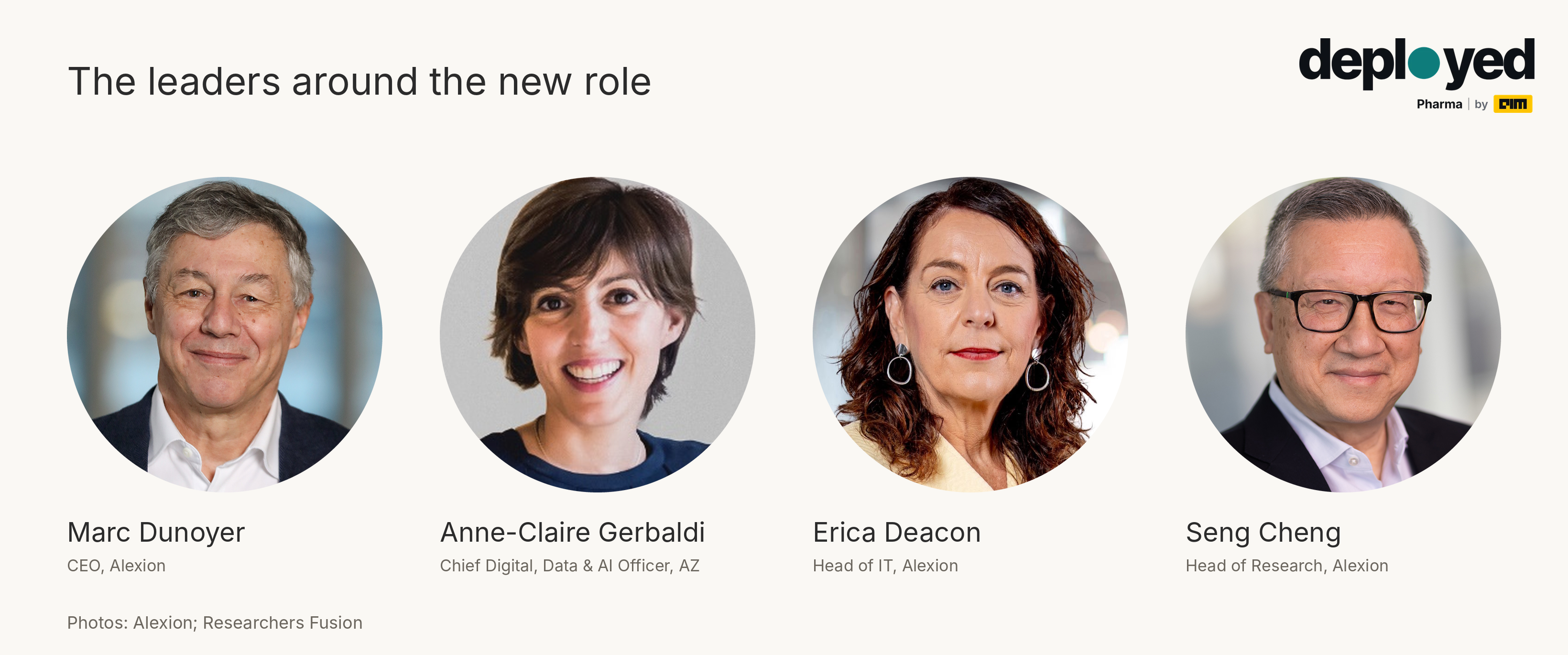
AstraZeneca built its own Enterprise AI Unit, which it describes as "a global centre of excellence" covering R&D, Commercial, Operations and Corporate functions, with rare diseases listed among its focus areas. It is led by Anne-Claire Gerbaldi, senior vice president and chief digital, data and AI officer. In October she announced a collaboration with Oracle on trial recruitment and earlier diagnosis, a discovery deal with insitro and a founding role in the Sferical AI supercomputer in Sweden. AstraZeneca also hired Chris Taylor from Stellantis as chief information officer in April, and its chief data officer, Brian Dummann, has spoken about unifying AI, privacy and security reviews to cut approval times from weeks to days.
Against that backdrop, a separate Alexion AI head raises fair questions. Two leaders setting AI priorities for overlapping functions could split budgets, duplicate vendor deals and create two governance regimes for the same regulators. AstraZeneca's own employees could also face different tools and rules depending on which unit they sit in. There is a talent question as well, since both teams would be hiring from the same small pool of AI leaders with pharma and regulatory experience, and a unit-level head may find that the most valuable data and platforms still sit with the parent.

The week's drug discovery, trials and health-system deployments. Wednesdays.
Too many patients are diagnosed late or face a long journey.

Why rare disease may need its own
The case for a dedicated leader is grounded in how different rare disease work is. About 95% of the roughly 10,000 known rare diseases have no approved therapy, according to the Financial Times, and patients can wait years for a diagnosis. Rare disease data is small, scattered and often held in electronic health records rather than large trials, so the AI problems look different from oncology or respiratory. Alexion has already worked with Pangaea Data on an AI tool that flags hypophosphatasia in health records, and with Genomenon on genomic maps for diseases such as Wilson disease and hypophosphatasia.
The commercial stakes are large too. Rare disease medicines made up 16% of AstraZeneca's $58.7 billion revenue last year, roughly $9.4 billion, and Alexion runs its own leadership team in Boston under Marc Dunoyer, who is also AstraZeneca's chief strategy officer. A unit of that size, with its own research head in Seng Cheng and its own IT head in Erica Deacon, has a reasonable claim to its own AI roadmap, as long as it builds on the parent's platforms.
Others are making similar moves. Deployed's pharma desk recently covered Syneos Health naming a global head of AI and engineering, and Novo Nordisk turning to Anthropic for drug development. Our analysis of a decade of AI in pharma found that technological progress outpaced adoption, which is the gap a unit-level AI head is meant to close. On the patient side, Ro has shown how quickly AI moves once a company owns its own clinical data.
Five questions for Marc Dunoyer
- Q1Does Alexion's Head of AI report into Alexion, AstraZeneca's Enterprise AI Unit, or both?
- Q2Which AI platforms and governance rules will Alexion share with AstraZeneca, and which will it run itself?
- Q3Which rare disease problem gets AI first: diagnosis, trial recruitment, regulatory filings or commercial?
- Q4How will Alexion measure AI value when patient populations are this small?
- Q5How will it avoid duplicating vendor deals such as the Oracle collaboration?
AstraZeneca has bet on a strong central AI unit, and Alexion is now asking for a leader of its own. If the two roles are wired together clearly, rare disease patients could see faster diagnoses and trials. If they are not, AstraZeneca may end up with two AI agendas competing for the same budget.
Last updated
