How is Goldman Sachs Restructuring for AI Growth?
"The opportunity set with AI is 'enormous.' There will be winners and losers"
On paper, Goldman Sachs already won the technology M&A game in 2025. The firm ranked number one globally, advising on $337.8 billion in tech transactions, a 42.5% market share. It closed the $55 billion leveraged buyout of Electronic Arts and Alphabet's $32 billion acquisition of cloud security firm Wiz. By every traditional metric, Goldman dominated.
Yet on December 17, the bank made a hire that tells something different. Goldman Sachs recruited Brian Cayne, co-founder of Qatalyst Partners, to serve as global co-head of its software investment banking group, first reported by Reuters.
Cayne spent 15 years building Qatalyst into the premier advisory firm for technology deals under the mentorship of legendary tech banker Frank Quattrone. Now, starting in January, he'll run Goldman's software practice from San Francisco alongside existing co-heads Joe Porter (London) and Jason Rowe (New York).
Software deals have become the most valuable and competitive segment in tech M&A. Unlike hardware or infrastructure, software companies trade at multiples that reward scale, market position, and recurring revenue models. A $1 billion software acquisition is fundamentally different from a $1 billion hardware deal. The buyer is purchasing subscription revenue streams, customer relationships, and technical talent, assets that require deep sector expertise to properly value.
Qatalyst has dominated this space for over a decade. By focusing exclusively on technology advisory, the firm developed proprietary insight into valuations, buyer appetite, and deal dynamics that generalist investment banks struggle to match. Frank Quattrone's reputation attracted top talent and ensured repeat business from the most sophisticated buyers in tech.
Goldman has long been the largest tech M&A advisor by volume. But "largest" doesn't necessarily mean "most profitable" or "most strategic." Boutique firms like Qatalyst capture disproportionate fees on major deals because they're perceived as indispensable. They have relationships, expertise, and credibility that generalist banks lack. Cayne's hire suggests Goldman wants to shift that perception.
The AI Shift
Just three days before announcing Cayne's arrival, Goldman revealed it will be doing a wider reorganization of its technology, media, and telecom (TMT) investment banking division, as reported by Reuters. The restructuring consolidates telecom and "CoreTech" teams into two new groups, Global Infrastructure Technology and Global Internet and Media. Their main focus now will be infrastructure deals and artificial intelligence.
AI has become the dominant narrative in technology M&A. Companies are racing to acquire AI capabilities, data, talent, and compute infrastructure. Every software deal now has an AI component. Every infrastructure deal is mostly an AI infrastructure deal. Goldman recognizes that advisors who deeply understand AI, how it reshapes software economics, which companies have defensible AI moats, which AI investments are strategic versus vanity, will capture disproportionate fees.
Cayne brings exactly that perspective. He spent 15 years embedded in the technology ecosystem, advising founders and boards on M&A strategy during transformational moments. He understands which software business models survive AI disruption and which get flattened.
Hiring a co-founder of a boutique bank is also a statement about Goldman's hunt for talent. Generalist banks struggle to retain top deal makers because boutiques offer partnership, focus, and relationship ownership that massive universal banks can't match.
By recruiting Cayne, Goldman signals it's willing to offer autonomy, focus, and seniority to top talent. Cayne becomes global co-head of software banking. Not a managing director reporting to someone else, but a co-leader of an entire practice reporting directly to the global co-heads of TMT. That's an offer boutiques can't easily match.
What Does It Mean?
On the surface, it looks like Goldman is poaching a respected advisor to strengthen its software practice and prevent competitors from adding him to their teams.
But the deeper reason is strategic repositioning. As confirmed by an internal memo, Goldman is reorganizing its TMT group around infrastructure and AI. It's hiring a specialist in software M&A who understands AI's impact on valuations and deal dynamics. It's creating a new organizational structure (Global Infrastructure Technology and Global Internet and Media) that reflects where growth capital is actually flowing.
Goldman's $337.8 billion market share in 2025 looks unassailable. But software M&A is becoming more concentrated among fewer buyers, meaning larger deals. Those mega-deals require advisors who understand both the strategic rationale and the financial engineering.
Goldman's move suggests it wants to own that role going forward. By installing Cayne, a co-founder who has spent 15 years cultivating those relationships, Goldman signals it's not willing to cede software advisory leadership to boutiques.
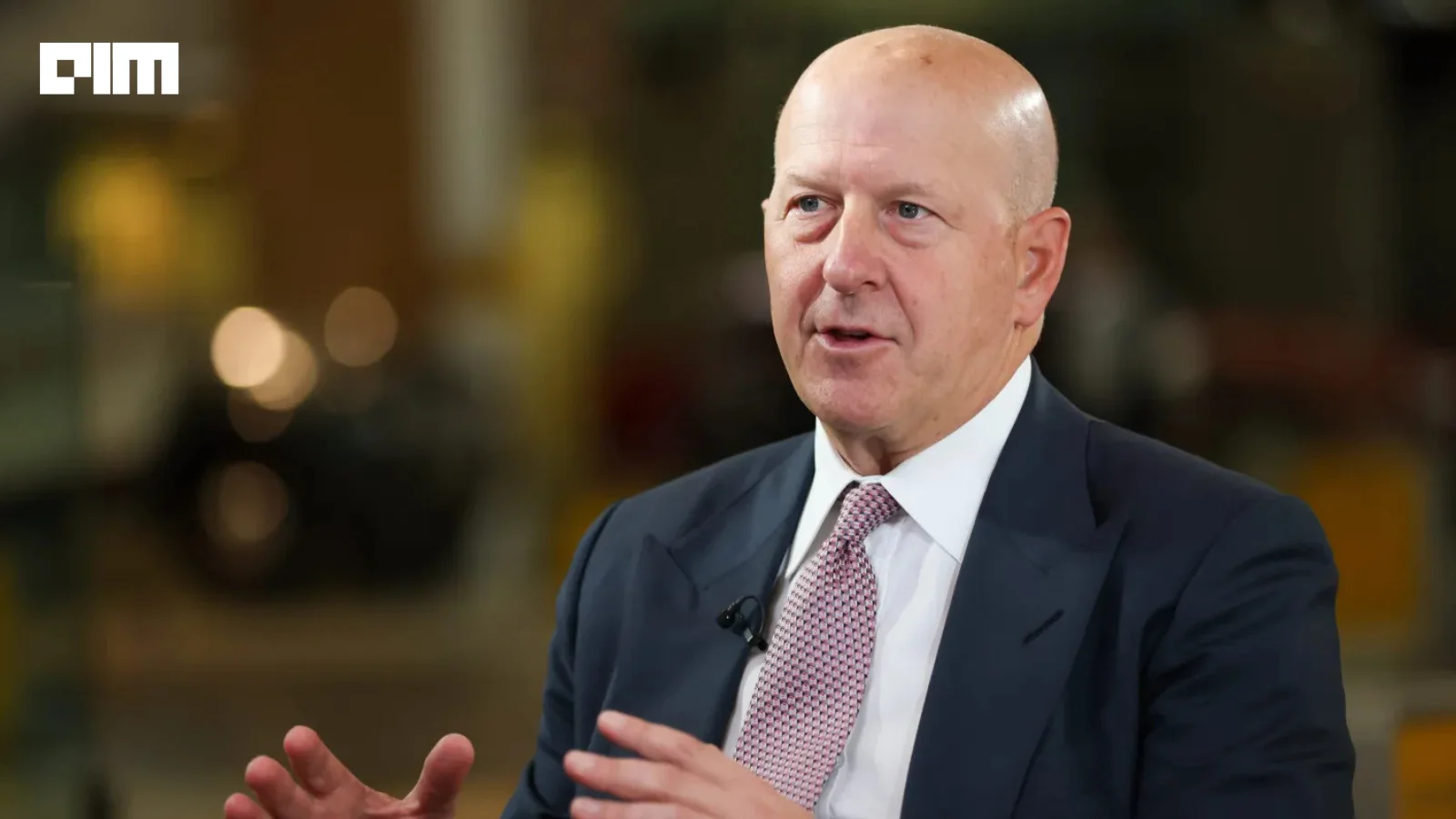
."The opportunity set with AI is 'enormous.' There will be winners and losers, and it's hard to pick them now," said David Soloman, Goldman Sachs CEO.
Key Takeaways
- Goldman Sachs hires Brian Cayne to enhance its software investment banking amid AI focus.
- The bank leads global tech M&A with a 42.5% market share in 2025.
- Cayne's expertise from Qatalyst Partners aims to strengthen Goldman's competitive edge in technology deals.
- Goldman's restructuring signals a strategic pivot towards artificial intelligence in finance.
- Industry experts anticipate significant winners and losers in the evolving AI landscape.