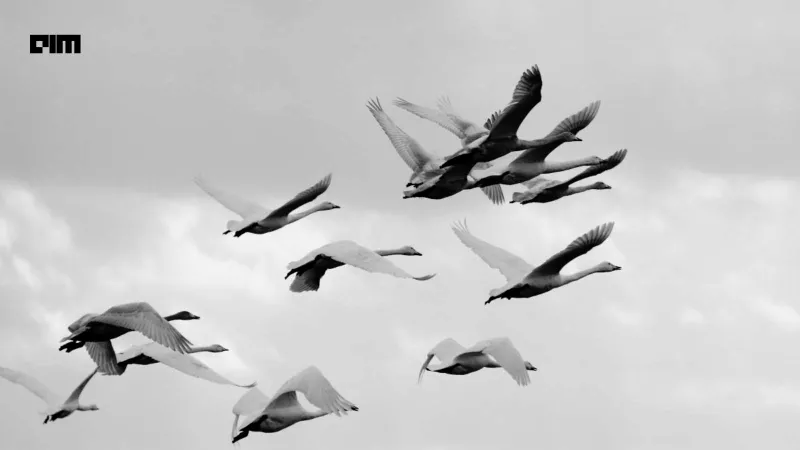
Wildlife migration tracking is shifting from observation to decision-making as artificial intelligence systems process data from sensors, satellites, and field observations into operational insights.
A recent report from The Nature Conservancy outlines how migration tracking now integrates GPS tags, radar, bioacoustics, environmental DNA (eDNA), and AI to monitor animal movement across land, air, and water at scale.
The change is not in data collection alone. AI systems analyze large volumes of movement data and identify patterns that inform where conservation efforts should be deployed. Similar AI-driven decision systems are already used in other biological domains, including drug discovery workflows where models guide research direction and outcomes.
Migration tracking historically depended on manual observation and limited tagging methods. Current systems combine continuous sensor inputs with automated analysis, allowing researchers to monitor species movement with higher frequency and geographic coverage. The Nature Conservancy report details examples including monarch butterfly migration tracking, nocturnal bird monitoring using bioacoustics, and ocean-scale tracking of marine species.
These datasets are used to identify migration corridors, breeding habitats, and seasonal stopover points. Conservation teams then use this information to prioritize land protection, restoration efforts, and cross-border coordination.
The Nature Conservancy headquarters in Arlington, Virginia
AI Systems Enable Real-Time Monitoring And Intervention
AI models are increasingly used to process acoustic recordings, satellite feeds, and GPS data to detect movement patterns and identify risks as they emerge.
For migratory birds, bioacoustic sensors capture flight calls during night migration. AI systems analyze these recordings to determine species presence and migration timing, helping identify critical habitats and peak movement periods.
On land, GPS tracking of species such as mule deer reveals migration corridors and bottlenecks where animals encounter roads or development. Conservation teams use this data to guide infrastructure adjustments and habitat protection measures.
Real-time tracking also supports direct intervention. The report describes how cheetah movements are monitored using GPS collars, allowing conservation teams to respond to threats such as poaching by deploying patrols and alerting nearby communities.
This operational use of AI aligns with broader applications in animal health systems, where AI tools are used to monitor and manage biological conditions in real time.
Migration Data Informs Planning And Restoration Decisions
Migration datasets are also being used to guide long-term planning decisions at regional and national levels.
In Kenya, elephant tracking data has been used by government authorities to inform land-use planning and infrastructure placement, reducing conflicts between wildlife movement and human development.
In aquatic systems, tagging and monitoring of migratory fish reveal where dams and barriers disrupt movement. Conservation teams use this data to evaluate restoration efforts and identify where additional changes are needed to reconnect river systems.
Tracking data is also used to coordinate conservation across borders. Satellite monitoring of leatherback sea turtles allows researchers to identify overlaps between migration routes and fishing zones, informing policy and mitigation strategies.
These applications extend into broader environmental systems where AI is used to support sustainability and resource management decisions at scale.
The Nature Conservancy report shows that migration tracking is no longer limited to mapping where animals move. AI systems now convert those movements into actionable data that supports conservation planning, real-time response, and ecosystem management across multiple regions.
Mukundan covers enterprise AI and the AI startup ecosystem for AIM Media House. Reach out to him at mukundan.sivaraj@aimmediahouse.com or Signal at mukundan.42.


 Pharma