Banner Health Deploys Robotic Microscope for Brain Tumor Surgery in Arizona

Banner Thunderbird Medical Center becomes first in Western U.S. to use a robotic digital microscope for brain tumor surgery, focusing on precision and surgeon ergonomics.
Banner Health has deployed a robotic digital microscope for brain tumor surgery at Banner Thunderbird Medical Center, making it the first hospital in the Western U.S. to adopt the system.
The hospital is using the Aesculap Aeos Robotic Digital Microscope, a robotic exoscope that provides high-definition 3D visualization of the surgical field and allows the entire operating room team to view procedures in real time. A neurosurgery team has already used the system in craniotomy procedures to remove brain tumors, according to a Banner Health press release.
The system replaces traditional optical microscopes with a digital interface. Surgeons operate in a “heads-up” position, viewing a screen instead of looking through an eyepiece. The device can be controlled using a handgrip or wireless foot switch, with features that allow precise movement, waypoint setting, and target locking during procedures.
Health systems are increasingly tying technology deployments to measurable clinical and operational outcomes, as seen across recent implementations in care delivery environments.
 >
>Surgical Visualization and Operating Room Workflow
The Aeos system expands visibility beyond the lead surgeon by projecting a shared 3D image across the operating room. This allows surgical teams to follow procedures simultaneously, improving coordination during complex cases.
“I couldn’t be more thrilled with this new technology to advance brain tumor microneurosurgery,” said Dilan Ellegala, Professor of Neurosurgery at Banner University Neurosurgery. “Not only does the exoscope allow for a more comfortable operating experience, it also enables better communication and workflow between our team members in the operating room.”
This shift toward shared visualization aligns with broader adoption of task-specific systems designed to improve workflow performance in clinical settings.
Digital exoscopes are part of a transition from optical to screen-based surgical environments, where imaging, navigation, and control systems are integrated into a single platform. The ability to adjust positioning without interrupting procedures allows surgeons to maintain continuous focus during high-precision operations.
Focus on Surgeon Ergonomics and Long Procedures
Banner Health’s deployment also addresses physical strain associated with neurosurgery. Studies cited by the health system show that 54% of neurosurgeons experience cervical or lumbar discomfort, 40% report neck pain, and 27% report shoulder pain during procedures.
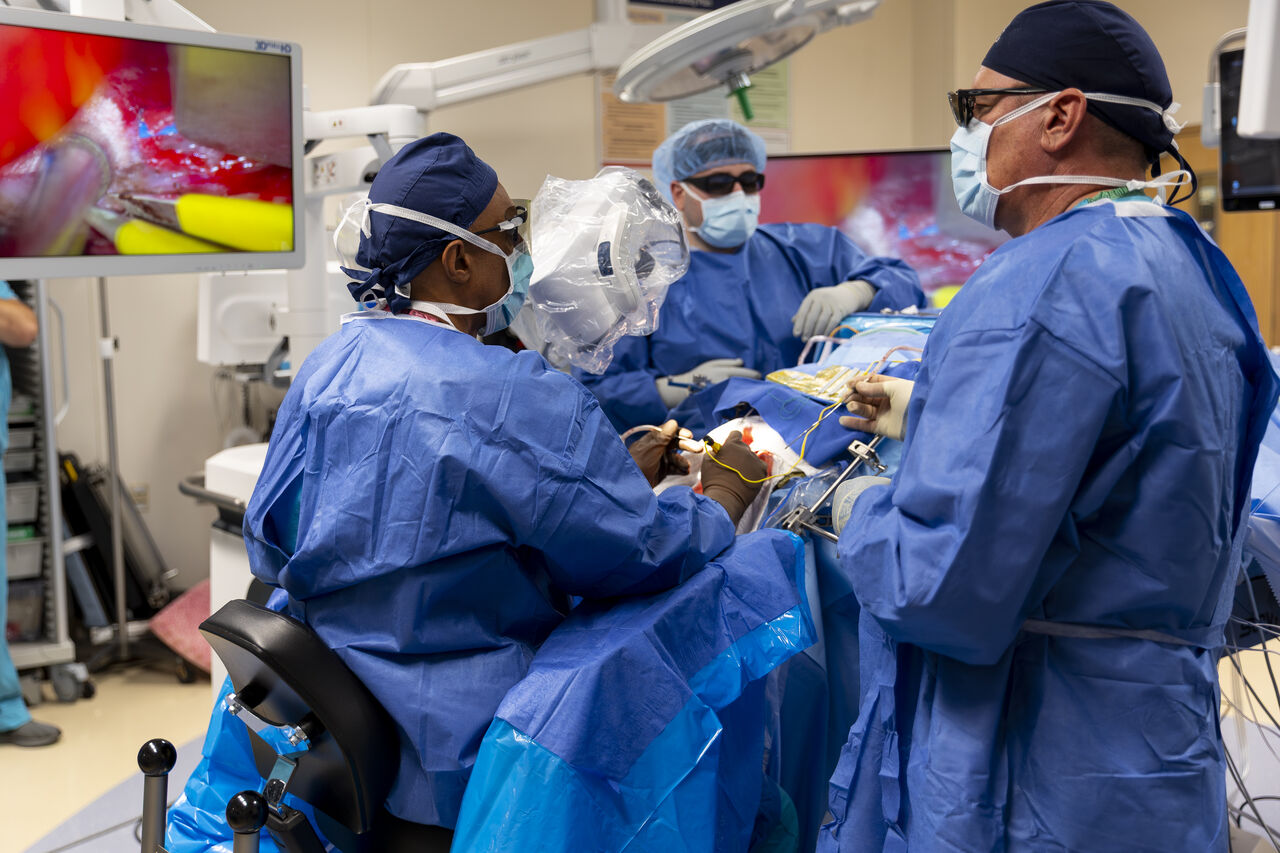 >
>Traditional microscopes often require fixed postures for extended periods. The Aeos system allows surgeons to operate in a more natural position, reducing fatigue during long procedures. The hospital said the system is designed to improve both surgeon comfort and procedural performance.
Healthcare organizations are also using automation and AI systems to reduce workload across clinical environments, including administrative and operational tasks.
Banner Thunderbird has an established robotic surgery program, with more than 15,000 robotic procedures completed across specialties, reflecting continued investment in surgical technology infrastructure
Ellegala said the system provides a foundation for future advancements in brain tumor surgery, including the integration of emerging technologies to improve outcomes.
Key Takeaways
- Banner Thunderbird Medical Center becomes the first in the Western U.S. to deploy a robotic digital microscope.
- Utilize the Aesculap Aeos system for high-definition 3D visualization during brain tumor surgeries.
- Enhance surgical team collaboration with shared 3D images projected across the operating room.
- Improve surgeon ergonomics by allowing a 'heads-up' viewing position instead of traditional eyepieces.
- Leverage technology for better clinical outcomes in complex surgical procedures.