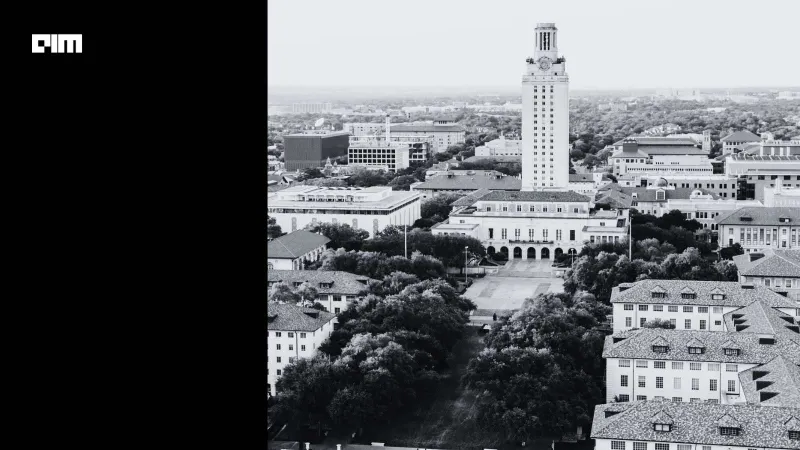
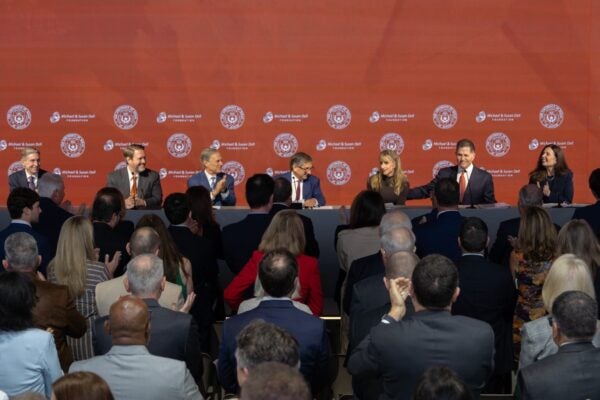
Michael and Susan Dell have surpassed $1 billion in total donations to the The University of Texas at Austin, becoming the institution’s first billion-dollar supporters following a new $750 million commitment announced April 21.
The latest investment will fund the UT Dell Campus for Advanced Research and the UT Dell Medical Center, a new academic hospital designed to integrate artificial intelligence into clinical care from inception.
The medical center is expected to open in 2030 as part of a 300-plus-acre campus in Northwest Austin, combining research, clinical care, and advanced computing infrastructure.
The project also includes expanded funding for scholarships, student housing, and the Texas Advanced Computing Center, one of the country’s leading academic supercomputing facilities.
AI-Native Hospital Built From The Ground Up
The UT Dell Medical Center is being designed as an “AI-native” hospital, embedding artificial intelligence across prevention, diagnosis, treatment, and research workflows instead of retrofitting existing systems.
University officials say the system will connect clinical care, data infrastructure, and research capabilities to enable earlier disease detection and more personalized treatment.
This model reflects a broader shift toward integrating AI directly into care delivery. Similar approaches are emerging across healthcare systems. Hospitals implementing AI in clinical workflows have already reported measurable operational and care improvements.
Unlike most current deployments, which focus on narrow applications, the UT system is being designed as a fully integrated environment spanning multiple functions. Industry analysis has shown that many health systems still rely on task-specific models rather than unified architectures:
MD Anderson Integration And Austin’s Healthcare Gap
The new medical center will integrate cancer care from the The University of Texas MD Anderson Cancer Center into a single system, allowing patients in Austin to access specialized oncology services locally rather than traveling to Houston.
Officials said thousands of patients from Central Texas currently travel for advanced cancer treatment, highlighting a gap in regional healthcare infrastructure.
Austin has been one of the largest U.S. cities without a comprehensive academic medical center, and the new campus is intended to address both care access and research capacity.
The UT Dell Campus for Advanced Research is designed to bring together medicine, science, and computing within a single environment, with the goal of accelerating discovery and improving patient outcomes.
State officials and university leadership have also tied the project to broader economic goals, including positioning Texas as a hub for life sciences and advanced healthcare innovation.
The university has set a target to raise $10 billion over the next decade and aims to rank among the top 10 medical centers in the United States within that timeframe.
Construction on the UT Dell Medical Center is expected to begin later this year.


 Pharma