How Can AI Transform Biologics Discovery with Eli Lilly?
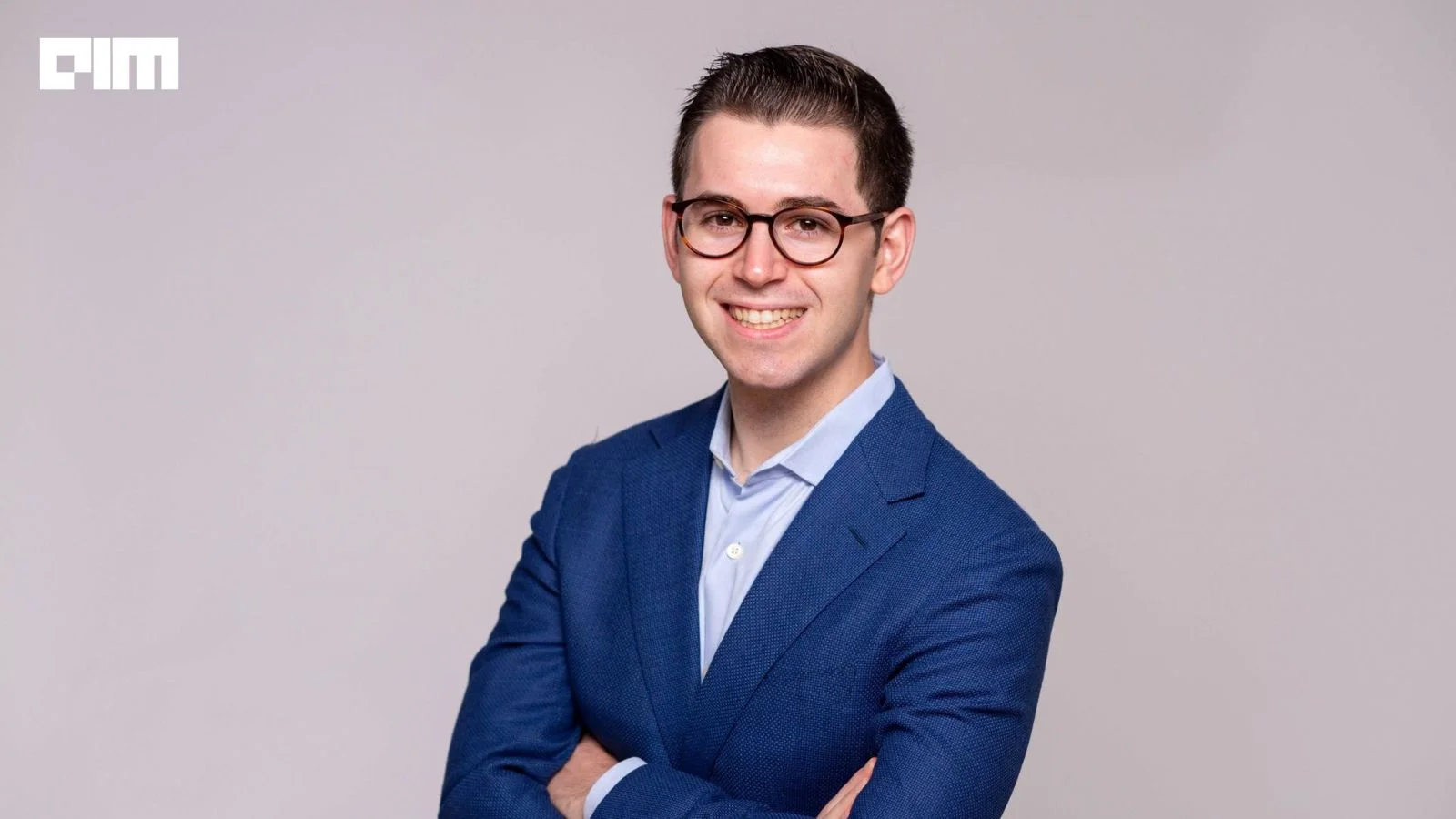
"By combining Chai’s generative design models with Lilly’s deep biologics expertise and proprietary data, the companies intend to push the frontier of how AI can design better molecules from the outset"
Chai Discovery, an AI startup founded in 2024, has gone from concept to reaching unicorn status in just 18 months. The San Francisco-based startup has raised close to $230 million, reached a $1.3 billion valuation, and secured a high-profile collaboration with Eli Lilly and Company to accelerate biologics discovery using AI-driven technologies.
Announced in January 2026, the collaboration will entail Lilly to deploy Chai’s AI platform to design novel biologic therapeutics across multiple discovery targets, while the two companies develop a purpose-built AI model trained exclusively on Lilly’s proprietary data which is tailored to its internal discovery processes. This is a co-developed system embedded into Lilly’s own R&D environment, calibrated to the company’s scientific standards and operational reality.
Drug discovery is slow and expensive, especially when it comes to biologics like antibodies. Traditional approaches like high-throughput screening rely on testing vast libraries of molecules in wet labs, a scattershot method that can take years and frequently fails to yield viable candidates.
Chai’s main technology is Chai-2, a generative design platform focused on antibodies. The company describes Chai-2 as a “computer-aided design suite” for molecules, designed to propose antibody structures that exhibit drug-like properties before they are physically synthesized. According to Chai, the system is capable of “zero-shot” antibody design and can deliver double-digit experimental hit rates, compressing parts of the discovery timeline from months to weeks by reducing the number of unsuccessful candidates that must be tested in the lab.
This potential is one reason why investors are willing to set clear expectations. Elena Viboch, managing director at General Catalyst, one of Chai’s major backers, framed the opportunity in concrete terms. She told TechCrunch that her firm is confident that companies that adopt the startup’s services will see results. “We believe the biopharma companies that move the most quickly to partner with companies like Chai will be the first to get molecules into the clinic, and will make medicines that matter,” Viboch said. “In practice that means partnering in 2026 and by the end of 2027 seeing first-in-class medicines enter into clinical trials.”
Partnership with Eli Lilly
The partnership is structured in a way which combines Chai Discovery's model development capabilities with Lilly’s scale, proprietary data, and domain expertise in biologics. Lilly will use their platform to design novel biologic therapeutics across multiple discovery targets, while a customized model will be also developed to align with the company’s discovery workflows.
Aliza Apple, head of Lilly’s TuneLab program, which focuses on applying AI and machine learning to drug discovery, emphasized the ambition behind the collaboration, "By combining Chai’s generative design models with Lilly’s deep biologics expertise and proprietary data, the companies intend to push the frontier of how AI can design better molecules from the outset, with the goal of accelerating the development of innovative medicines for patients." The partnership follows an evaluation phase, during which Lilly assessed a set of Chai’s model designs before committing to a broader collaboration.
Shortly before the Chai deal was highlighted publicly, Lilly announced a separate $1 billion partnership with Nvidia to build an AI drug discovery lab in San Francisco, aimed at combining big data, compute resources, and scientific expertise to accelerate drug development. Taken together, these moves indicate Lilly is not making one-off experiments in AI but assembling an ecosystem of capabilities to retool its discovery engine.
Chai’s co-founder Josh Meier worked at OpenAI in 2018 as part of its research and engineering team. Around that time, OpenAI CEO Sam Altman approached Meier’s former college classmate, Jack Dent, about the possibility of spinning out a proteomics-focused company built around OpenAI’s expertise. Meier, however, felt the underlying technology was not yet ready to support such an effort, and instead joined Meta to work on AI research.
At Facebook, Meier contributed to the development of ESM1, the first transformer-based protein-language model, which has since been recognized as an important precursor to current work in AI-driven protein design. After leaving Facebook, Meier spent three years at Absci, another AI biotech firm centered on drug creation, further deepening his experience at the intersection of machine learning and therapeutic design. By 2024, Meier and Dent concluded that the technology had matured enough to revisit their original proteomics concept.
The pair reconnected with Altman and decided to launch Chai Discovery together, joined by co-founders Matthew McPartlon and Jacques Boitreaud. OpenAI became one of Chai’s early seed investors, and the team initially worked out of OpenAI’s offices in San Francisco’s Mission District, with the AI lab providing space as the company got started.
Jack Dent has been explicit about this philosophy. He has said that every line of code in Chai’s codebase is written in-house, and that the company is not simply fine-tuning off-the-shelf large language models from the open-source ecosystem. Instead, Chai focuses on custom architectures designed specifically for biological sequence and structure prediction, an approach that demands more upfront effort but promises models more closely aligned with the physics and constraints of molecular systems.
Funding and Validation
The Series B round which raised $130 million was co-led by Oak HC/FT and General Catalyst, both prominent investors in healthcare and technology, and built on earlier backing from OpenAI and other venture firms.
Not everyone in the industry is convinced that AI will dramatically compress drug discovery timelines. Some experts have cautioned that biological systems remain extraordinarily complex and that AI may struggle to overcome the inherent uncertainties of translating molecular designs into clinically effective therapies.
Nonetheless, investors like General Catalyst’s Viboch and operators like Lilly’s Apple argue that there are no fundamental technical barriers to deploying these models in early discovery.
“Companies will still need to take drug candidates through testing and clinical trials, but we believe there’ll be significant advantages to those who adopt these technologies, not just in compressing discovery timelines, but also in unlocking classes of medicines that have historically been difficult to develop,” said Viboch.
Key Takeaways
- Chai Discovery collaborates with Eli Lilly to enhance biologics discovery using AI technologies.
- Utilize Chai’s generative design models to develop novel biologic therapeutics tailored to Lilly’s data.
- Accelerate drug discovery processes, reducing timelines from months to weeks with AI-driven approaches.
- Chai-2 platform proposes antibody structures, improving hit rates and minimizing unsuccessful lab tests.
- Chai Discovery achieved unicorn status and a $1.3 billion valuation within 18 months of launch.