
FedEx Says AI Infrastructure Demand Is Emerging as a Major Growth Driver
FedEx reported strong quarterly results as demand tied to AI infrastructure and data center projects helped drive growth.
By Mukundan Sivaraj ·
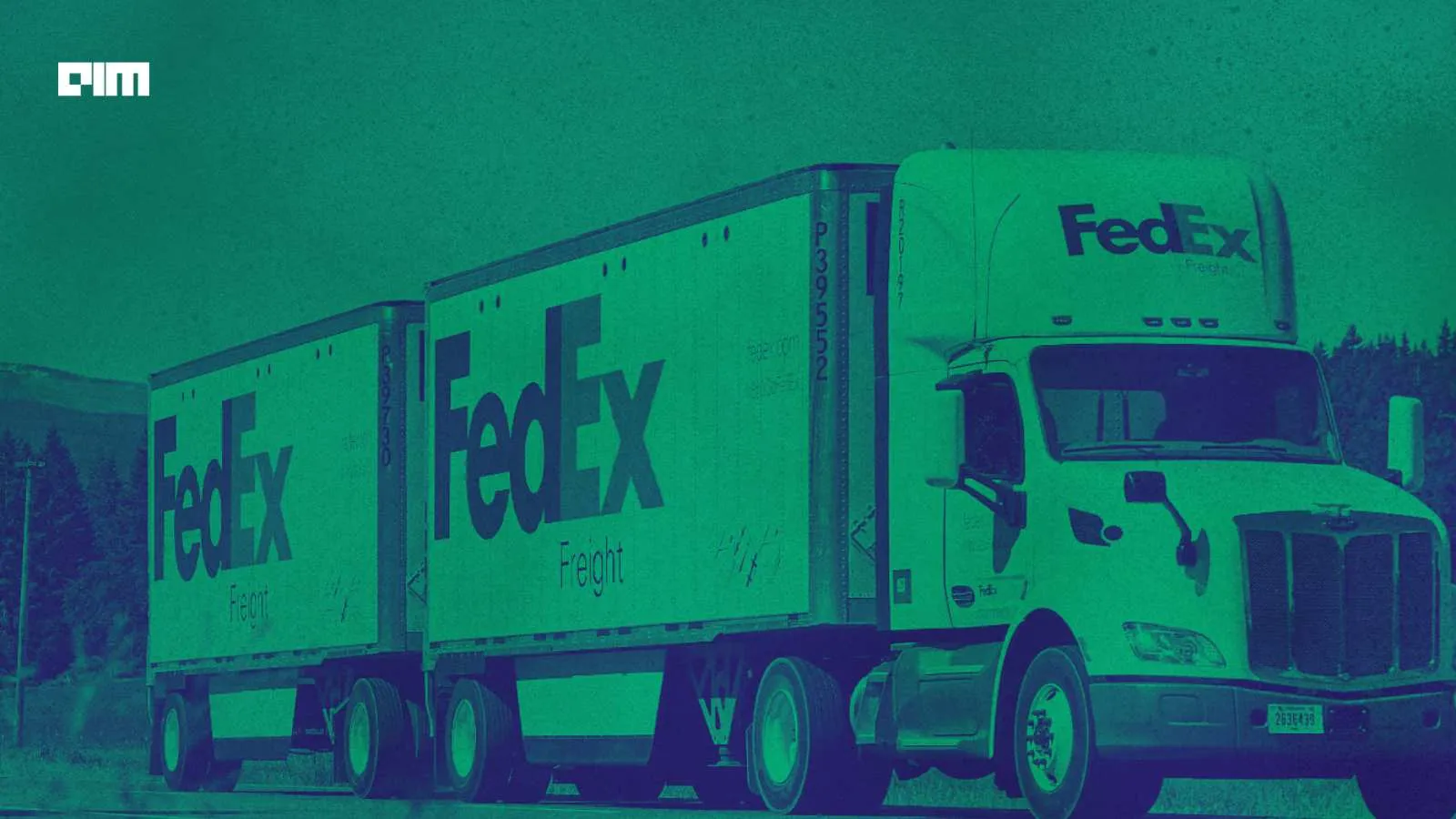
FedEx is seeing growing demand from companies building AI infrastructure, adding a new source of growth as the logistics giant pushes deeper into higher-margin business-to-business markets.
The company reported fourth-quarter revenue of $25 billion, up 12.6% year over year, while adjusted earnings per share reached $6.31, exceeding analyst expectations. For fiscal 2026, FedEx grew revenue and adjusted operating income by 8%, while adjusted free cash flow rose to $4.7 billion.
Beyond the financial results, executives highlighted a trend that is becoming increasingly important to the company's growth strategy: the rapid expansion of AI infrastructure and data center investments.
AI Infrastructure Emerges as a Key Growth Driver
"The AI and data center space is an emerging and rapidly scaling growth engine for us, delivering double-digit revenue growth," Brie Carere, Executive Vice President and Chief Customer Officer at FedEx, said during the company's earnings call.
The comments offer a glimpse into how the AI boom is creating beneficiaries beyond chipmakers, cloud providers, and software companies. As enterprises and hyperscalers invest billions of dollars in data centers, demand is also increasing for companies that move servers, networking equipment, power systems, cooling infrastructure, and other hardware required to build and operate AI facilities.
Carere said FedEx is seeing demand across the entire AI ecosystem rather than from a single customer segment. The company is transporting shipments for hyperscalers, industrial manufacturers, power infrastructure providers, and other suppliers supporting data center construction.
"What differentiates FedEx here is our unmatched responsiveness and our premium capabilities," Carere said.
She added that growth in AI and data center-related business is currently the fastest among the company's major commercial verticals.
AI Investment Creates Opportunities Across Logistics
The opportunity extends beyond traditional technology companies. During the call, Carere described a recent customer engagement that initially appeared to be an automotive opportunity before FedEx discovered the customer had shifted part of its manufacturing capacity toward equipment used in data center power generation.
That broader industrial demand mirrors developments across the logistics sector.
DHL Supply Chain recently announced plans to expand warehouse capacity in North America to support growing data center infrastructure requirements, while UPS has invested in logistics infrastructure serving semiconductor and high-tech supply chains. As AI investment increasingly moves from software development to physical infrastructure deployment, logistics providers are positioning themselves to capture a share of the spending.
FedEx's AI-related growth comes as the company continues a shift toward higher-value business customers.
Management said business-to-business services accounted for the majority of revenue growth during the quarter. The company highlighted healthcare, automotive, aerospace, and data centers as key verticals driving demand.
At the same time, FedEx continues to deemphasize lower-margin shipping categories. Ground Economy volume declined about 5% during the quarter, a trend management expects to continue through the remainder of calendar 2026 as the company focuses on higher-yield shipments.
Healthcare remains another significant growth area.
FedEx exited fiscal 2026 with nearly $10 billion in healthcare transportation revenue and recently launched FedEx Life Sciences, a dedicated organization focused on pharmaceutical and healthcare logistics. The company has expanded temperature-controlled transportation capabilities and established specialized healthcare corridors connecting major pharmaceutical markets.
FedEx Expands AI Use Inside Its Own Operations
While AI is contributing to customer demand, FedEx is also using the technology internally as part of its ongoing transformation efforts.
CEO Raj Subramaniam said the company has embedded AI into its DRIVE operating framework, which guides operational improvement and decision-making across the business.
"We have embedded AI into our DRIVE process," Subramaniam said.
The company has been expanding its AI initiatives beyond operational analytics. According to The Wall Street Journal, FedEx plans to integrate AI into more than 50% of its core workflows by 2028 and is developing AI agents to support operational tasks, planning, and business processes.
FedEx's internal data platform currently supports more than 200 AI use cases across the organization, including network planning, customs operations, software development, and customer service functions.
That combination of internal adoption and external demand gives the company exposure to AI from multiple directions.
On one side, AI tools are helping FedEx improve efficiency and reduce operational costs. On the other, the rapid buildout of AI infrastructure is creating new logistics demand from customers investing in data centers, networking equipment, power systems, and supporting industrial capacity.
The trend is becoming increasingly visible in FedEx's financial performance.
Federal Express Corporation revenue increased 14% during the quarter, supported by both higher yields and volume growth. International export package volumes rose 5%, while airfreight volumes increased 12% as the company continued to gain share in global freight markets.
FedEx also exceeded its fiscal 2026 target of $1 billion in transformation-related savings and remains on track to achieve $2 billion in Network 2.0 and One FedEx savings by the end of calendar 2027.
Looking ahead, the company expects revenue growth of approximately 11% in calendar 2026 and forecast adjusted earnings per share between $16.90 and $18.10.
While investors have largely focused on FedEx's cost-cutting efforts and network transformation, the latest earnings suggest another force may be contributing to future growth. As AI investment expands from software into physical infrastructure, FedEx is positioning itself as one of the companies moving the equipment that powers the industry's next phase. Broader infrastructure spending tied to AI data centers is increasingly reshaping supply chains, power infrastructure investments, and industrial logistics worldwide.