How is AI Automating Retail Decisions Today?
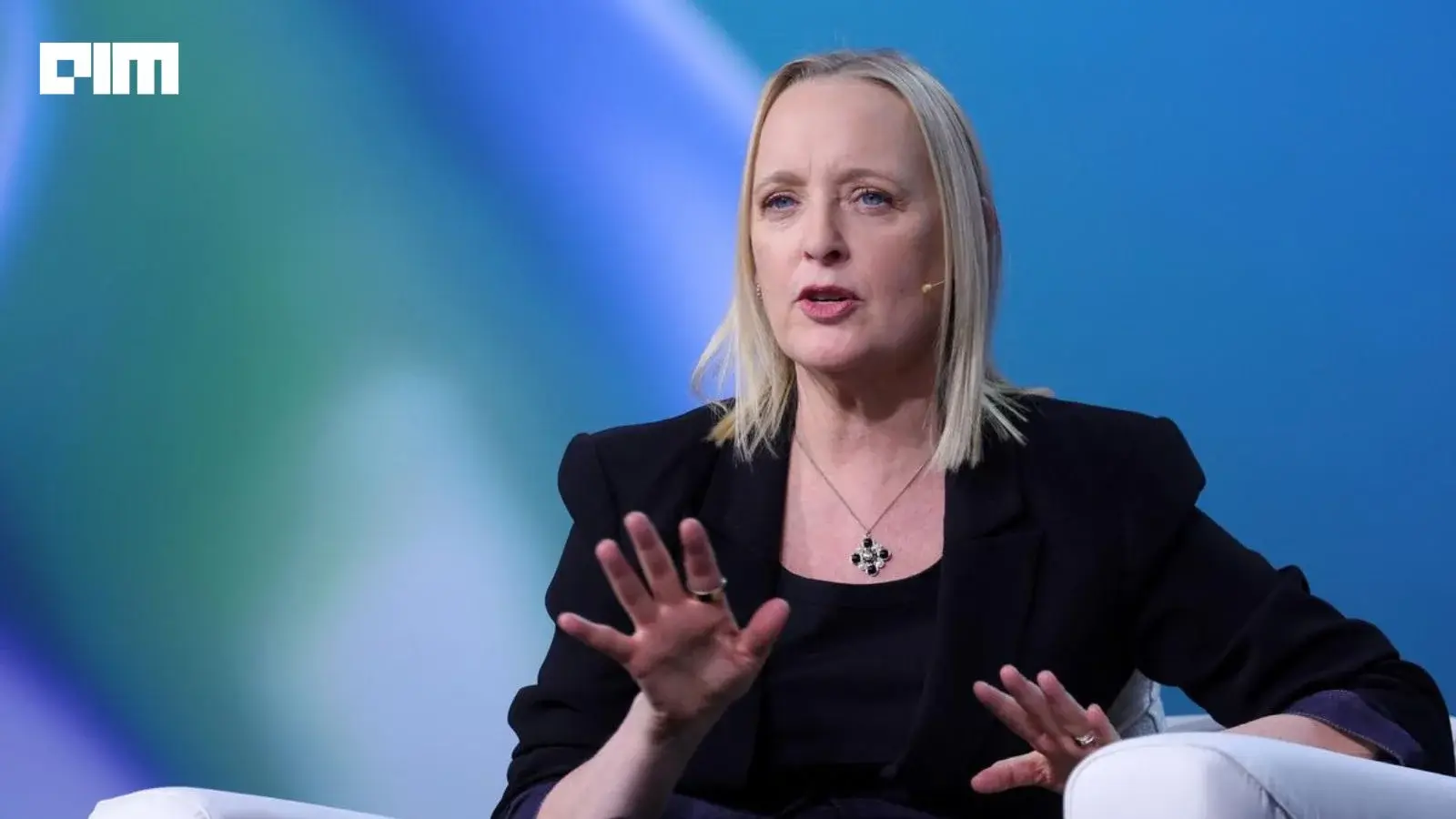
"In retail, AI is reinventing how people shop, how businesses operate and how employees work"
Every Monday morning, retail executives across the globe face the same problem. Data from pricing systems, inventory platforms, competitor websites, and sales channels flowing into numerous spreadsheets. Teams spend Monday to Tuesday manually synthesizing reports and hunting for patterns. By Wednesday, when decisions finally need to be made, the time is already gone.
On January 8, 2026, Accenture announced their investment in Profitmind, an agentic AI platform built by retail operators for retail operators, making a bet on AI to solve the gap between insight and action. The investment, made through Accenture Ventures, is to capitalize on that by providing a platform to its client base of 9000+ globally.
"In retail, AI is reinventing how people shop, how businesses operate and how employees work," said Jill Standish, Accenture's global retail lead. "Profitmind bridges the gap between insight and action through agentic AI. It mirrors how retailers run their businesses, linking data from multiple sources for clear, prioritized recommendations that can be trusted and executed quickly."
Understanding why Accenture prioritizes Profitmind requires understanding retail's operational reality. Dr. Mark Chrystal, Profitmind's co-founder and CEO, spent 30 years as a retail executive, at Rue 21, American Eagle Outfitters, David's Bridal, and The Disney Store, working across planning, marketing, technology, analytics, supply chain, and e-commerce functions.
His insight came from observing the same inefficient process repeat 52 weeks a year. Retail teams would manually pull reports from multiple systems, dump data into Excel spreadsheets, spend all of Monday and part of Tuesday preparing for executive meetings, and then take actions with limited confidence about whether those actions would move the needle on business performance.
"The software industry is really good at developing point solutions that do one thing, like price optimization, or replenishment, or allocation," Chrystal said. "But it didn't matter what solutions I brought to the retail teams because they inevitably ended up back in Excel spreadsheets to make their decisions." This observation captures a critical failure of traditional retail technology. Most solutions optimize for individual functions (pricing, assortment, inventory) in isolation. They don't mirror how actual retail teams work, as cross-functional groups coordinate across pricing, promotions, inventory, and assortment simultaneously.
Profitmind was built to solve this problem. Launched at the National Retail Federation conference in 2024 as the first agentic platform purpose-built for retail, the platform uses a network of intelligent AI agents that synthesize data from multiple sources like internal performance data, competitive pricing and assortment information, promotional data, even competitor 10-K and 8-K filings.
The system then generates prioritized, actionable recommendations designed to be executed by human teams within existing workflows. Instead of spending 50 percent of their time searching through reports and spreadsheets, retail teams now receive a ranked set of actions tied to sales, profit, and working capital impact, every Monday morning at 9 AM, with all analysis complete before the business team arrives.
Why Now?
Profitmind's customers, which include major retailers like Home Depot, Crocs, Batteries Plus, and HEB, have reported an average of 21 percent revenue increase, 14 percent gross profit improvement, and return on investment for the platform within a single month. One customer reported a 250+ basis point profit improvement. Across the customer base, the platform has saved hundreds of hours per month in manual data work.
These are outcomes from a dozen retailers operating the platform in real-time, across multiple continents, ranging in millions or even billions in annual revenue. The diversity of customer scale is significant. It suggests Profitmind's capability of delivering value to small specialty retailers and massive enterprises simultaneously.
Accenture's investment arrives at an ideal time for agentic AI in retail. Industry research firm IDC projects that agentic AI will represent 10-15 percent of information technology spending in 2026, growing to approximately 26 percent of enterprise IT budgets, roughly $1.3 trillion by 2029.
McKinsey research suggests that agentic AI could reshape workplace operations more profoundly than the Internet itself. Gartner forecasts that by the end of 2026, 40 percent of enterprise applications will include task-specific AI agents, with agentic AI potentially representing nearly 30 percent of enterprise application software revenue by 2035.
For retail specifically, the opportunity is enormous. The global agentic commerce market is projected to reach $3 to $5 trillion by 2030, with the U.S. B2C retail market alone potentially seeing $1 trillion in orchestrated agentic commerce revenue. The $164 billion retail AI market opportunity by 2030 is being captured by early movers, companies that deploy agentic AI systems in 2026 and 2027 will establish competitive advantages that compound over the decade.
Beyond market size, consumer behavior is shifting in ways that demand agentic decision-making. Seventy percent of shoppers used AI tools to assist with their shopping journey in 2025. Consumers are 1.5 times more engaged with brands that provide emotionally personalized experiences, 2.3 times more likely to recommend those brands online, and 1.7 times more likely to accept higher prices from AI-enabled retailers.
Traffic from AI-powered shopping sources has surged 1,200 percent year-over-year for retailers. The market has shifted. Retailers that don't deploy agentic decision-making systems in 2026 will be playing catch-up by 2030.
Accenture's Strategy
The consulting firm operates at a massive scale with 9000+ clients globally, $250 million in venture capital under management through Accenture Ventures, and deep expertise in retail strategy, operations, and technology implementation.
Profitmind, conversely, has built world-class agentic AI technology purpose-built for retail, but has limited direct market reach (currently operating with roughly a dozen customers). Profitmind needs distribution and enterprise credibility. Accenture has both.
The partnership allows Accenture to use Profitmind's agentic AI capabilities into its service offerings for retail clients. For Profitmind, access to Accenture's global retail client base represents a path to rapid scaling without bearing the full cost of building an enterprise sales force. This is the partnership model of 2026, natively built AI technology companies partnering with distribution-heavy consulting firms to reach the market at scale.
Accenture announced the Profitmind investment just one day after announcing its acquisition of Faculty, a UK-based AI company, for over $1 billion. Within a single week, Accenture showed its commitment to two different AI strategies, acquiring mature AI companies (Faculty) and investing in mission-critical startups solving specific industry problems (Profitmind).
Notably, Profitmind's distribution strategy extends beyond Accenture. Earlier in January 2026, Profitmind announced availability on the Microsoft Marketplace, integrating with Microsoft Azure and other Microsoft products. Keith Mercier, Microsoft's Vice President for worldwide retail and consumer goods, described Profitmind as a demonstration of how agentic AI can "translate complex merchandising and planning data into prioritized actions." This two-pronged distribution strategy, Accenture on the consulting/services side, Microsoft Marketplace on the technology/cloud side, positions Profitmind for aggressive scaling.
This shift matters because competitors are moving fast. Microsoft, Amazon, and Google have all launched retail-focused AI tools in 2025. Shopify integrated AI-powered product recommendations and inventory optimization. Adobe extended its analytics platform with generative AI capabilities. Traditional point solutions like pricing optimization tools, assortment software, and inventory platforms are rapidly adding AI layers. Profitmind's bet is that retailers will choose platforms built by retailers, for retailers.
Key Takeaways
- Accenture invests in Profitmind to enhance AI-driven retail decision-making.
- Profitmind's platform automates insights from diverse retail data sources.
- AI transforms shopping experiences, operational efficiency, and employee roles in retail.
- Jill Standish emphasizes the importance of trusted, actionable recommendations for retailers.
- Dr. Mark Chrystal's retail experience informs Profitmind's development and functionality.