
Exclusive: Oracle's Kaushal Kurapati on Why Agentic Apps Beat Copilots
Kaushal Kurapati tells AIM Media House why Oracle thinks agentic applications, not copilots, are next for enterprise software.
By Mukundan Sivaraj ·
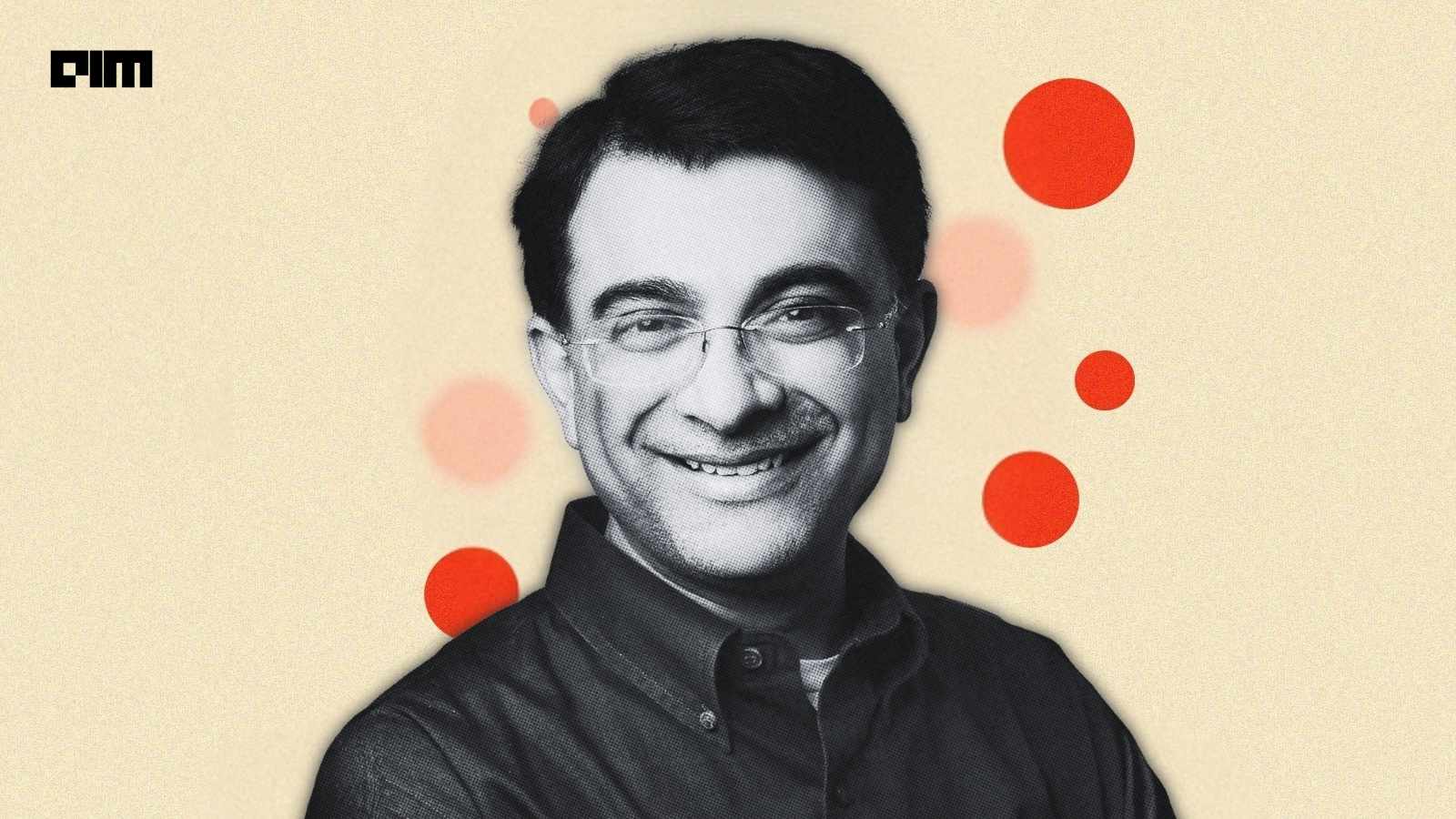
For most of the past decade, enterprise AI has meant a chatbot layered on top of existing software: useful for answering a question, still waiting on a human to notice a problem and act on it. Oracle wants to end that pattern.
On July 14, Oracle introduced an AI-native builder experience for Oracle AI Agent Studio that lets customers and partners create and run Fusion Agentic Applications inside Oracle Fusion Cloud Applications. Oracle says those applications represent a new class of enterprise software that monitors work, coordinates tasks, and executes business processes instead of waiting for user prompts.
"Enterprise apps have been... more or less static because they are not proactive. They are reactive to the human taking the action," Kaushal Kurapati, Group Vice President, Applications Development, Oracle, said during a briefing with AIM Media House.
The category Oracle unveiled, Fusion Agentic Applications, is built around agents that work without waiting to be asked. "Agents that can really monitor, can coordinate work and execute work and deliver against a business outcome," he said.
On where he thinks this leaves the rest of the enterprise software market, he said, "We've seen that, hey, SaaS applications are getting disrupted. We are the ones who are disrupting it."
Sanchit Vir Gogia, Chief Analyst, Greyhound Research, puts the same moment in market terms. "The market is already saturated with agents; the contest is no longer over who builds the smartest one, but over who owns the governed runtime in which agents are permitted to act," he tells AIM Media House.
Oracle is not alone in making this pitch. SAP made a similar case at its Sapphire conference in June, where CEO Christian Klein introduced an "Autonomous Enterprise" built around more than 50 Joule assistants and 200 specialized agents. SAP's Chief Product Officer for Business Suite, Manoj Swaminathan, told AIM Media House at the time that static, module-based software was ending: "How do we move from systems of record towards systems of action and systems of intelligence?"
Two Ways to Build
In a live demonstration, Kurapati typed a single prompt into Oracle's new Agent Studio builder, asking for a comprehensive view of his team's health, developmental needs, and who deserved recognition.
The system assembled its own set of agents without further instruction. It surfaced a missed check-in, proposed calendar holds, drafted a recognition email, and generated a PowerPoint deck from an uploaded template, all inside the same interface.
The same application, Kurapati showed next, can also be built by a professional developer. Oracle's new AI Studio Skill brings Visual Studio Code and Git-based workflows into Fusion-native development, and connects AI coding assistants, including OpenAI's Codex and Anthropic's Claude Code, to the same governed framework.
Gogia calls that dual path central to the release. "The AI-native builder experience opens the creation of Fusion Agentic Applications to business users through natural language and low code, and to professional developers through a genuine pro-code path," he says.
Agents built through either path, he adds, are "born inside the system of record, designed to inherit the security, approvals, and auditability that agents built outside it must reconstruct at great expense."
Rather than positioning AI agents as external assistants connected to business systems through APIs, Oracle is embedding them directly into Fusion's applications and data model.
The company argues that gives agents immediate access to existing permissions, approval workflows, and transactional context without recreating those controls separately.
Governance and Its Limits
Oracle is targeting a familiar failure point in enterprise AI. More than 40% of agentic AI projects could be abandoned by the end of 2027, according to Gartner, citing escalating costs, unclear business value, and inadequate risk controls as the main drivers.
Mauro Schiavon, Global Chief Commercial Officer for Oracle Business at Deloitte Consulting, said in a statement accompanying the announcement that the barrier is rarely the technology itself. "The challenge is often not the technology itself, but how to integrate it into core business operations with appropriate security, oversight, and operational controls," he said.
Zachary Chertok, Senior Research Manager for HCM Applications and Agents at IDC, added that the same governance layer lets less technical staff build safely. Working from established permissions and data controls, he said, organizations can let employees "build, configure, and support themselves and their teams with the agents they need to collaborate, innovate, and drive toward quality outcomes."
Kurapati's own answer to inconsistency is what Oracle calls a policy model. Business rules written in natural language are compiled once into code, which then runs the same way every time instead of being reinterpreted by a model on each request.
Kurapati said during the briefing that the approach targets regulated sectors, including financial services and healthcare, where inconsistent output carries real consequences.
On what happens if an agent misreads a shifting policy and produces a wrong result, Kurapati pointed to the layers built to catch it early. Replay tools show exactly what an agent did at each step, he said, and any high-impact decision is routed to a human for approval before it executes, so most errors are caught before they become a transaction.
If a mistake still gets through, he said, the same reversal mechanisms already used in Fusion's system of record apply, the same way they would for an error a person made.
The Partner Network
Oracle points to scale as its proof that the model is catching on. More than 80,000 professionals are now certified on Oracle AI Agent Studio.
A new public GitHub repository of templates went live this week. Fusion Applications already run 22 agentic applications alongside more than 1,000 AI agents spanning finance, HR, supply chain, and customer service, according to the company.
Why is Oracle investing so heavily in a certified-partner network at a moment when hyperscalers and AI-native vendors are building out their own in-house deployment teams? Kurapati pointed to a pattern he said holds across enterprise technology history.
"Any successful platform... has had a robust developer ecosystem," he tells AIM Media House, adding that agentic applications let partners adapt Oracle-built templates into tools suited to specific departments and industries, work Oracle could not do alone at the same scale.
"It's a defensible sort of system when those many are getting built very quickly," he says. Fusion Agentic Applications now move from demonstrations into daily use across finance, HR, and customer operations.