How is Kodiak AI Scaling Autonomous Truck Manufacturing?
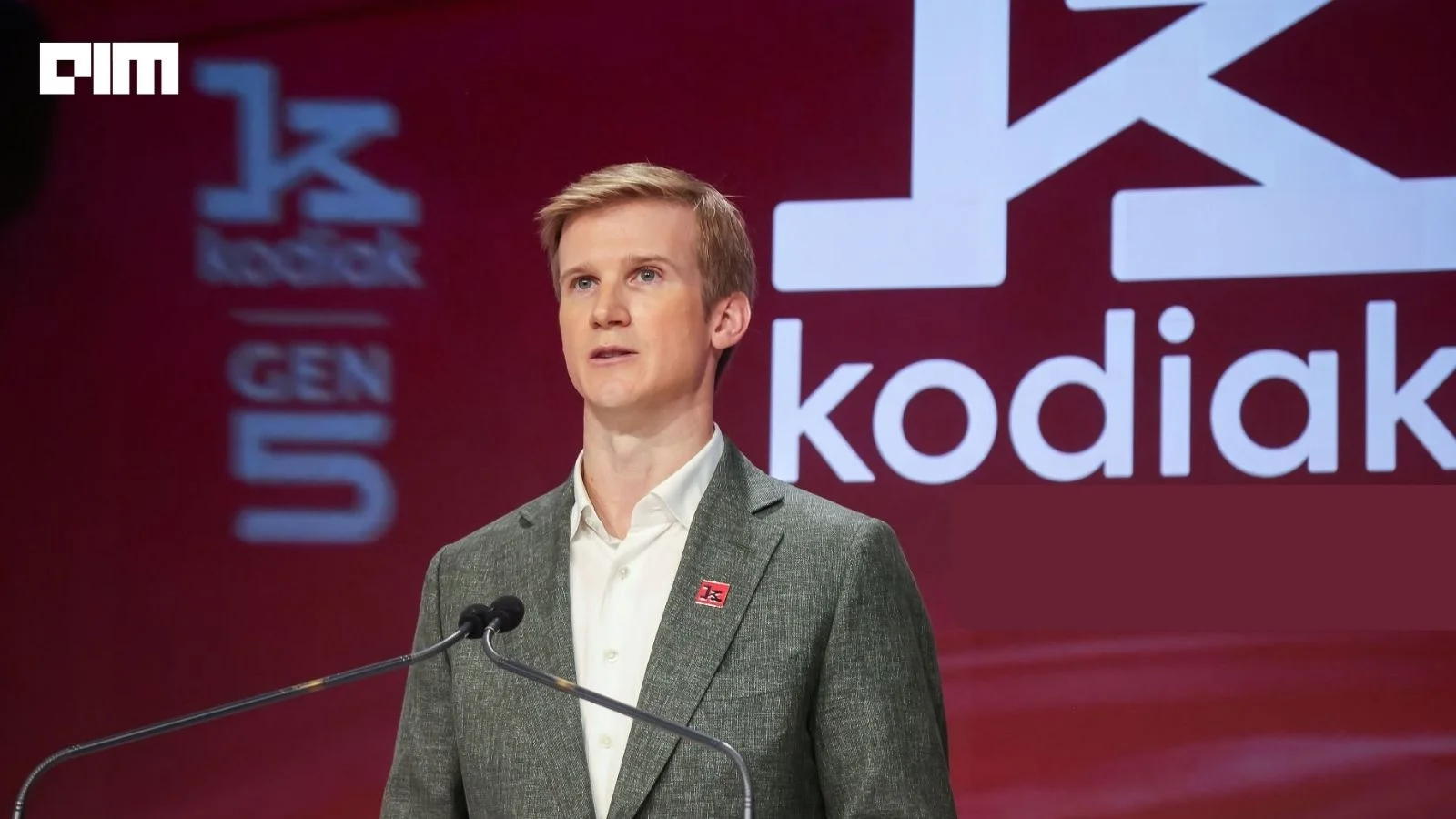
"By supplying production-grade hardware, we are enabling the next generation of autonomous trucking alongside Kodiak"
Autonomous trucking has a credibility problem. Not because the technology doesn't work, since Kodiak AI's driverless trucks have already proven they can operate without human drivers in commercial service, logging over three million autonomous miles and delivering more than 10,000 customer loads.
The problem is manufacturing at scale. Until now, most autonomous vehicle companies have developed sophisticated software and sensor suites, but lacked the industrial infrastructure to move from handful-of-trucks pilots into fleets of hundreds, then thousands.
On January 5, 2026, at the CES trade show in Las Vegas, Kodiak AI announced a partnership with Bosch, the world's largest automotive supplier by revenue, to solve that problem. Under the agreement, Bosch will supply Kodiak with automotive-grade components, including sensors and vehicle actuation systems like steering technologies, and collaborate on developing a production-grade, redundant autonomous platform. The partnership marks a critical transition where autonomous trucking is finally moving from demonstration to manufacturing.
"Advancing the deployment of driverless trucks and physical AI not only requires robust autonomous technology, but also manufacturing experience and a robust supply chain in order to achieve true scale," Don Burnette, Kodiak's founder and CEO, said in a statement.
Kodiak has solved the software and AI piece. What the company lacked was industrial credibility, proof that its technology could integrate seamlessly into manufacturing workflows at the scale the market demands.
Bosch brings exactly that. The company supplies sensors, compute, and vehicle control systems to carmakers and technology firms worldwide. Its supply chain spans 35,000 employees across purchasing and logistics.
More importantly, Bosch has spent decades managing the complexity of automotive-grade manufacturing, redundancy requirements, safety certification, quality assurance protocols, and rapid iteration. These are not problems technology companies typically solve in-house.
The Manufacturing Bottleneck
Kodiak's current fleet consists of 10 fully driverless trucks operating in commercial service, a big achievement for a startup founded in 2018. But ten trucks aren't proof of commercial viability. The gap between technical success and commercial scale is where most autonomous vehicle companies have stumbled. Manufacturing doesn't generate venture funding or analyst reports. It's where ambitious technology companies go to die if they can't execute it.
The Bosch partnership directly addresses this. Kodiak's autonomous platform will integrate into Bosch-supplied hardware through both factory integration (building autonomous trucks on production lines) and retrofit options (retrofitting existing vehicles). This modularity matters. It means fleet operators like J.B. Hunt, CR England, and Martin Brower, companies already working with Kodiak, can choose when and how to scale deployment. Factory integration reaches new trucks and retrofit reaches existing fleets. Both pathways to market.
For Bosch, the partnership deepens its footprint in autonomous mobility. "By supplying production-grade hardware, we are enabling the next generation of autonomous trucking alongside Kodiak," Paul Thomas, President of Bosch in North America, said. "Kodiak has already deployed trucks with no humans on board in commercial operation and this cooperation gives us a valuable opportunity to deepen our understanding of real-world autonomous vehicle requirements."
Bosch is building expertise in autonomous vehicles by working with Kodiak. The company benefits from understanding what production-grade autonomous trucks actually demand in terms of sensors, steering precision, redundancy architecture, and service availability. That expertise becomes valuable as the broader automotive industry accelerates autonomous adoption.
The global autonomous truck market was valued at approximately $47.4 billion in 2025 and is projected to grow to nearly $140 billion by 2033, a compound annual growth rate of roughly 15 percent. Long-haul autonomous trucking is accelerating faster, from $2.7 billion in 2024 to a projected 32 percent compound annual growth rate through 2034. These projections reflect rising pressure on trucking companies from driver shortages, rising labor costs, and freight volume growth driven by e-commerce.
The business case has become irrefutable. Autonomous trucks can operate 24/7, bypassing human hours-of-service regulations. They optimize driving profiles for fuel efficiency. Studies suggest cost savings of up to 40 percent are achievable through continuous autonomous operations.
For a logistics company operating thousands of trucks, that's a game-changing margin advantage. But margin advantage only matters if the technology is commercially available and doesn't require custom engineering for each deployment. That's where Kodiak and Bosch's partnership becomes strategically critical. Kodiak can now offer fleet operators a production-grade solution.
Path to Revenue
Kodiak went public in September 2025 at a valuation near $2.5 billion. The company's stock is trading near its 52-week high of $11.62, reflecting investor confidence in autonomous trucking's near-term commercial potential. But confidence doesn't pay operating expenses. Kodiak must convert its technical achievements into revenue-generating contracts with major trucking and logistics companies.
The company has clear catalysts ahead. In Q3 2025, Kodiak disclosed a commitment from Atlas Energy Solutions for an initial deployment of 100 driverless trucks, with commercial long-haul operations expected to begin in the second half of 2026. The company has also articulated its "Autonomy Readiness Measure" (ARM) for long-haul trucking at 78 percent completion as of November, with steady progress toward launching long-haul driverless operations in H2 2026.
The Bosch partnership accelerates this timeline. Rather than Kodiak managing production scaling itself, Bosch handles the manufacturing complexity. Kodiak focuses on deploying its technology, refining its algorithms, and capturing market share.
For fleet operators and investors, the Bosch partnership provides enterprise-grade validation. Bosch's involvement signals that Kodiak's platform meets automotive-industry standards for safety, redundancy, and serviceability. This is a certification that the technology can integrate into existing fleets without excessive customization or risk. The company will display a Kodiak Driver-powered autonomous truck at Bosch's CES 2026 booth.
This partnership won't deliver overnight revenue. Bosch and Kodiak haven't disclosed financial terms, and integration timelines will stretch across 2026 and beyond. But what it does deliver is proof that the autonomous trucking industry is transitioning from technology development to industrial production. By partnering with Bosch, the company has unlocked the ability to manufacture at scale.
Key Takeaways
- Kodiak AI partners with Bosch to enhance autonomous trucking hardware manufacturing.
- The partnership aims to transition autonomous trucking from pilot programs to large-scale production.
- Bosch will supply automotive-grade components and collaborate on developing a redundant autonomous platform.
- Kodiak AI has proven its technology with over three million autonomous miles but needed industrial credibility.
- Robust manufacturing experience is crucial for scaling autonomous trucking technology effectively.