

- 0141% of business leaders surveyed use AI for market intelligence, while 28% use it for real-time price optimization.
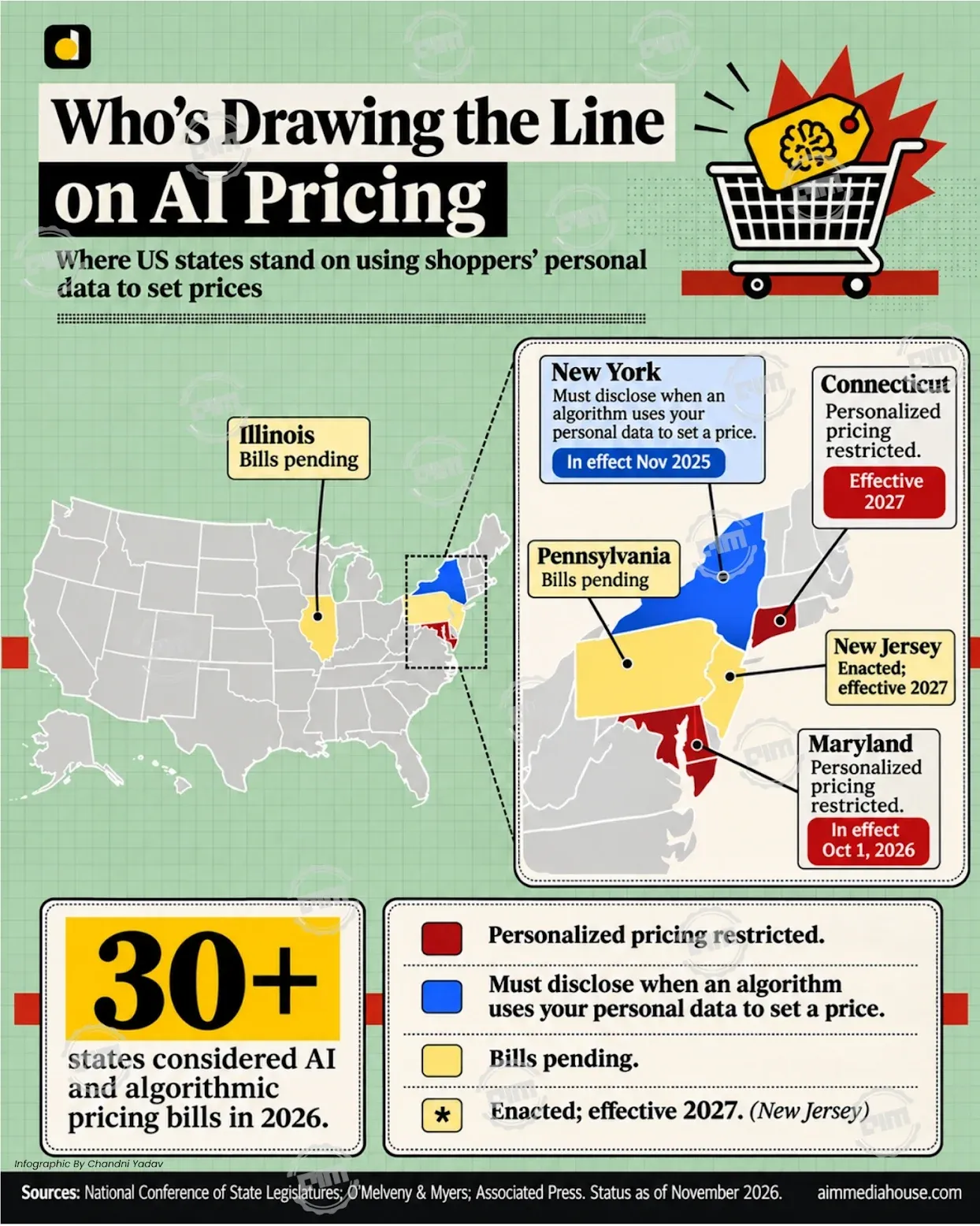
- 02Legislators in at least 30 states have considered pricing bills this year, focusing on regulations around personalized pricing.
- 03Maryland's Protection From Predatory Pricing Act, effective October 1, 2026, prohibits food retailers from using personal data to raise prices for consumers.
Show all 5Show less
- 04Connecticut's law, effective July 2027, bans personalized pricing for a broader range of retail purchases, with exceptions for general discounts.
- 05Retailers claim their pricing technologies focus on product pricing rather than individual consumer data, with some studies showing minimal instances of surge pricing.
Follow Deployed on Google
Shoppers are heading into the busiest pricing season of the year, when discounts change by the day and sometimes by the hour. More of those prices are now being set or adjusted with software.
Digital shelf labels are spreading to major US retailers, including Walmart and Whole Foods. Consulting firm Simon-Kucher surveyed more than 2,200 business leaders across 28 countries and 39 industries, and found that 41% use AI software to gather market intelligence, including competitors' prices, while 28% use it for real-time price optimization.
Lawmakers are paying attention. Legislators in at least 30 states have considered pricing bills this year, according to the National Conference of State Legislatures.
Where AI Pricing Is Showing Up
The concern for regulators is not dynamic pricing itself, but pricing based on who the shopper is. A January 2025 FTC staff report found that intermediaries offering tailored pricing tools worked with at least 250 clients, including grocery and clothing retailers.
Several companies have already faced scrutiny. A Consumer Reports, Groundwork Collaborative and More Perfect Union investigation found that shoppers on Instacart were shown different prices for identical products at the same stores.
Instacart said it ended tests that randomly assigned shoppers to groups, and that it did not set prices from personal data.
In 2022, California prosecutors alleged that Target's app showed lower prices before shoppers entered a store and higher prices once they were inside. Target agreed to a $5 million settlement and a ban on using geofencing to raise prices.
The FTC's 2023 antitrust suit against Amazon alleged that the company used a tool called Project Nessie to identify products whose prices it could raise with competitors likely to follow.
Amazon said the allegations "grossly mischaracterize" the tool and that it was scrapped before the lawsuit. A trial is scheduled for next year.
The States Step In
New laws are now taking effect. Maryland's Protection From Predatory Pricing Act, effective October 1, 2026, bars food retailers and third-party food delivery services from using a consumer's personal data to raise food prices for that consumer.
It carves out promotional, loyalty and subscription pricing, and allows penalties of up to $10,000 per violation. Connecticut's law, effective July 2027, covers a broader range of retail purchases.

The week's store, brand and commerce deployments. Fridays.
It bars retailers and food delivery services from personalized pricing, subject to exceptions such as generally available discount programs.
Sellers using a price-setting device that relies on personal data must display the notice: "THIS PRICE WAS INCREASED USING YOUR PERSONAL DATA."
New York took a disclosure approach. Since November 2025, sellers have had to tell shoppers when an algorithm using their personal data sets a price, with civil penalties of up to $1,000 per violation.
At the federal level, the FTC has proposed an enforcement policy warning that failing to disclose the use of personal data to set individualized prices could violate consumer protection law. New Jersey has also passed a ban covering groceries and other necessities, which takes effect August 1, 2027. Bills are pending in Pennsylvania and Illinois.
What Retailers Are Saying
Retailers describe the technology as a way to keep prices accurate and save labor. Walmart CEO John Furner wrote in a September 25 letter that the company does not set different prices based on who a customer is or the time of day, and that its digital shelf labels help keep shelf prices matched to checkout prices. ‘We price the product, not the person,’ he wrote.”
Some data supports that description. Researchers tracking an unnamed grocery chain after it introduced electronic shelf labels found "virtually no surge pricing."
Asa Farquhar of Relex Solutions said changing prices throughout the day, as airlines and rideshare apps do, is "exceedingly rare in grocery and general merchandise today."
Decodo, which tracked 2025 price changes across product categories, found that about half of the US changes it recorded were decreases.
"There are major tensions happening right now between who's really going to have the power," said Katie Thomas, who leads a consumer behavior think tank at Kearney.
The laws passed so far draw a narrow line. They allow algorithms to set prices, and in most cases allow loyalty discounts and promotions. What they restrict is using a shopper's personal data to charge that shopper more, or doing so without telling them.
Retailers say their tools price the product, not the person. With laws now in force in Maryland, and more than two dozen other states weighing their own, the question is how retailers will show regulators that their AI pricing systems stay on the right side of that line.
Last updated
